


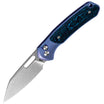
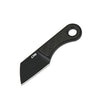
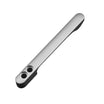
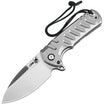


Introduction: The Engineering Behind the Edge
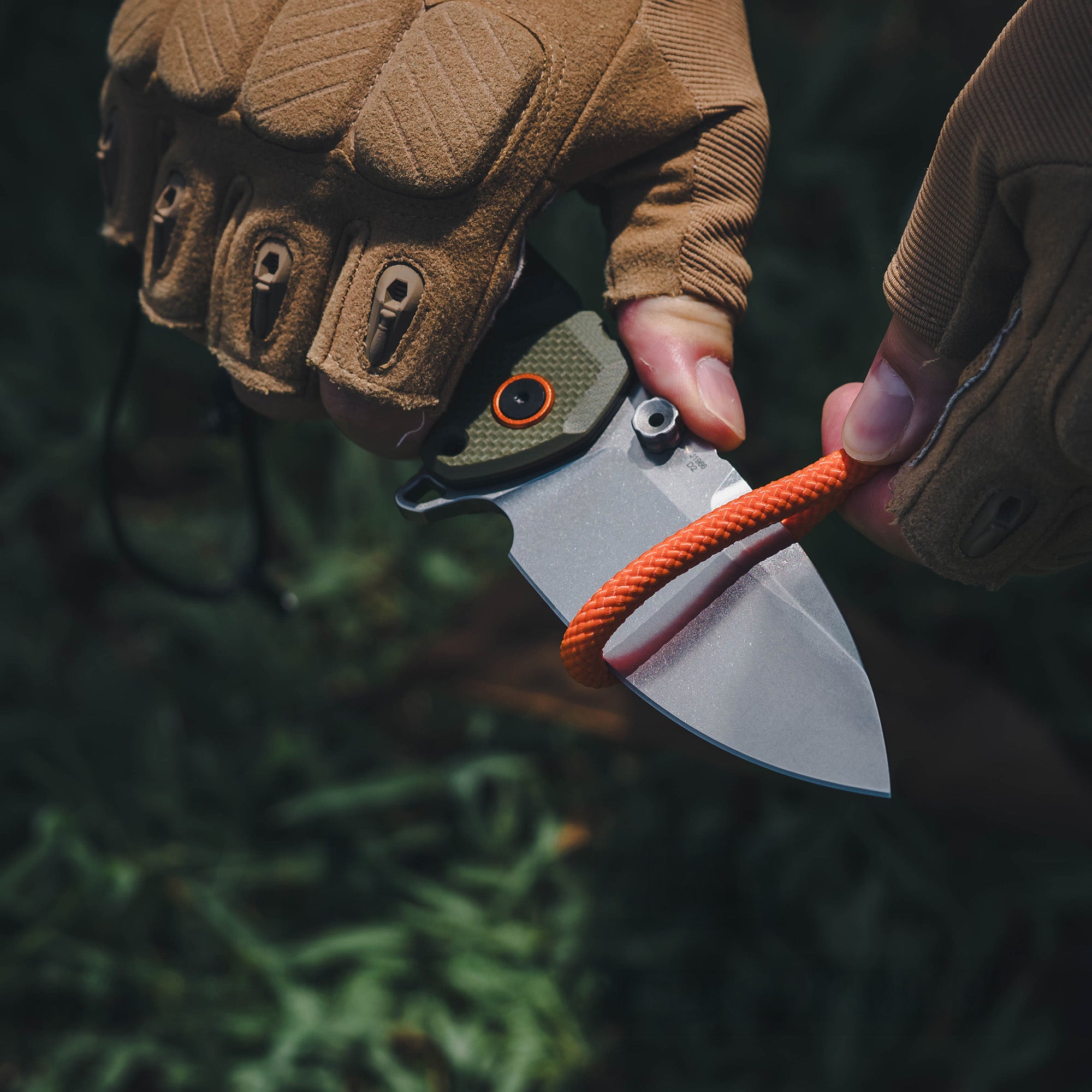
In the world of everyday carry (EDC) and professional cutting tools, the blade often garners the most attention. Metallurgy, edge geometry, and grind styles are frequent topics of debate. However, the true heart of a folding knife lies in its mechanism—specifically, the lock. A locking mechanism is not merely a convenience; it is a critical safety device that transforms a folding tool into a rigid instrument capable of handling significant stress. Without a reliable lock, a folding knife is simply a friction folder, prone to closing on the user's hand during rigorous use.
Understanding knife mechanisms requires a deep dive into physics, material science, and mechanical engineering. From the tension of a leaf spring in a Liner Lock to the complex internal geometry of a Recoil Lock V2, every system operates on a distinct set of principles designed to balance strength, ease of deployment, and safety. This guide serves as a comprehensive academic resource, dissecting the "how" and "why" behind the industry's most prominent locking systems.
We will explore the evolution of these mechanisms, from the traditional Slip Joint that defined the early 20th century to the modern engineering marvels like the Crossbar Lock and proprietary systems like the CJRB Recoil Lock. Whether you are a collector, an engineer, or an outdoor enthusiast, this guide will provide the technical knowledge necessary to evaluate the reliability and performance of your tools.

Core Principles of Locking Mechanics
The Physics of Engagement
At its core, a knife lock is a mechanism designed to counteract torque. When force is applied to the cutting edge, rotational energy is transferred to the pivot point. A lock must exert an equal or greater opposing force against the blade's tang to prevent rotation. This is achieved through three primary physical principles: Friction, Spring Tension, and Mechanical Obstruction.
- Friction: In mechanisms like the Liner Lock, the friction between the lock face and the blade tang prevents slippage. The angle of the tang (usually between 7 and 9 degrees) is critical. If the angle is too steep, the lock may slip (cam-out); if too shallow, the lock may stick (lock stick).
- Spring Tension: Almost all locks rely on potential energy stored in a spring—whether it is a bent titanium liner, a coil spring in a button lock, or an omega spring in a crossbar lock. This tension ensures the locking element engages automatically when the blade reaches its fully open position.
- Mechanical Obstruction: Stronger locks, such as the Tri-Ad Lock or the Recoil Lock, place a physical barrier (a pin or bar) directly in the path of the blade tang's rotation, relying on the shear strength of steel rather than friction alone.
The Role of Detents
A lock's job is not only to keep the knife open but also to keep it closed. This is the role of the detent. In a standard Liner Lock, a tiny ceramic or steel ball is embedded in the lock bar. When the knife is closed, this ball rests in a small hole drilled into the blade tang. The force required to push the ball out of this hole creates the "break" or resistance felt when opening the knife. This "bias toward closure" is a critical safety feature that prevents the knife from deploying accidentally in a pocket.
The Liner Lock: The Industry Standard
Mechanical Analysis
The Liner Lock is arguably the most ubiquitous locking mechanism in modern knife history. While the concept of a locking liner existed earlier, it was custom knifemaker Michael Walker who revolutionized the design in the 1980s by adding the detent ball and refining the lock face geometry. This innovation allowed for true one-handed opening and closing, changing the knife industry forever.
In a Liner Lock system, the handle is constructed with metallic liners (usually stainless steel or titanium). A section of one liner is cut to form a leaf spring. This leaf spring is bent inward, toward the center of the knife. When the blade opens, the spring tension forces this metal leaf to snap behind the blade tang, buttressing it against the stop pin. To close the knife, the user manually pushes the liner aside, clearing the path for the blade to rotate shut.
Engineering Challenges and Solutions
Despite its popularity, the Liner Lock requires precise engineering to be safe. One common issue is "lock rock," where the blade wiggles vertically because the lock bar does not sit flush against the tang. Another is "lock slip," which occurs if the geometry of the tang is incorrect. High-quality Liner Locks feature a hardened steel interface or a "carbidized" lock face to prevent wear, especially when a softer titanium liner meets a hardened steel blade. When executed correctly, as seen in CJRB's precision-milled collections, the Liner Lock offers a perfect balance of slim profile and reliable security.

Frame Locks: Strength and Simplicity
The Integral Lock Concept
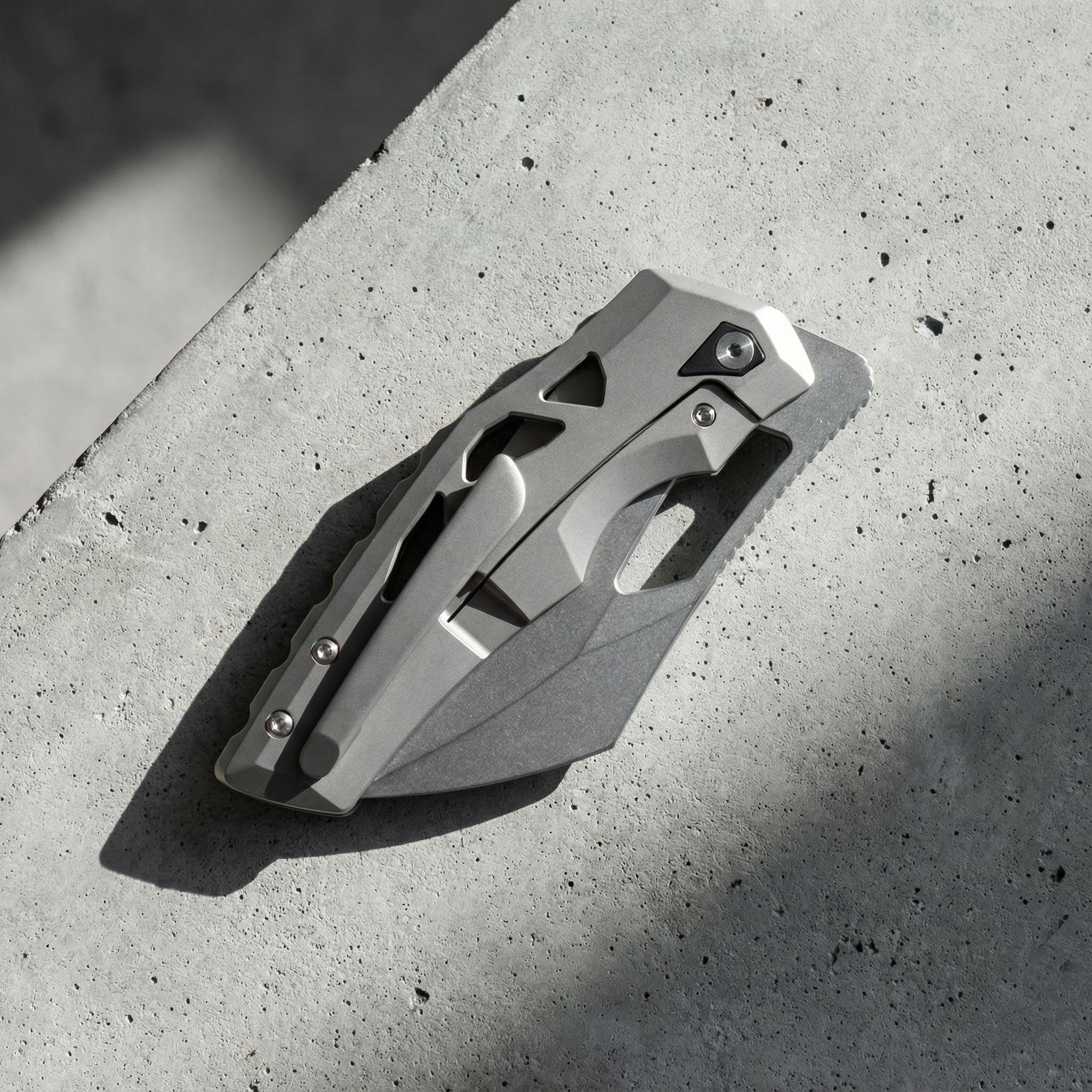
The Frame Lock, also known as the Integral Lock, is an evolution of the Liner Lock principle. Instead of using a thin internal liner to secure the blade, the Frame Lock utilizes a substantial portion of the handle scale itself. This design was popularized by Chris Reeve and is a staple in the CJRB Frame Lock Collection.
The primary advantage of a Frame Lock is sheer strength. Because the locking element is much thicker than a standard liner, it can withstand significantly more stress. Furthermore, the mechanics of gripping the knife actually reinforce the lock. When a user grips the handle tightly during hard use, their fingers squeeze the lock bar firmly against the blade tang, theoretically making the lock more secure the harder the knife is used.
Top Frame Lock and Top Liner Lock Variations
While the traditional engagement happens at the bottom of the handle, variations such as the top frame lock and top liner lock exist. These mechanisms move the locking interface to the spine of the handle. This configuration is mechanically similar to a Compression Lock. The advantage of a top-oriented lock is safety: the user's fingers are never in the path of the closing blade. By placing the release mechanism on the spine, the user can disengage the lock and swing the blade shut without repositioning their hand, ensuring a higher degree of safety during one-handed operation.
Button Locks and Plunge Locks: Fluidity in Motion
Hydraulic-Like Smoothness
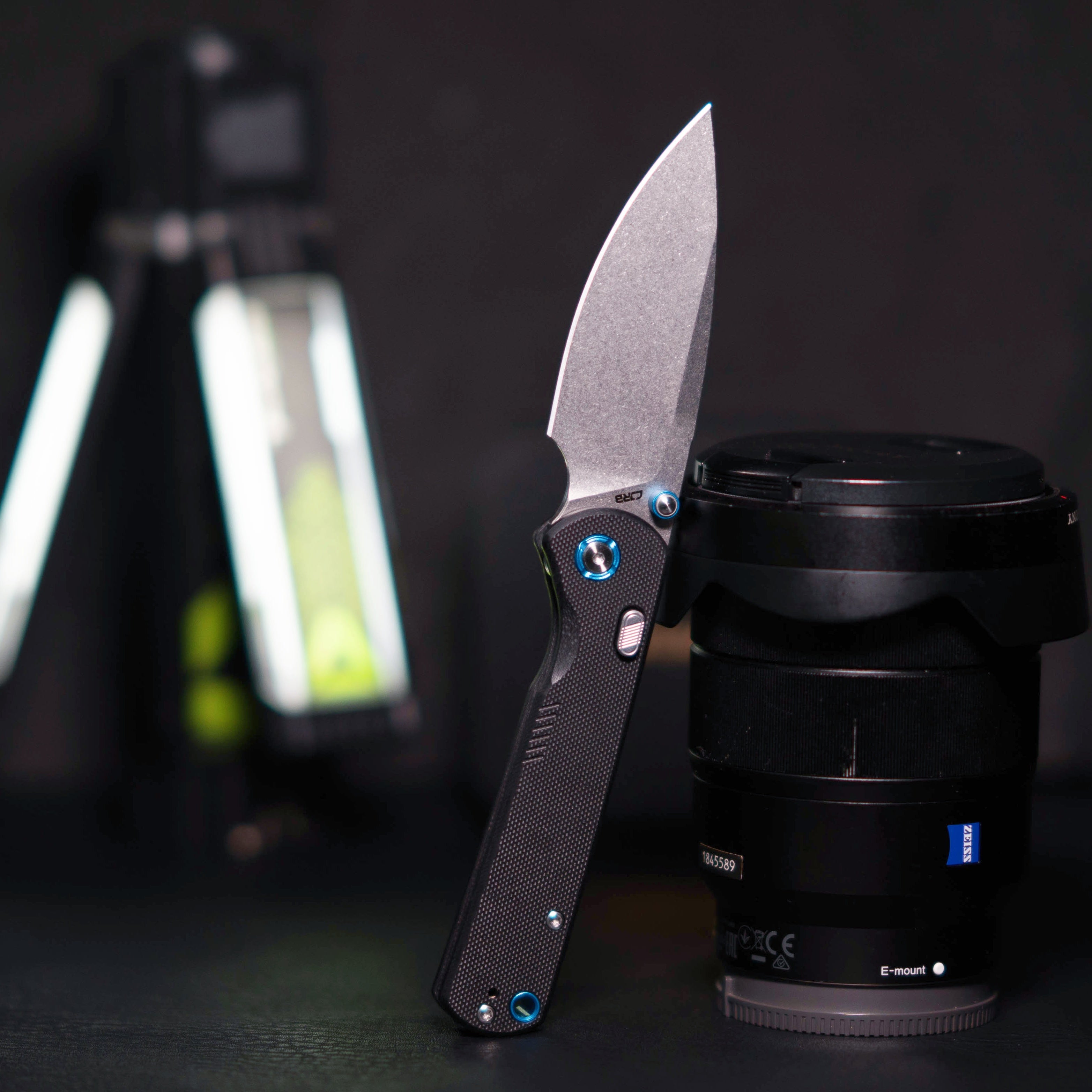
The Button Lock, sometimes referred to as a Plunge Lock, offers a completely different tactile experience. In this system, a spring-loaded plunger moves perpendicular to the blade. The blade tang has a specific cutout that matches the profile of the plunger. When the blade is open, the plunger snaps into this cutout, preventing movement. Pressing the external button compresses the internal spring and moves the plunger out of the way, allowing the blade to swing free.
The CJRB Button Lock Collection is renowned for its "fidget factor." Because there is no friction from a lock bar dragging against the blade tang during rotation, button locks often feature a gravity-defying, drop-shut action. This mechanism allows for rapid deployment and closing without ever placing fingers in the blade's path.
Internal Safety Mechanisms
One engineering challenge with button locks is ensuring the lock doesn't fail under spine-whack pressure. High-quality button locks utilize a tapered plunger design. As wear occurs over time, the spring pushes the tapered plunger deeper into the notch, self-adjusting for wear and ensuring a tight lockup for the life of the knife. This mechanism is particularly favored in situations where speed of deployment is paramount.

The Crossbar and AXIS Style Revolution
Ambidextrous Engineering
The AXIS Lock / Crossbar Lock represents a major leap in user ergonomics. Originally patented (and now available as the generic Crossbar Lock), this mechanism uses a hardened steel bar that slides back and forth in a slot cut into both liners. Two "omega" springs (shaped like the Greek letter Ω) push this bar forward. When the blade opens, the bar slides up a ramp on the tang and wedges itself between the tang and the liners.
This design is featured in the Crossbar Lock collection and is celebrated for being fully ambidextrous. Unlike Liner or Frame locks, which are biased toward right-handed users, the Crossbar Lock can be operated equally well with either hand. Mechanically, it is incredibly strong because the lock bar must be sheared through for the lock to fail, which requires massive force.

CJRB Innovation: The Recoil Lock System
Redefining the Sliding Lock
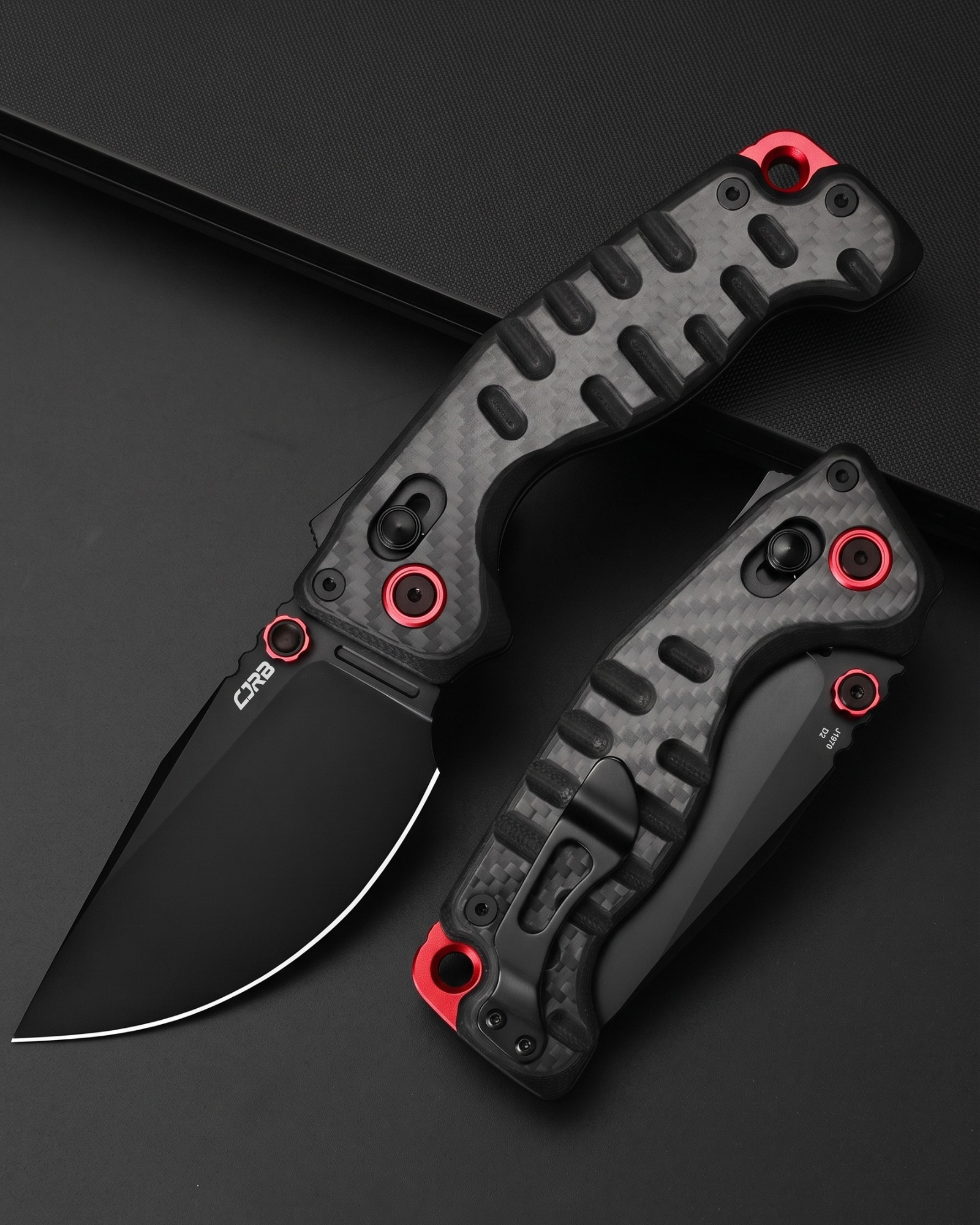
While the Crossbar lock set a standard, innovation did not stop there. CJRB introduced the Recoil Lock, a proprietary mechanism that builds upon the sliding lock concept but introduces a unique internal architecture. The Recoil Lock utilizes a sliding cage mechanism that engages the tang of the blade.
Recoil Lock V2: Perfection in Geometry
The evolution continues with the Recoil Lock V2. The V2 update addresses the subtle haptics and mechanical feedback of the system. By refining the internal geometry of the sliding components, the Recoil Lock V2 offers a smoother engagement and a more tactile "break" when releasing. The mechanism is designed to be "linear," meaning the force required to pull back the lock is consistent throughout the travel. This system eliminates the "mushy" feeling sometimes associated with spring-loaded locks, providing a crisp, mechanical snap that inspires confidence.
The Recoil Lock is particularly notable for its safety profile. Like the Crossbar and Button locks, it keeps the user's fingers entirely clear of the rotation path. The "sneaker" action of the internal slider ensures that debris is less likely to jam the mechanism compared to open-back designs, making it a robust choice for field use.

Traditional and Heavy-Duty Mechanisms
The Slip Joint: Tradition Meets Modernity
Not all folding knives require a mechanical lock. The Slip Joint is the mechanism found on classic pocket knives. It utilizes a backspring that applies tension to the cam-shaped tang of the blade. This tension holds the blade open and closed but does not mechanically lock it. While it cannot withstand heavy spine pressure, the Slip Joint is legal in almost every jurisdiction globally, making it an essential design for international travelers. Modern metallurgy has allowed for Slip Joints that have stronger "walk and talk" (the snap of the spring), bridging the gap between safety and tradition.
Back Locks and the Tri-Ad Lock
For sheer strength, the Back Lock / Lock Back remains a heavyweight champion. A rocker arm pivoted on the handle spine engages a notch on the blade tang. This mechanism is incredibly secure because the force applied to the blade is transferred directly into the solid spine of the handle. An evolution of this is the Tri‑Ad Lock, developed by Demko, which adds a stop pin between the blade tang and the lock bar. This stop pin absorbs all the shock and impact, isolating the lock mechanism itself from stress. While slower to operate than a Liner Lock, the Tri-Ad and Back Lock are the preferred choices for heavy-duty survival situations.
Ring Locks and Rotary Safety
A mention must be made of the Ring Lock (often associated with Opinel's Virobloc). This system uses a rotating metal collar that physically blocks the blade from moving. It is primitive compared to a Recoil Lock but effective in its simplicity. It highlights the diversity of engineering solutions used to solve the single problem of blade retention.
Comparative Analysis: Strength vs. Usability
To help visualize the trade-offs between these mechanisms, the following table analyzes them across three critical engineering dimensions.
| Mechanism | Lock Strength | Ease of One-Handed Use | Ambidextrous Factor | Primary Failure Mode |
|---|---|---|---|---|
| Liner Lock | Moderate | High | Low | Lock slip under torque |
| Frame Lock | High | High | Low | Lock rock / Face wear |
| Back Lock | Very High | Low | High | Debris in lock channel |
| Crossbar Lock | High | Very High | High | Omega spring breakage |
| Recoil Lock V2 | High | Very High | High | Spring fatigue (Long term) |
| Button Lock | Moderate/High | Very High | Moderate | Plunge stick / debris |
| Slip Joint | N/A (Non-Locking) | Low | High | Unintentional closure |
Expert Perspectives on Mechanism Selection
From an engineering standpoint, there is no "best" lock, only the best lock for a specific application. As renowned knifemakers often note, the geometry of the lock face is more important than the type of lock. A well-executed Liner Lock with a carburized face and proper ramp angle is superior to a poorly machined Crossbar Lock.
Experts in the field suggest that for urban EDC—where speed and convenience are paramount—Button Locks and Recoil Locks are superior. They allow for quick deployment in emergency situations or simple utility tasks. Conversely, for heavy outdoor survival tasks where the knife might be used for batoning wood (though not recommended for folders), the Frame Lock or Tri-Ad Lock offers the structural integrity required to prevent catastrophic failure.
Another emerging trend is the hybrid approach. We are seeing mechanisms like the Compression Lock (essentially a reverse liner lock) gaining traction because they offer the strength of a liner lock but the safety of a back-mounted release. The industry is moving toward mechanisms that prioritize "drop-shut" action—where the blade falls closed under its own weight when the lock is disengaged—without sacrificing the secure lockup required for safety.

Future Outlook: The Next Generation of Locking Systems
The future of knife mechanics lies in precision manufacturing and material innovation. We are already seeing the integration of magnetic locking systems in some high-end concepts, though mechanical interference remains the standard for reliability. The focus is shifting toward mechanisms that are completely modular and tool-free, allowing users to disassemble and clean their locks in the field without screwdrivers.
Furthermore, systems like the Recoil Lock V2 indicate a trend toward proprietary improvements on expired patents. Manufacturers are no longer satisfied with standard designs; they are refining the haptic feedback, acoustic signature, and long-term wear resistance of locks. We can expect to see more "super-locks" that combine the ambidextrous nature of the Crossbar lock with the solidity of a Frame Lock, likely utilizing advanced materials like ceramic ball bearings and nitrogen-based steels for internal components.
Conclusion
Choosing the right knife is as much about the lock as it is about the steel. Whether you prefer the classic reliability of a Back Lock, the fidget-friendly nature of a Button Lock, or the innovative engineering of the Recoil Lock, understanding the mechanics ensures you can trust your tool when it matters most. As engineering tolerances tighten and designs evolve, the folding knife continues to be a pinnacle of mechanical efficiency.
FAQ: Common Questions About Liner Locks
1. Is a Liner Lock strong enough for heavy-duty work?
For most standard utility tasks, yes. However, Liner Locks are generally not designed for high-impact tasks like batoning wood. For extreme heavy-duty use, a fixed blade or a heavy-duty Frame Lock or Tri-Ad Lock is recommended.
2. How do I know if my Liner Lock is engaging correctly?
A healthy Liner Lock should engage the blade tang by at least 30-50% of the liner's thickness. "Early lockup" (less than 20%) can be unsafe as it might slip, while "late lockup" (touching the opposite liner) means the lock has little room left for wear adjustment.
3. Can a Liner Lock wear out over time?
Yes. Every time the lock engages and disengages, friction removes a microscopic amount of material. Over many years, the lock bar may travel further across the tang. However, high-quality knives use hardened steel inserts or heat-treated faces to maximize longevity.
4. Why is my Liner Lock sticky?
"Lock stick" occurs when friction prevents the lock bar from releasing smoothly. This can be caused by oil, debris, or dissimilar metals (titanium sticking to steel). Cleaning the lock face with alcohol and applying a graphite lubricant (like pencil lead) often solves the issue.
5. Are Liner Locks safe for left-handed users?
Standard Liner Locks are biased for right-handed use. While a left-handed person can operate them, it forces the thumb into an awkward position across the blade path to close it. Left-handed users are better served by ambidextrous locks like the Crossbar or Button Lock.


Leave a comment
All comments are moderated before being published.
This site is protected by hCaptcha and the hCaptcha Privacy Policy and Terms of Service apply.