

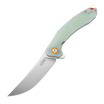
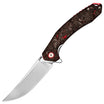
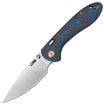
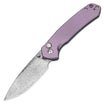

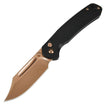
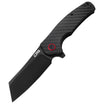
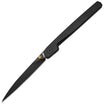
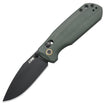
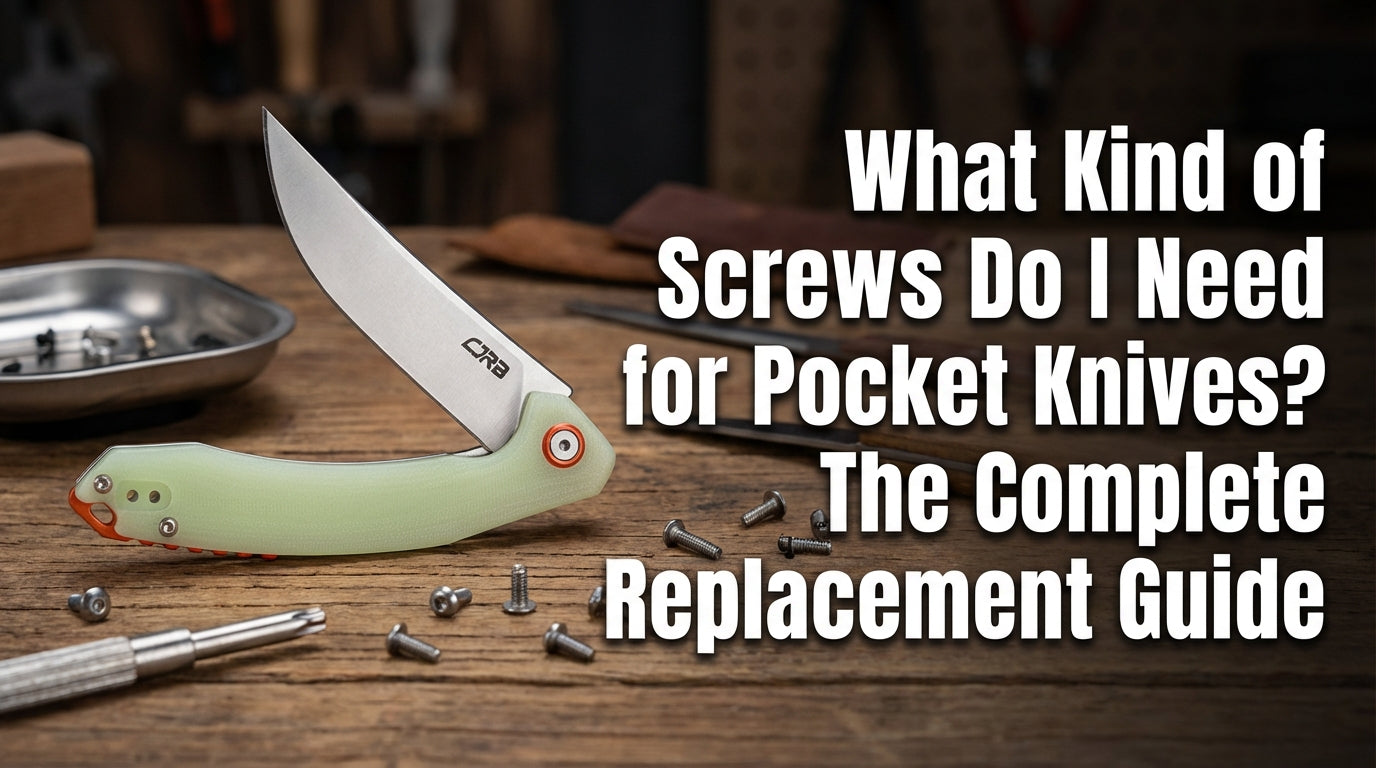
There is a specific kind of heartbreak known only to knife enthusiasts. It happens when you reach for your trusty everyday carry (EDC) blade, pull it from your pocket, and hear a faint, metallic click that shouldn't be there. Or worse, you reach down and feel the handle scale shifting loosely in your grip. You look closer, and there it is—or rather, there it isn't. A screw is missing. Perhaps it's the pivot screw, the critical component that dictates the smooth action of your blade. Maybe it's a clip screw, leaving your pocket clip wobbling precariously. In that moment, the question isn't just about repair; it's an urgent inquiry into the microscopic engineering of your tool: what kind of screws do i need for pocket knives?
Finding the correct replacement hardware is often more complicated than it seems. Unlike the standardized world of home construction where a few screw types rule them all, the knife industry is a patchwork of metric and imperial measurements, proprietary head designs, and varying material grades. Are you looking for stainless steel, titanium, or lightweight aluminum screws? Do you need a T6 or a T8 drive? Getting it wrong can mean stripped threads, ruined handles, or a pivot that never stays tight.
This comprehensive guide is your roadmap to navigating the complex world of knife hardware. We will dissect the anatomy of a pocket knife, decode the mysterious numbering systems of Torx drivers, and explore the material science behind the screws that hold your EDC life together. Whether you are looking to replace a lost pocket knife screw or upgrade your stock hardware to custom anodized titanium, this guide covers everything you need to know to maintain the structural integrity of your favorite blade.
Understanding Pocket Knife Anatomy and Hardware Types
To answer the question "what kind of screws do i need for pocket knives," we first need to understand the different roles screws play in the knife's construction. A folder is not a monolith; it is a dynamic assembly of parts under tension and friction. The screws are the glue that holds this assembly together, but not all screws are created equal. Each location on the knife demands a different size, length, and strength profile.
The Pivot Assembly: The Heart of Action
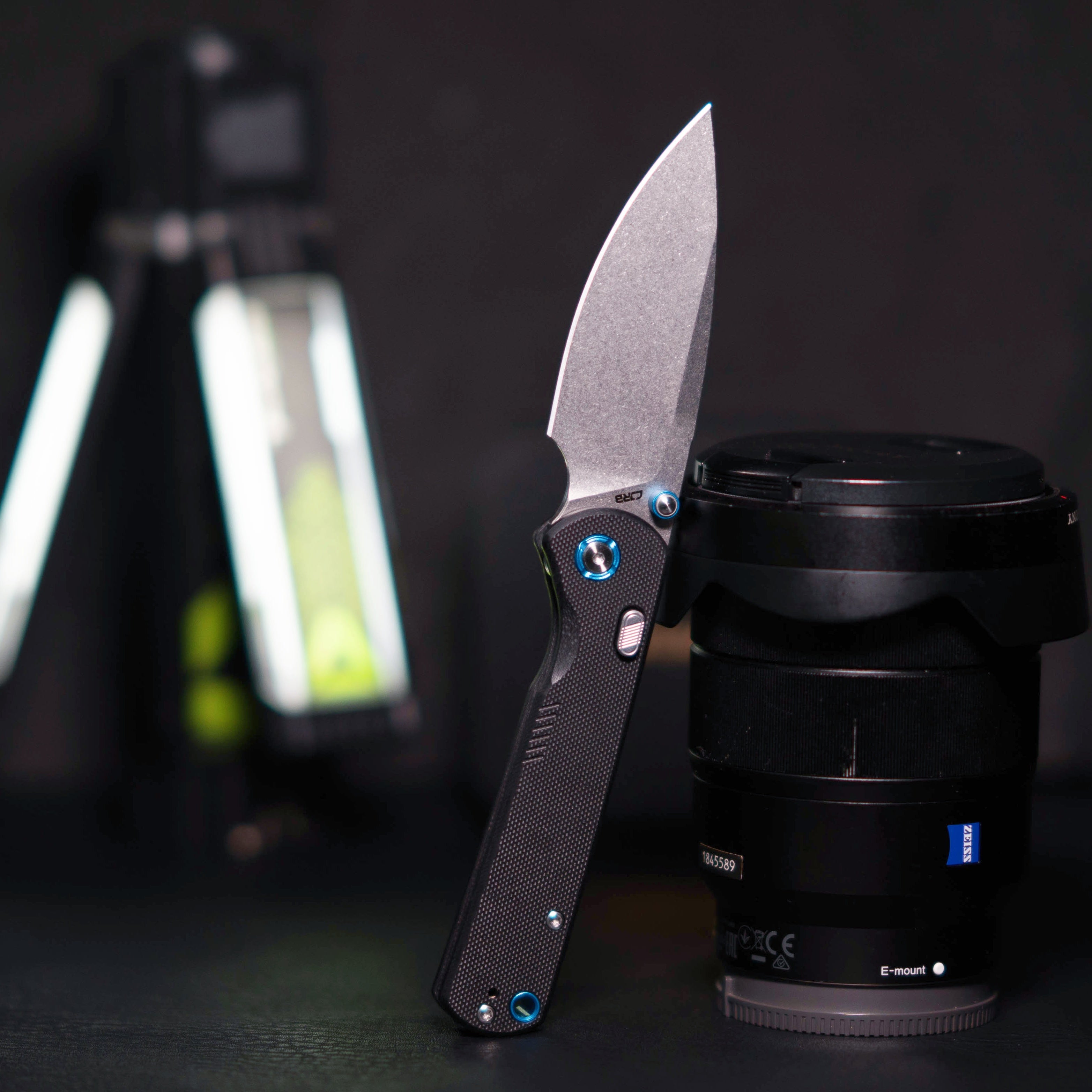
The most critical screw on any folding knife is the pivot screw. This is usually the largest fastener on the knife, often featuring a decorative head or a custom pivot collar. Its job is twofold: it must hold the blade securely between the liners or scales, and it must allow for the rotational movement of the blade deployment. This requires a precise balance of tension.
If a pivot screw is too tight, the knife won't open. If it's too loose, you get "blade play"—side-to-side wobbling that can make the lock fail or cause the blade to rub against the liners. Because the pivot endures the most dynamic stress (opening and closing thousands of times), it is the screw most prone to backing out over time. Pivot screws typically have a larger thread diameter and a larger head size (often T8 or T10) compared to the rest of the body screws to handle this torque.
 Body and Handle Screws: Structure and Stability
Holding the handle scales, liners, and backspacers together are the knife handle screws (also called body screws). These are generally smaller than the pivot screw and are distributed along the spine or belly of the handle. Their primary function is structural rigidity. They ensure the frame of the knife remains stiff and that the scales don't separate from the liners.
On open-back construction knives, these screws thread into "standoffs"—small hourglass-shaped pillars that keep the scales apart. On closed-back knives, they might thread into a backspacer made of G10, steel, or aluminum. While they don't face the rotational torque of a pivot, they are subject to lateral stress when you grip the knife tightly. Losing one knife screw from the body might not make the knife fall apart immediately, but it compromises the overall integrity and can lead to warping of the liners over time.
Clip Screws: Securing Your Carry
The unsung heroes of the knife world are the clip screws. These are almost always the smallest screws on the entire knife, yet they face the most erratic forces. Every time you slide your knife over the thick hem of your jeans, the pocket clip flexes, pulling directly against the threads of these tiny screws. It is very common for a clip screw to work itself loose due to this constant vibration and pulling.
Because they are so small (often T6), they are also the most difficult to handle and the easiest to strip. We will discuss the specific challenges of pocket clip hardware in detail later, as this is the most frequent replacement request we see.
Decoding Torx Sizes: T6, T8, and T10 Screws Explained
If you look closely at the head of a modern pocket knife screw, you likely won't see a Phillips cross or a flathead slot. You will see a six-pointed star. This is the Torx drive system, and it is the industry standard for high-quality cutlery. Understanding Torx sizes is the first step in buying replacements.
Why Knife Makers Love Torx
Knife makers shifted away from Phillips and flathead screws decades ago for a simple reason: cam-out resistance. A Phillips driver is designed to slip out of the screw head if too much torque is applied, to prevent over-tightening. In knife making, however, we often need precise, high-torque tightness in very small fasteners. Torx allows for higher torque transfer without the driver slipping out, which is essential when dialing in a pivot or securing a scale.
However, this grip comes with a risk. Because the driver doesn't slip, if you apply too much force, or use a cheap, soft driver bit, you can strip the splines of the screw head or the tool itself. This is why knowing your sizes—and using quality tools—is paramount.
The Ubiquitous T6 Screws: Small but Critical
The t6 screws are the bane of many knife owners' existence, simply because they are so small. You will almost universally find T6 screws used for pocket clips and often for body/handle screws. The "6" refers to the size of the Torx drive. The visual difference between a T6 and a T8 is significant, but to the untrained eye, a stripped T6 can look like a T5.
The problem with t6 screws is that the driving surface area is tiny. It takes very little force to deform the star pattern if your driver isn't perfectly perpendicular to the screw. When replacing clip screws, you are almost certainly looking for T6 hardware, though some heavy-duty knives upgrade these to T8.
Heavier Duty T8 and T10 Screws
Stepping up in size, t8 screws are the gold standard for body screws on larger knives and pivot screws on smaller to medium knives. The T8 head offers much more surface area, making it far more robust and resistant to stripping. Many premium knife makers are slowly transitioning all body hardware to T8 to improve durability.
For the pivot of a large, hard-use folder, you might encounter t10 screws. These are substantial fasteners capable of withstanding significant torque. If you are adjusting a large chopper or a heavy-duty tactical folder, you'll likely need a T10 bit for the pivot. A good rule of thumb for identifying your needs: if it's a clip screw, it's likely T6; if it's a pivot, it's likely T8 or T10.
Material Matters: Steel, Titanium, and Aluminum Screws
Once you know the size, you must choose the material. This affects strength, weight, and aesthetics. While stock knives usually come with steel, the aftermarket world is full of exotic options.
The Standard: Stainless Steel
Most factory knives come with stainless steel hardware. This is chosen for its hardness and cost-effectiveness. Steel threads are strong and less likely to gall (seize up) than titanium. However, standard steel screws can rust if they are of a lower grade (like 400 series stainless) and exposed to sweat or saltwater. Black-coated steel screws are common to provide extra corrosion resistance and a tactical look.
The Premium Choice: Titanium
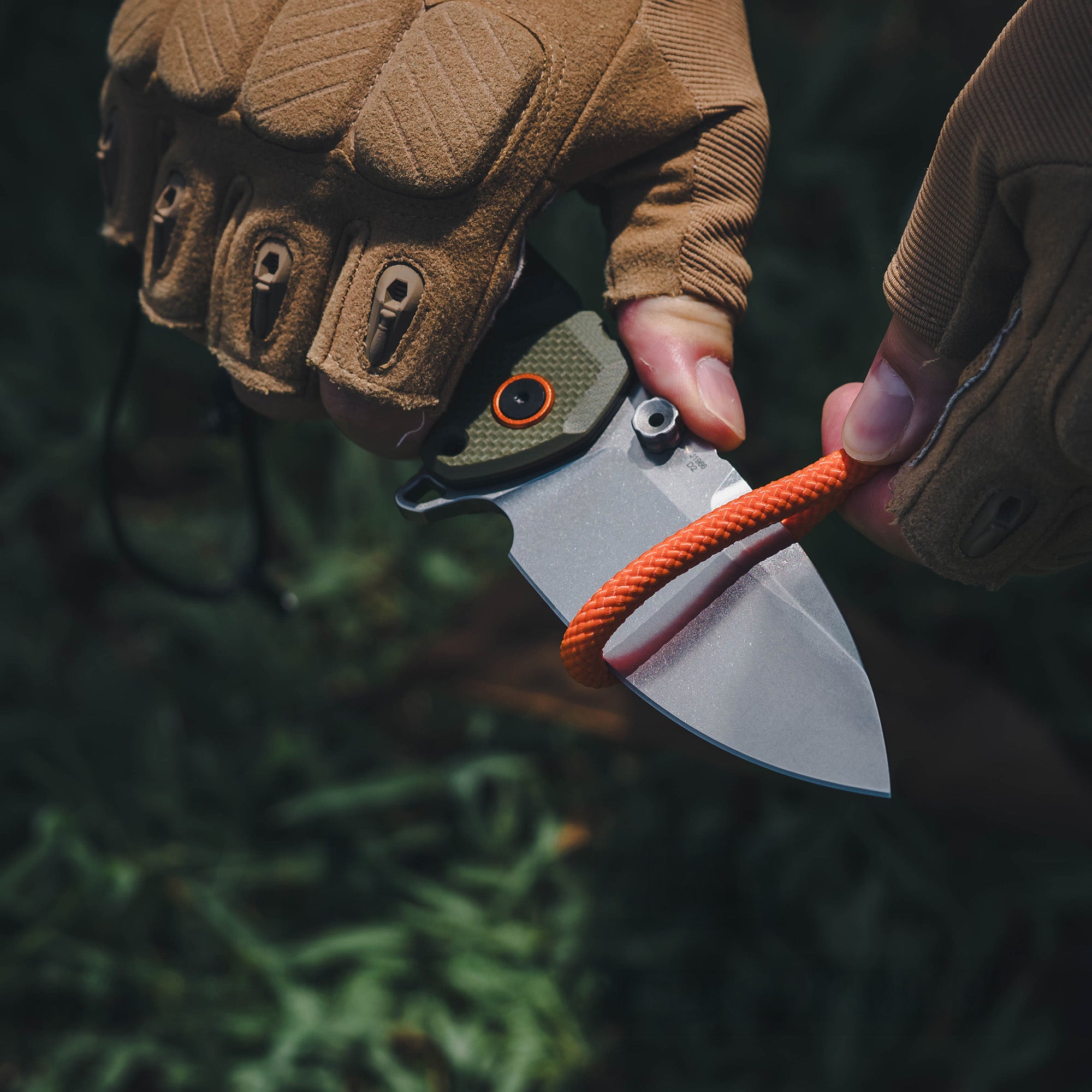
Titanium is the darling of the knife modification community. It is roughly 45% lighter than steel, non-magnetic, and completely rust-proof. But the real draw is anodization. Titanium can be electrochemically treated to turn a spectrum of colors—from bronze to purple to blue—without using any paint. If you see a customized knife with vibrant, metallic-looking hardware, it is almost certainly Titanium.
Warning: Titanium is softer than steel. While it has high tensile strength, the heads of titanium screws can strip easier than steel if you are careless. Always use high-quality bits when installing titanium hardware.
Why Aluminum Screws Are a Unique Case
We often hear customers asking for aluminum screws to match their aluminum handle scales. It is important to make a distinction here. While aluminum is an excellent material for handles (scales), backspacers, and thumb studs due to its extreme lightness and ability to take vibrant anodized colors (including deep reds and blacks that Ti can't easily match), aluminum screws themselves are relatively rare in high-stress points like pivots.
The reason is material softness. Aluminum is significantly softer than steel or titanium. Using an aluminum screw for a pivot would likely result in the threads stripping under the tension required to keep the blade safe. However, you will find aluminum screws used in very low-stress applications or, more commonly, people confuse "aluminum screws" with "screws for aluminum handles." If you are looking to color-match your hardware to a specific theme, Titanium is usually the safer structural choice that still offers color options, but if you do source true aluminum screws for non-structural body ornamentation, be incredibly gentle with the torque.
 Sizing Guide: Thread Pitch and Length
Knowing you need a T6 screw isn't enough; you also need to know the thread pitch. This is where the "Metric vs. Imperial" divide frustrates many.
Metric vs. Imperial Threads
Knives made in the USA (like Benchmade or Spyderco) often use Imperial (Standard) sizes. Common sizes include 2-56 (for clips and body) and 4-40 (for pivots). "2-56" means a #2 wire size diameter with 56 threads per inch.
Knives made in Asia (like CJRB, Artisan Cutlery, WE Knife) almost exclusively use Metric threads. The most common sizes are M2, M2.5, and M3. For example, a typical pocket knife screw for a clip on a metric knife is often an M2.5 x 4mm. If you try to force a 2-56 screw into an M2.5 hole, you will cross-thread the hole and ruin the liner. If you are unsure of your knife's origin, checking the manufacturer's specs is mandatory before buying generic screws.
Measuring Screw Length Correctly
Length is the third variable. A screw that is too short won't grab enough threads to stay secure. A screw that is too long is even worse—it can protrude into the blade channel. If a clip screw is too long, it might scrape against the blade when you close it, ruining your edge or scratching the blade finish. When measuring screw length, measure from the bottom of the head (the flat part that sits flush) to the tip of the threads.
Upgrading Your Pocket Clip and Clip Screws
The pocket clip is the part of the knife that connects it to your daily life. It's also the part most people want to customize. Whether you broke your original clip or just want a deep-carry option, upgrading is a great way to personalize your carry.
Types of Clips and Mounting Styles
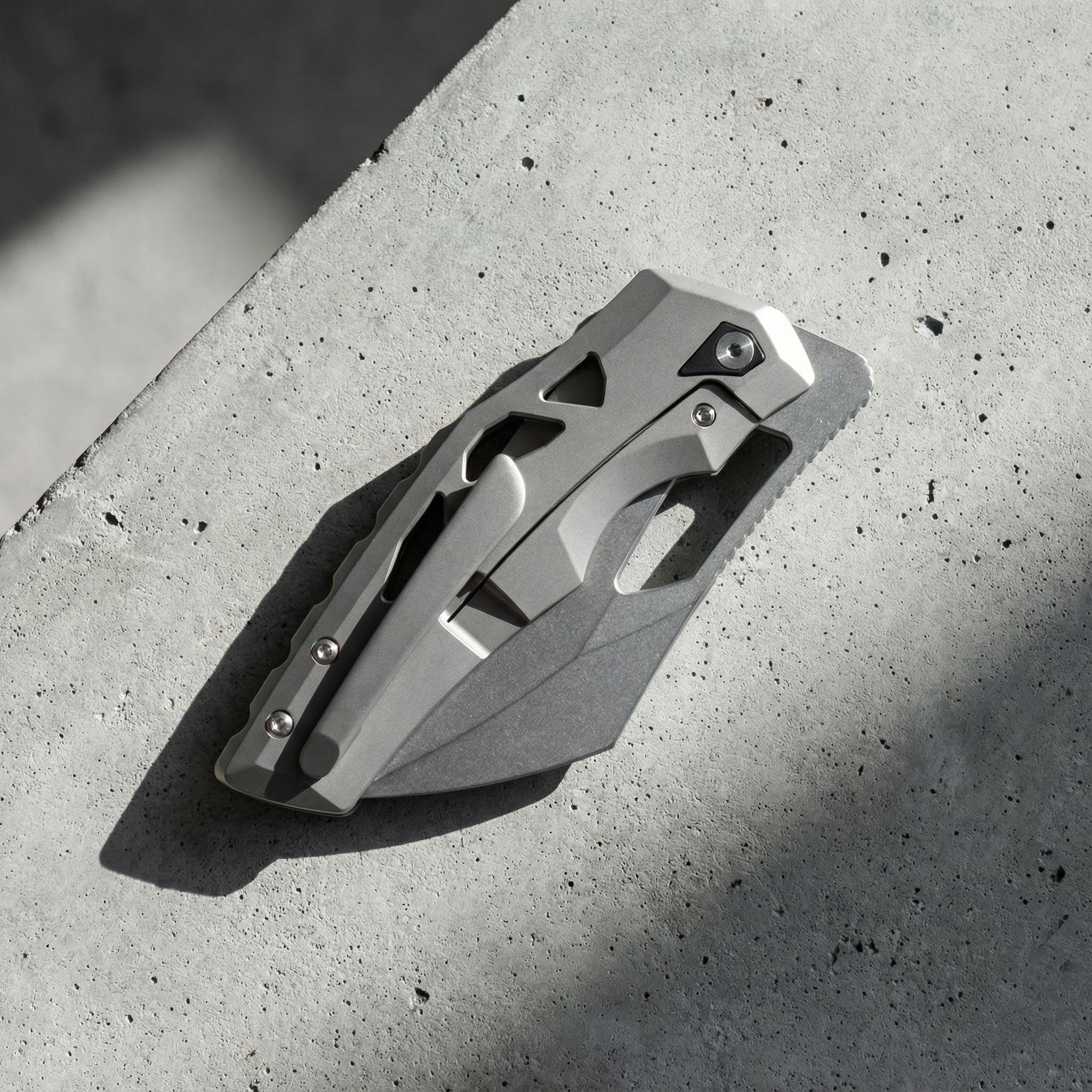
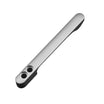
Clips generally come in two materials: stainless steel (spring steel) and milled titanium. Spring clips are thin and flexible. Milled clips are machined from a solid block of titanium; they are stiffer and look more premium. When you buy a replacement Clip, you must ensure the hole pattern matches your knife.
Matching the Right Clip Screw to the Insert
Most modern knives have nested liners or recessed screw holes so the screws sit flush. This prevents the screw heads from snagging on your pocket. This means you generally need "flat head" or "countersunk" clip screws. Using a "button head" or "pan head" screw here would leave a bump that tears up your pocket fabric.
Installation Tips for a Secure Fit
If you are upgrading to a premium option like the Titanium Pocket Clip, note that the thickness of the clip might be different from your stock steel clip. This means you might need slightly longer screws. Often, premium clips come with their own hardware. When installing, always press down firmly on the driver before turning to ensure the T6 bit engages fully. Tighten them sequentially—turn one a few times, then the other, ensuring the clip settles evenly.
The Pivot Screw: Adjustment and Maintenance
Adjusting your pivot screw is an art form. It's about finding the "sweet spot" where the blade drops shut freely but has zero side-to-side play.
Dialing in the Action
Tighten the pivot fully (finger tight), then back it off by 1/8th of a turn at a time. Check the action. Repeat until smooth. If you find the screw keeps loosening after a few days of flipping, don't just crank it tighter—that will ruin the action. You need a threadlocker.
Threadlocker: Blue vs. Red Loctite
Never use Red Loctite (high strength) on a pocket knife unless you never plan to take it apart again. Red requires heat to break the bond. Always use Blue Loctite (medium strength) or Purple (low strength). Apply a tiny dot to the threads of the screw—not the female side of the pivot. This gum-like substance fills the gaps in the threads and cures to a hard plastic, preventing the screw from vibrating loose while still allowing you to break the seal with hand tools.
 Troubleshooting Common Knife Screw Issues
Even with the best care, disasters happen. Here is how to handle the worst-case scenarios.
Stripped Heads and How to Remove Them
If you strip the head of a T6 knife screw, don't panic. First, try the "rubber band method": place a wide rubber band over the stripped head, insert your driver firmly, and turn. The rubber fills the gaps and adds grip. If that fails, you may need to use a Dremel to cut a slot in the head and use a flathead screwdriver, or use a screw extractor bit. To avoid this, always replace screws that show even minor signs of wear.
Lost Screws: Sourcing Replacements
If you lose a screw, check the manufacturer's website first. Many offer "hardware kits" specifically for their models. If you are looking for generic replacements, you need to know the specs. For CJRB and Artisan Cutlery knives, the hardware is generally metric. Searching for "M2.5 Torx flat head" on industrial supply sites is a good start if you can't find the specific branded kit.
Cross-threading Prevention
Cross-threading happens when you force a screw into the hole at an angle. The steel screw cuts new threads into the softer liner or backspacer, ruining the original threading. To prevent this, always turn the screw counter-clockwise (left) first until you feel a distinct "click." That click is the threads aligning. Then, and only then, turn clockwise to tighten.
Tools of the Trade: Drivers and Maintenance Kits
You cannot effectively maintain a knife with a $5 eyeglass repair kit. Those bits are made of soft pot metal and will twist or shatter, likely damaging your t8 screws in the process.
Quality Bits vs. Cheap Drivers
Invest in a set of hardened steel bits from reputable brands like Wiha or Wera. The tolerances on these bits are much tighter, meaning they fit the star pattern of the screw head perfectly with no wiggle room. The tighter the fit, the less likely you are to strip the screw. A good T6, T8, and T10 bit set will last you a lifetime.
Must-Have Maintenance Tools
Beyond drivers, a few other tools are essential. A set of digital calipers is invaluable for measuring the length and diameter of mystery screws. A pivot styling tool (if your knife has custom pivot hardware) and a bottle of high-quality knife oil (like KPL) complete the kit. Keeping your hardware clean and lubricated prevents rust, which can seize screws in place.
Customization: Anodizing and Coloring
Finally, let's talk about aesthetics. Hardware swaps are the easiest way to make a production knife feel like a custom piece.
The Aesthetic Appeal of Colored Hardware
Replacing satin steel screws with blue anodized titanium screws changes the entire character of a knife. It can match your outfit, your car, or just your favorite color. While aluminum screws can also be anodized, the market is dominated by titanium due to its strength.
DIY Anodizing vs. Buying Pre-colored
Titanium anodizing can be done at home with 9V batteries and a solution of baking soda, but it requires practice to get consistent colors. For most users, buying pre-anodized hardware kits is safer and cheaper. Ensure you are buying kits specifically designed for your knife model, as screw lengths vary wildly even within the same brand.
Conclusion
The question "what kind of screws do i need for pocket knives" has a multi-layered answer. It depends on the knife's origin (Metric vs. Imperial), the specific location on the knife (Pivot T8/T10 vs. Clip T6), and your performance goals (Steel durability vs. Titanium style vs. aluminum screws lightness). By understanding the anatomy of your tool and investing in the right maintenance gear, you can ensure your EDC stays tight, safe, and ready for action. Don't let a loose clip or a missing screw sideline your favorite blade—measure twice, buy quality replacements, and maintain with care.
FAQ: Common Questions About Knife Screws
1. Can I use aluminum screws for my knife pivot?
It is generally not recommended. Aluminum is much softer than steel or titanium. The high tension and friction of a pivot assembly can easily strip the threads or shear the head of aluminum screws. Stick to steel or titanium for pivots and use aluminum only for decorative scale screws or non-structural standoffs.
2. Why do my pocket clip screws keep falling out?
Pocket clips are subjected to constant vibration and lateral pushing. This motion can slowly vibrate the screws loose. The solution is to use a small dab of Blue Loctite (threadlocker) on the clip screws and let it cure for 24 hours. Do not overtighten them, as T6 heads strip easily.
3. How do I know if my knife uses Metric or Imperial screws?
As a general rule, knives manufactured in China (like CJRB, Artisan, Civivi) use Metric screws (M2.5, M3). Knives made in the USA (Benchmade, Spyderco, Kershaw USA) often use Imperial sizes (2-56, 4-40). Always check the manufacturer's specs or use a thread pitch gauge to be sure.
4. Are T6 and T8 screws interchangeable?
No. T6 and T8 refer to the size of the "star" hole in the screw head. A T8 driver will not fit into a T6 screw, and a T6 driver will spin loosely inside a T8 screw, likely stripping it. You must use the exact driver size corresponding to the screw head.
5. Where can I find replacement screws for my CJRB knife?
For specific models, it is best to check the manufacturer's support or look for compatible aftermarket kits. For clips specifically, you can view the Clip collection or upgrade to a Titanium Pocket Clip which often includes the necessary hardware for installation.



1 comment
Michael A Leady
Great article, thanks for having a common sense educational guide for the common guy.
Leave a comment
All comments are moderated before being published.
This site is protected by hCaptcha and the hCaptcha Privacy Policy and Terms of Service apply.