


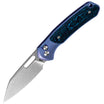
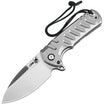
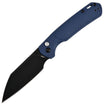
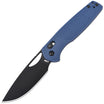
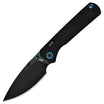
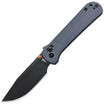
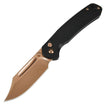
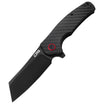
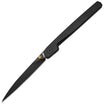
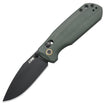
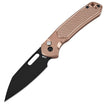
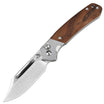
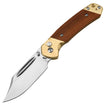
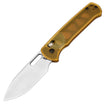
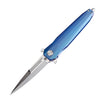

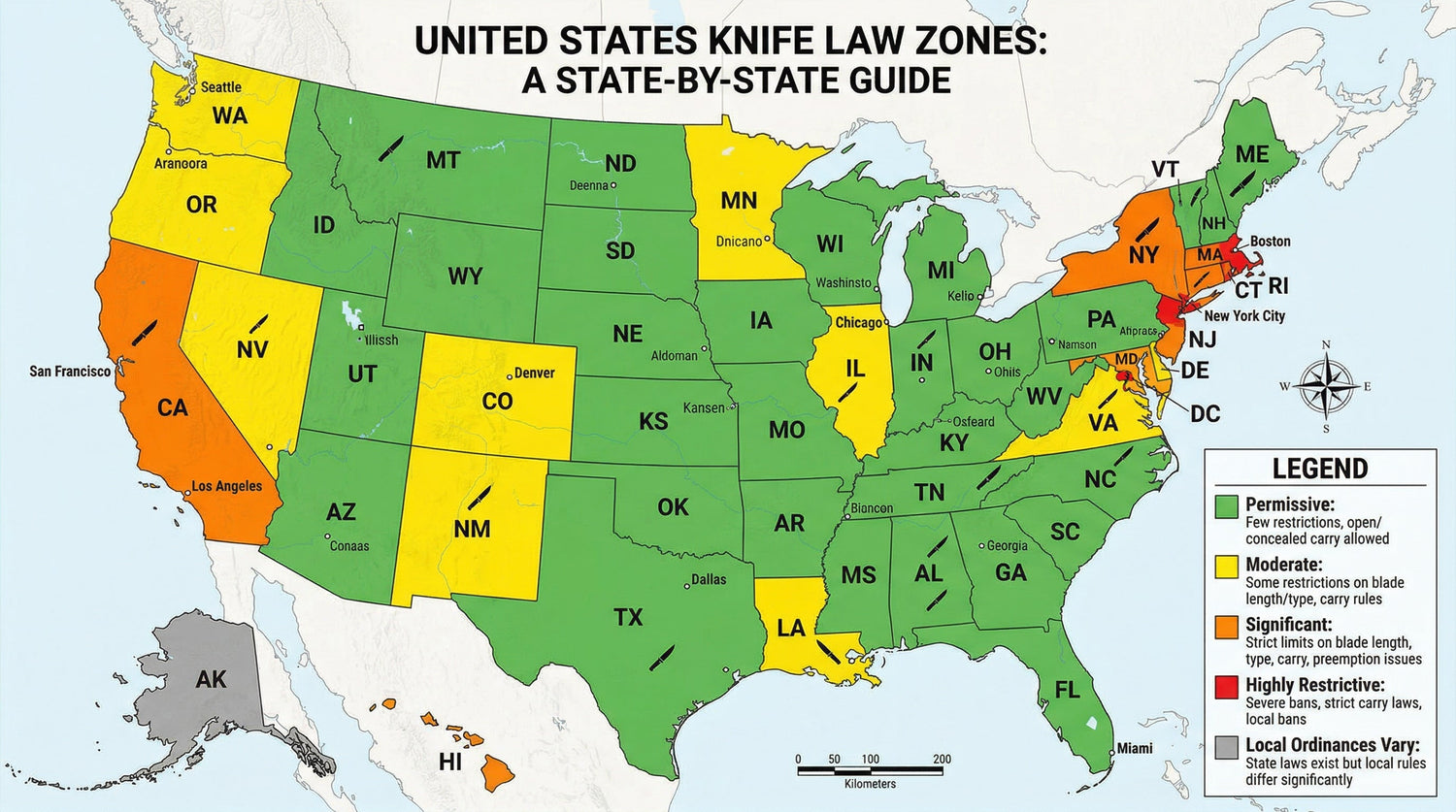
Are OTF knives legal? It depends on the state, the blade length, how the knife opens, and whether you are carrying it openly, concealed, or while traveling. Use this state-by-state OTF knife law guide as a starting point before buying, carrying, or packing an out-the-front knife.
Legal note: Knife laws can change and may vary by city, county, intent, age, carry method, and restricted locations. This guide is for general education only, not legal advice. Always confirm current state and local law before carrying or traveling with an OTF knife.
| Common question | What to check first |
|---|---|
| Are OTF knives legal in my state? | Check automatic knife rules, blade length limits, and concealed-carry restrictions. |
| Are OTF knives legal in California? | California searches are common because automatic knife rules can be strict and length-sensitive. |
| Are OTF knives legal in Texas or Florida? | State law may be more permissive, but restricted places and local rules still matter. |
| Can I travel with an OTF knife? | Check TSA rules, airline policy, destination laws, and whether the knife must be packed in checked luggage. |
I. Introduction: Know the Law Before You Carry
I get this question in my inbox almost every single week. You buy a sleek new pocket knife, clip it to your jeans, and suddenly a wave of anxiety hits. Are you actually allowed to carry this thing out in public? Just last Tuesday, a reader emailed me specifically asking, "are otf knives legal in michigan?" This simple question highlights a massive point of confusion for everyday carry (EDC) enthusiasts across the country.
In my years of collecting, carrying, and testing pocket knives, I have realized that buying the knife is the easy part. Staying out of legal trouble is where things get tricky. The United States does not have a single, unified rulebook for civilian knife carry. Instead, we have a patchwork of 50 different state laws, thousands of local ordinances, and federal regulations that often contradict each other.

This guide serves as a high-level overview of knife and Out-The-Front (OTF) regulations across the country. My goal is to help you understand your local environment so you can choose and carry your gear responsibly. Whether you use a dependable CJRB folder for opening warehouse boxes or rely on a sturdy fixed blade for weekend camping, knowing the boundaries is your responsibility.
Disclaimer: I am an EDC enthusiast and content creator, not a lawyer. The information presented here is for educational purposes only. Laws change rapidly, and local city ordinances can completely override state permissions. Always verify current regulations with official state statutes or legal counsel before carrying any blade.
II. Knife Law Basics Every EDC Owner Should Understand
Before looking at specific states, we need to clarify some confusing legal jargon. Reading state statutes can feel like deciphering an ancient language. In my experience, misunderstanding these basic terms is how well-meaning citizens end up facing fines or confiscation.
Carry vs. Own vs. Transport
Just because you can buy something online does not mean you can walk down the street with it. "Owning" means keeping it on your private property. "Transporting" usually requires the blade to be locked away, out of reach, and often in a separate compartment from the driver (like a car trunk). "Carrying" means having it on your person, readily accessible for use. The law on carrying a knife is always much stricter than the law on owning one.
Open Carry vs. Concealed Carry
This is where many people mess up. Open carry means the weapon is clearly visible to ordinary observation. If you wear a fixed blade on your belt outside your shirt, that is open carry. Concealed carry means the item is hidden from view.
Here is the catch: in many jurisdictions, simply having a pocket clip visible on the outside of your jeans still counts as a "concealed" weapon because the actual blade is hidden inside the pocket. You have to read exactly how your state defines concealment.
Restricted and Sensitive Locations
Even in the most permissive, knife-friendly states, certain areas are universally off-limits. These typically include K-12 schools, courthouses, federal government buildings, airport secure zones, and often public transit hubs. Carrying a perfectly legal tool into a restricted zone turns a minor mistake into a federal issue.
III. What Makes OTF and Automatic Knives Legally Different
If you are new to the hobby, you might wonder why an OTF (Out-The-Front) knife is treated differently than a standard flipper. Mechanically, an OTF knife deploys its blade straight forward out of the top of the handle with the push of a button or slide. Side-opening automatics swing out from the side, similar to a traditional folder, but are entirely spring-driven.
Historically, these "switchblades" were targeted by the Federal Switchblade Act of 1958. Driven by Hollywood movies depicting street gangs using automatic knives, lawmakers panicked. This federal law primarily restricted the interstate commerce of automatic knives, but it caused a domino effect where dozens of states outright banned civilian carry.
- Legal in almost all 50 states
- Viewed as standard utility tools
- Fewer blade length restrictions
- Highly regulated or banned in some areas
- Often classified as "weapons" rather than tools
- Strict concealed carry limitations
Today, advocacy groups have successfully repealed many of these outdated bans, but the stigma remains. Many states still have "intent-based" clauses, meaning if an officer believes you are carrying an OTF for self-defense rather than utility, they might classify it as a "dangerous or deadly weapon."
IV. Regional Legal Climate: From Knife-Friendly to Strict
To give you a quick sense of the landscape, I group states into three broad "climate" categories. Let's face it, your experience carrying a pocket tool in rural Texas is vastly different from walking through downtown Manhattan.
The Permissive States
In these areas, knife laws are heavily relaxed. States like Texas, Arizona, and Utah generally allow citizens to own and carry almost any type of blade, including OTFs and automatics, openly or concealed. The restrictions are minimal, usually only applying to restricted buildings or individuals with criminal records.
The Conditional States
This is where most of the country sits. The state might allow automatic knives, but with heavy conditions. They might mandate that you can only open-carry them, or they strictly limit the blade length to under 2 or 3 inches. Permits might be required to conceal them.
The Restrictive States
A handful of states still hold onto strict 1950s-era bans. In places like Hawaii, Washington, and certain parts of the Northeast, OTF knives and switchblades are completely illegal for civilians to manufacture, sell, or carry. Standard manual folders are your only safe bet here.
| State | OTF Legal | Concealed Carry Allowed | Preemption | Friendliness Score |
|---|---|---|---|---|
| Alabama | Yes | Partial | No | 7 / 10 |
| Alaska | Yes | Yes | Yes | 10 / 10 |
| Arizona | Yes | Yes | Yes | 10 / 10 |
| Arkansas | Yes | Yes | Yes | 10 / 10 |
| California | Partial (< 2") | No | No | 3 / 10 |
| Colorado | Yes | Partial | Yes | 7 / 10 |
| Connecticut | No | No | No | 2 / 10 |
| Delaware | No | No | No | 2 / 10 |
| Florida | Yes | Partial (Permit) | Yes | 8 / 10 |
| Georgia | Yes | Yes | Yes | 10 / 10 |
| Hawaii | No | No | No | 1 / 10 |
| Idaho | Yes | Yes | Yes | 9 / 10 |
| Illinois | Yes (with FOID) | Partial | No | 5 / 10 |
| Indiana | Yes | Yes | Yes | 9 / 10 |
| Iowa | Yes | Yes | Yes | 9 / 10 |
| Kansas | Yes | Yes | Yes | 10 / 10 |
| Kentucky | Yes | Partial | No | 7 / 10 |
| Louisiana | Yes | Yes | No | 8 / 10 |
| Maine | Yes | Partial | No | 7 / 10 |
| Maryland | Yes | No | No | 4 / 10 |
| Massachusetts | No | No | No | 2 / 10 |
| Michigan | Yes | Partial | Yes | 8 / 10 |
| Minnesota | No | Partial | No | 3 / 10 |
| Mississippi | Yes | Partial | No | 7 / 10 |
| Missouri | Yes | Partial | No | 7 / 10 |
| Montana | Yes | Yes | Yes | 10 / 10 |
| Nebraska | Yes | Partial | No | 6 / 10 |
| Nevada | Yes | Partial | No | 6 / 10 |
| New Hampshire | Yes | Yes | Yes | 10 / 10 |
| New Jersey | No | No | No | 1 / 10 |
| New Mexico | No | No | No | 2 / 10 |
| New York | No | No | No | 1 / 10 |
| North Carolina | Yes | No | No | 5 / 10 |
| North Dakota | Yes | Partial | No | 6 / 10 |
| Ohio | Yes | Yes | Yes | 10 / 10 |
| Oklahoma | Yes | Yes | Yes | 10 / 10 |
| Oregon | Yes | No | No | 5 / 10 |
| Pennsylvania | Yes | Partial | No | 6 / 10 |
| Rhode Island | No | No | No | 2 / 10 |
| South Carolina | Yes | Partial | No | 7 / 10 |
| South Dakota | Yes | Yes | Yes | 10 / 10 |
| Tennessee | Yes | Yes | Yes | 10 / 10 |
| Texas | Yes | Yes | Yes | 10 / 10 |
| Utah | Yes | Yes | Yes | 10 / 10 |
| Vermont | Partial | Yes | No | 6 / 10 |
| Virginia | Yes | No | No | 4 / 10 |
| Washington | No | No | No | 2 / 10 |
| West Virginia | Yes | Partial | Yes | 8 / 10 |
| Wisconsin | Yes | Yes | Yes | 10 / 10 |
| Wyoming | Yes | Yes | Yes | 10 / 10 |
This snapshot provides a quick look at how different regions handle pocket tools. Keep in mind, this is a highly condensed summary. I highly recommend researching your specific local city codes, as cities like Philadelphia or Los Angeles have strict rules that override state leniency.
A. Western & Mountain States
The West is a massive mix of total freedom and heavy restrictions. Mountain states like Idaho, Montana, and Wyoming are incredibly permissive. You can carry almost anything, including large OTFs.
But what about the coast? Are automatic knives legal in california? Surprisingly, yes, but the restrictions are incredibly tight. Under state law, you can legally own and carry an automatic knife, but if you want a california legal otf knife, the blade must be strictly under 2 inches in length. Anything larger is a hard "no" for public carry. Because of this, many manufacturers make specific "stubby" versions of their popular models just for West Coast residents.
B. South & Southwest
Generally, the South is very friendly to EDC enthusiasts. Texas repealed almost all of its restrictive blade laws a few years ago. Florida is quite open, though a concealed carry permit gives you much more freedom regarding automatics.
However, moving slightly north, people frequently ask me, are otf knives legal in virginia? Virginia law is actually quite tricky. While it is legal to own an OTF or switchblade and keep it in your home, it is generally illegal to carry one concealed in public. Even carrying one openly can draw unwanted attention and potential legal scrutiny depending on the county.
C. Midwest
The Midwest has seen massive reforms over the last decade. Ohio recently overhauled its laws to remove the confusing "deadly weapon" definitions for standard pocket knives.
VI. Are OTF Knives Legal In Michigan? A Closer Look
Let's circle back to the exact question that started this guide: are otf knives legal in michigan? I want to give this its own focus because the legal history here is fascinating and serves as a great example of changing legislation.
For decades, Michigan had extremely strict bans on switchblades and automatics. If you lived in Detroit or Grand Rapids ten years ago, an OTF was off-limits. However, in 2017, Michigan passed a major reform bill that officially repealed the ban on automatic knives.
So, yes, OTF knives are currently legal to own and carry in Michigan. You can carry them concealed, provided they do not have a double-edged blade. In Michigan, double-edged non-folding instruments (like dirks and daggers) carry heavy restrictions for concealed carry. If your OTF is single-edged, you are generally in the clear under state law. But remember, always check if your specific municipality has lingering ordinances!
D. Northeast & Mid-Atlantic
This region requires extreme caution. States like New York, New Jersey, and Massachusetts have notoriously aggressive weapons laws. In New York, for example, switchblades and gravity knives have a heavily contested legal history. While gravity knife bans were struck down in NY, OTF automatics remain strictly prohibited for civilian carry. If you live here, a standard manual CJRB flipper is absolutely your smartest and safest choice.
E. Pacific, Alaska & Hawaii
Alaska matches its wild terrain with wild freedom—almost all blades are legal for adults. Hawaii, on the completely opposite end of the spectrum, strictly bans the manufacture, sale, and carry of switchblades and butterfly knives. Washington state generally prohibits the concealed carry of dangerous weapons and heavily restricts automatics for civilians.
| Region | General Stance | OTF / Auto Notes |
|---|---|---|
| Mountain West | Highly Permissive | Mostly legal, few restrictions |
| West Coast (CA) | Conditional | Legal only if blade is under 2 inches |
| Midwest (MI/OH) | Permissive | Legal to carry (Watch for double-edges) |
| Northeast | Highly Restrictive | Mostly banned for civilians |
VII. Common Mistakes Knife Owners Make (and How to Avoid Them)
I have seen good people end up with confiscated gear simply because they did not understand the nuances of the legal system. Ignorance is not a valid defense in court. Here are the most common traps to avoid.
- Assuming online availability equals local legality: Online retailers will happily ship a tactical OTF to your door. It is entirely up to you to know if opening the box and putting it in your pocket is a crime in your zip code.
- Misunderstanding concealment: Letting a pocket clip show does not legally count as "open carry" in many states. If the blade is hidden, the law usually considers it concealed.
- Ignoring school zones: You might be in the most knife-friendly state on earth, but stepping onto a school campus or federal property with a blade will instantly trigger federal/state zero-tolerance policies.
The simplest best practice? Know your exact blade length. Use a ruler and measure from the tip of the blade to the top of the handle scales. Keep that number in your head.
VIII. Traveling With Knives: Road Trips and Flights
Taking your EDC across state lines requires careful planning. During a road trip from Ohio to New York last summer, I realized I had to lock my everyday carry folder in a toolbox in the trunk the moment I crossed the state line. If you drive across multiple jurisdictions, the safest approach is to store the knife securely in a locked container in the trunk.
Air travel is an entirely different beast. Can you fly with a pocket knife? Yes, but only in checked baggage.
Never put any blade in your carry-on bag. Secure it safely wrapped in your checked luggage.
Even if you pack it correctly, be aware of your final destination. Flying from Texas to Massachusetts with an OTF in your checked bag means you are committing a crime the moment you pull your luggage off the carousel in Boston. Always research your destination's regulations.
IX. Choosing the Right CJRB Knife for Your Legal Environment
At CJRB, we focus heavily on crafting high-quality, utilitarian folders that fit perfectly into the daily lives of hard-working people. Your legal environment should dictate your gear choices.
 If you live in a strict state (like New York or Illinois), I highly recommend a non-threatening, manual folding knife with a blade under 3 inches. A simple drop-point or sheepsfoot blade that opens manually via a thumb stud is universally recognized as a tool, not a weapon.
If you live in a permissive state like Michigan or Texas, you have the freedom to explore larger formats, assisted-openers, or specialized locking mechanisms based purely on your daily tasks, whether that is heavy outdoor use or warehouse cutting chores.
X. Staying Up to Date: Laws Change, So Should Your Knowledge
As I highlighted with the Michigan example earlier, laws are not set in stone. Advocacy groups work tirelessly to update legislation. To stay informed, I recommend checking authoritative external sources regularly.
You can verify current state statutes directly through your state government's official website. Additionally, organizations like the American Knife & Tool Institute (AKTI) and Knife Rights maintain excellent, up-to-date databases of regional restrictions. These are incredible resources to consult before planning a long trip.
XI. Responsible Carry: CJRB's Perspective
Honestly, a good pocket knife is one of the oldest and most essential tools known to humanity. At CJRB, we believe in the right to carry quality gear for everyday tasks, but we also strongly advocate for safe and responsible ownership.
A knife is a utility tool, not a prop for showing off. Your attitude, demeanor, and how you use your gear in public matter immensely. Yanking out a massive blade in the middle of a crowded coffee shop just to open a sugar packet is going to make people nervous, regardless of whether it is perfectly legal. Use common sense, treat your tools with respect, and always keep yourself educated on your local legal landscape.
Frequently Asked Questions (FAQ)
1. Are OTF knives legal in Michigan right now?
Yes. As of 2017, Michigan repealed its longstanding ban on automatic knives. You can legally own and carry an OTF knife in Michigan. However, you must be careful with double-edged OTFs, as Michigan has strict laws against carrying concealed double-edged blades.
2. Is there a federal law banning OTF knives?
The Federal Switchblade Act of 1958 primarily restricts the commercial import and interstate commerce of automatic knives via USPS. It does not blanket-ban civilian carry; carry rights are determined by individual state and local laws.
3. What makes a California legal OTF knife different?
To carry an automatic or OTF knife legally in California, the blade length must be less than 2 inches. Standard full-sized OTFs are illegal to carry in public spaces in the state.
4. Can I carry my legally owned OTF across state lines?
It depends entirely on the state you are entering. Your home state's legality does not follow you. If you travel from an open state to a strict state, carrying that OTF could instantly result in confiscation and criminal charges.
5. Does a concealed carry permit (CCW) cover knives?
Not always. In some states, a CCW only applies to handguns. In other states (like Florida), a concealed weapons permit allows you to carry hidden knives that would otherwise be restricted. Always read the specific text of your state's permit laws.



Leave a comment
All comments are moderated before being published.
This site is protected by hCaptcha and the hCaptcha Privacy Policy and Terms of Service apply.