

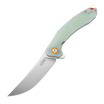
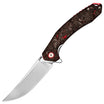
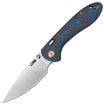
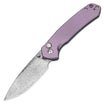

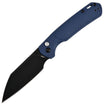
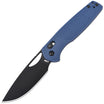
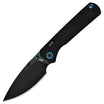
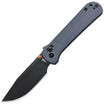
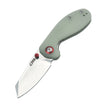
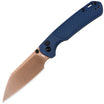
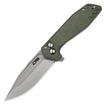

Let’s get one thing straight right out of the gate: You can have a blade forged from the absolute finest CPM S90V, heat-treated to a flawless 61 HRC by a master metallurgist, and cryogenically quenched for maximum edge retention, but if the blade shape doesn't match the reality of your daily tasks, you're essentially just carrying around an expensive, beautifully sharpened prybar. When building the ultimate Everyday Carry (EDC) rotation in 2026, the knife community often gets bogged down in steel snobbery, lock-type debates (button lock versus crossbar lock versus frame lock), and handle material aesthetics (titanium vs. fat carbon vs. G10). While all of those elements are undoubtedly crucial to creating a premium pocket knife, the fundamental geometry of your steel—specifically how the spine drops, how the belly curves, and precisely where the tip aligns with your natural grip—dictates roughly 90% of your actual, real-world cutting experience.
The blade shape is the physical, mechanical interface between your intent and the material you are trying to separate. It governs slicing friction, piercing capabilities, tip durability, and the overall ergonomics of a push-cut versus a pull-cut. In the modern EDC landscape, we are blessed with an overwhelming variety of blade profiles, from trailing points to tantos, hawkbills to reverse tantos. However, when you strip away the highly specialized tools and the aesthetic novelties, the core of practical daily utility boils down to three primary contenders.
Today, we're putting the three absolute heavyweights of the modern pocket knife world into the ring: the incredibly versatile and historically proven Drop Point, the surgical, utility-driven Wharncliffe, and the overbuilt, momentum-generating Cleaver. We will examine the physics, the geometry, the historical context, and the ideal use-cases for each. By the end of this definitive, deep-dive masterclass, you will possess a profound understanding of cutting physics, and you'll know exactly which blade geometry deserves a permanent, coveted spot in your pocket rotation.
1. The Drop Point: The Undisputed King of Versatility

If the universe decreed that you could only own one pocket knife for the rest of your natural life, and your survival depended on its utility across every conceivable scenario, the laws of physics and centuries of knife-making history dictate that it should probably be a drop point. Popularized in the mid-20th century by legendary custom knife makers (most notably Bob Loveless) primarily for hunting and field dressing game, the drop point has transcended its outdoor, sporting roots to become the absolute gold standard of the modern tactical and EDC world.
The Geometry and Physics of the Cut
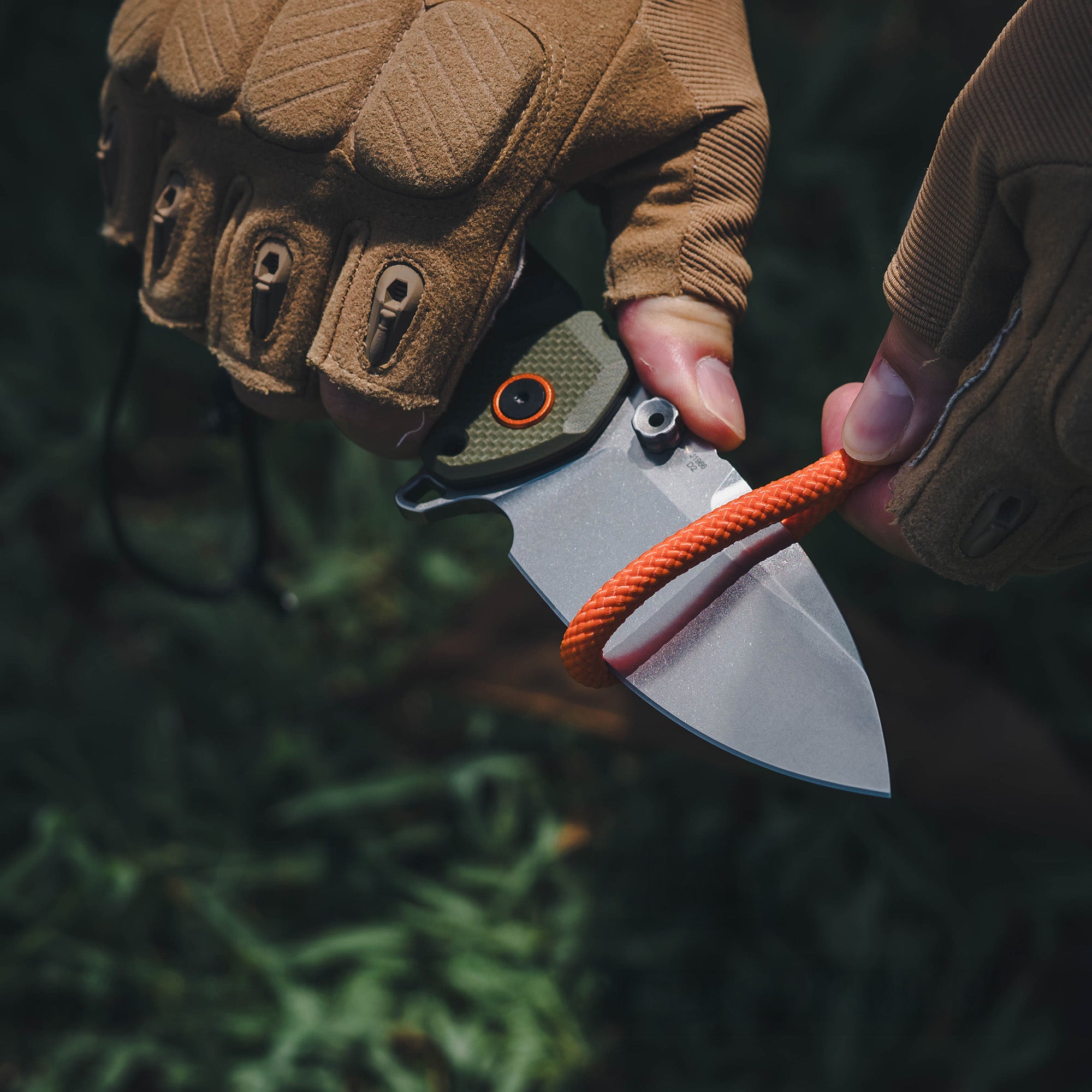
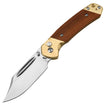
A true drop point features a spine that runs straight from the handle for a portion of the blade length, before forming a gentle, convex curve that slowly "drops" down to meet the point. This specific geometric design lowers the tip so that it aligns almost perfectly with the center axis of your grip. Why does this matter? When you hold the knife in a standard hammer grip and push forward to pierce or initiate a cut, the kinetic force generated by your arm and shoulder travels in a straight line directly into the tip. This gives you maximum control and penetration power without the awkward, downward-canted wrist angles required by a trailing point or the fragile, overly aggressive tip of a traditional clip point (like a Bowie knife).
Why it Rules (The "Belly" Advantage): The secret weapon of the drop point, however, is not just the tip—it's the "belly." The belly is the sweeping convex curve of the cutting edge that travels up to meet the dropped point. As you push the knife through heavy cardboard, thick plastic zip-ties, paracord, or even during camp food prep (like slicing meat or vegetables), this continuous curve is pure slicing magic. Because the edge is curved, it naturally presents a fresh, microscopic cutting surface to the material as your hand moves through the natural arc of the cut. It slices like a dream because the angle of attack is constantly, dynamically adjusting. Furthermore, because the spine remains relatively thick until the very last fraction of an inch before the point, it maintains a robust, highly durable tip. This means it won't snap when you inevitably use it for light prying, digging out a splinter, or aggressive piercing through rigid, stubborn materials.
The CJRB Drop Point Benchmark
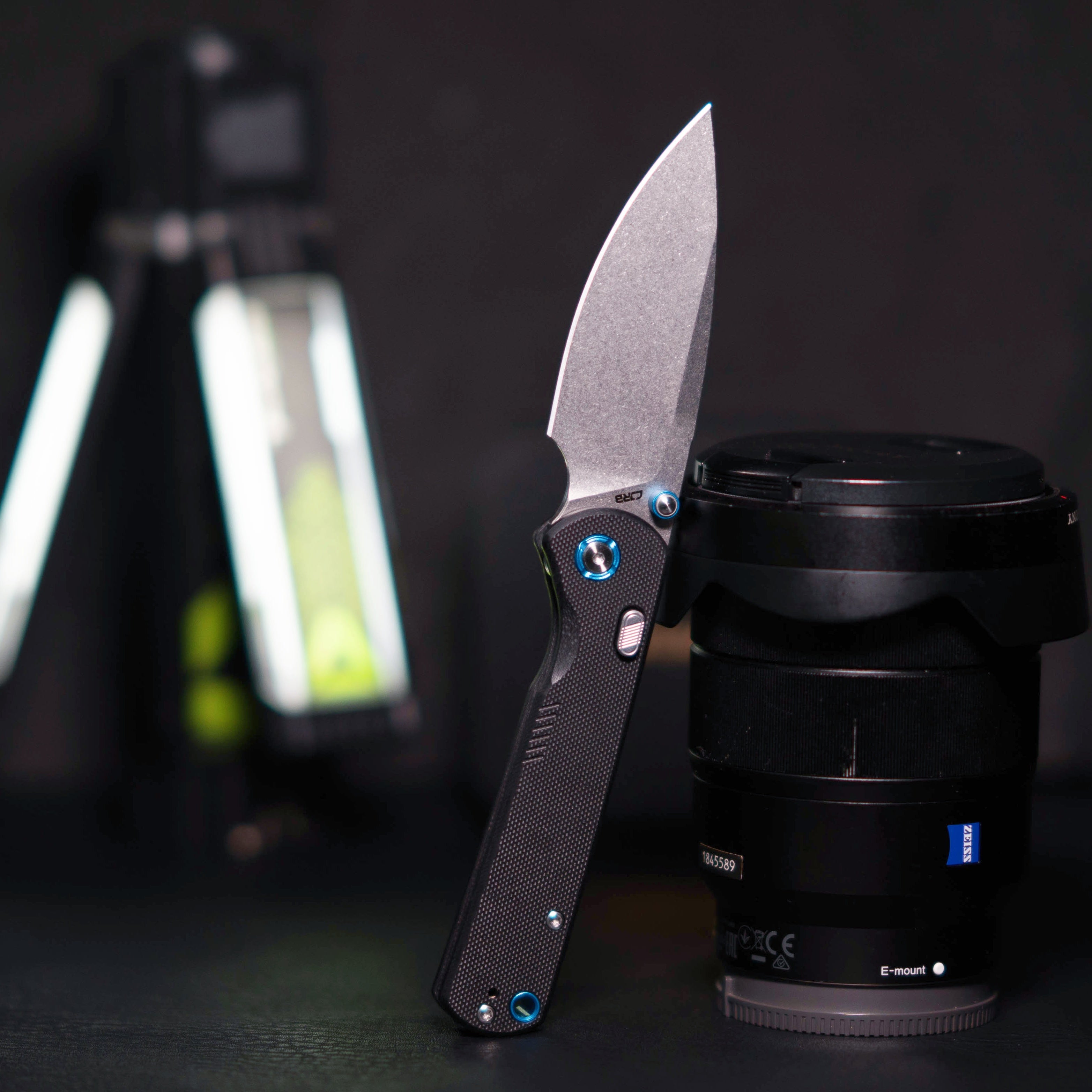
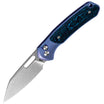
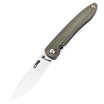
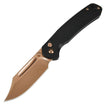
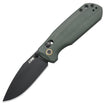
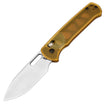
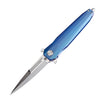
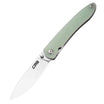
To understand the pinnacle of modern drop point execution, look no further than the CJRB Pyrite (J1925). This knife didn't just participate in the hyper-competitive budget-friendly EDC market; it completely disrupted it and redefined what "premium feel" means at an accessible price point. Crafted with our proprietary AR-RPM9 Spray Form steel, the Pyrite’s drop point geometry offers aggressive slicing capabilities while giving you an insanely addictive, drop-shutty button lock action. The plunge lock mechanism interacts flawlessly with the blade's tang, making deployment and closure a frictionless experience. The Pyrite perfectly balances tip strength with slicing efficiency, making it the ultimate "do-it-all" tool. Whether you are breaking down an endless mountain of recycling or slicing a steak at a campsite, the Pyrite’s drop point performs flawlessly.
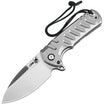
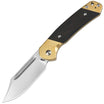
Need something slightly beefier with exceptional ergonomics for larger hands or gloved work? The CJRB Feldspar brings that exact same drop-point perfection into a beautifully contoured G10 chassis. The Feldspar proves that high-end geometry and flawless liner-lock execution don't have to break the bank. Its belly is pronounced enough for serious skinning and outdoor bushcraft tasks, yet the tip remains precise enough for daily urban tasks like opening mail or cutting loose threads. The handle-to-blade ratio ensures that when you choke up on the knife, the drop point acts as a natural extension of your index finger.
2. The Wharncliffe: The Master of Precision Utility

The Wharncliffe blade is currently experiencing a massive, undeniable resurgence in the 2026 EDC community, and it’s not just a fleeting aesthetic trend—it’s driven by pure, unadulterated utility physics. While its origins date back to the 19th century (reportedly designed by Lord Wharncliffe, a patron of the arts and cutlery, specifically for whittling and fine woodworking), it has evolved to become the ultimate urban EDC companion for modern professionals, warehouse workers, tradesmen, and anyone who demands surgical precision over general-purpose slicing.
The Geometry and Physics of the Cut
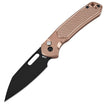
A true Wharncliffe features a perfectly straight cutting edge from the heel (near the handle) all the way to the tip. There is zero upward curve. The spine, conversely, swoops aggressively downward in a convex curve to meet that straight edge at a very acute, incredibly sharp point. This creates a blade that looks somewhat like a scalpel or a heavy-duty utility razor blade (like a Stanley knife) on steroids.
Why it Rules (The Power of the Straight Edge and Draw Cut): When you bear down on a Wharncliffe blade during a cut, the material you are separating has absolutely nowhere to run. Because there is no belly (no outward curve for the material to slide along), 100% of your downward cutting force is transferred directly into the medium. The straight edge essentially traps the material against the cutting plane. If your daily 9-to-5 involves breaking down 50 double-walled Amazon boxes, scoring thick leather, cutting linoleum, slicing heavy-duty zip-ties flush against a flat surface, or performing aggressive "draw cuts" (pulling the knife toward you), the Wharncliffe is your holy grail.
Furthermore, the tip is dropped all the way to the bottom edge of the blade line. This acts like a precision scalpel, giving you absolute, pinpoint control over exact, fine cuts. You never have to guess where the tip is—it’s exactly at the bottom of the blade, aligned with the cutting edge. This makes it exceptional for starting plunge cuts into boxes without plunging so deep that you damage the contents inside.
The CJRB Wharncliffe Benchmark
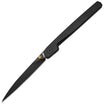
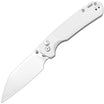
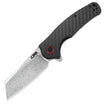
We listened to the fervent demands of the EDC community, took the wildly successful, fan-favorite chassis of the original Pyrite, and gave it a vicious, laser-focused utility upgrade. Meet the CJRB Pyrite-Alt (J1925A). This model provides the surgical tip control and full-force kinetic transfer of a Wharncliffe blade, combined with a proprietary AR-RPM9 steel edge that stays razor-sharp significantly longer than traditional budget steels like D2 or 8Cr13MoV. The Pyrite-Alt is an absolute game-changer for utility work, seamlessly blending the ultra-fidgety, smooth deployment of a ceramic ball-bearing button lock with uncompromising hard-use practicality. We gave it a subtle "modified" Wharncliffe profile, meaning the spine doesn't drop quite as abruptly as a traditional 19th-century design, providing a slightly more robust tip while maintaining the devastating cutting power of the straight edge.
3. The Cleaver: The Heavy-Duty Workhorse

Don't let the name fool you. Modern EDC cleavers aren't meant for butchering brisket or hacking through bone in a commercial kitchen; they are pocket-sized tactical tanks built to absorb extreme abuse and conquer tough, fibrous materials through sheer mass, height, and momentum. The pocket cleaver trend started as a custom knife-making novelty but rapidly proved its immense practical value in the real world.
The Geometry and Physics of the Cut
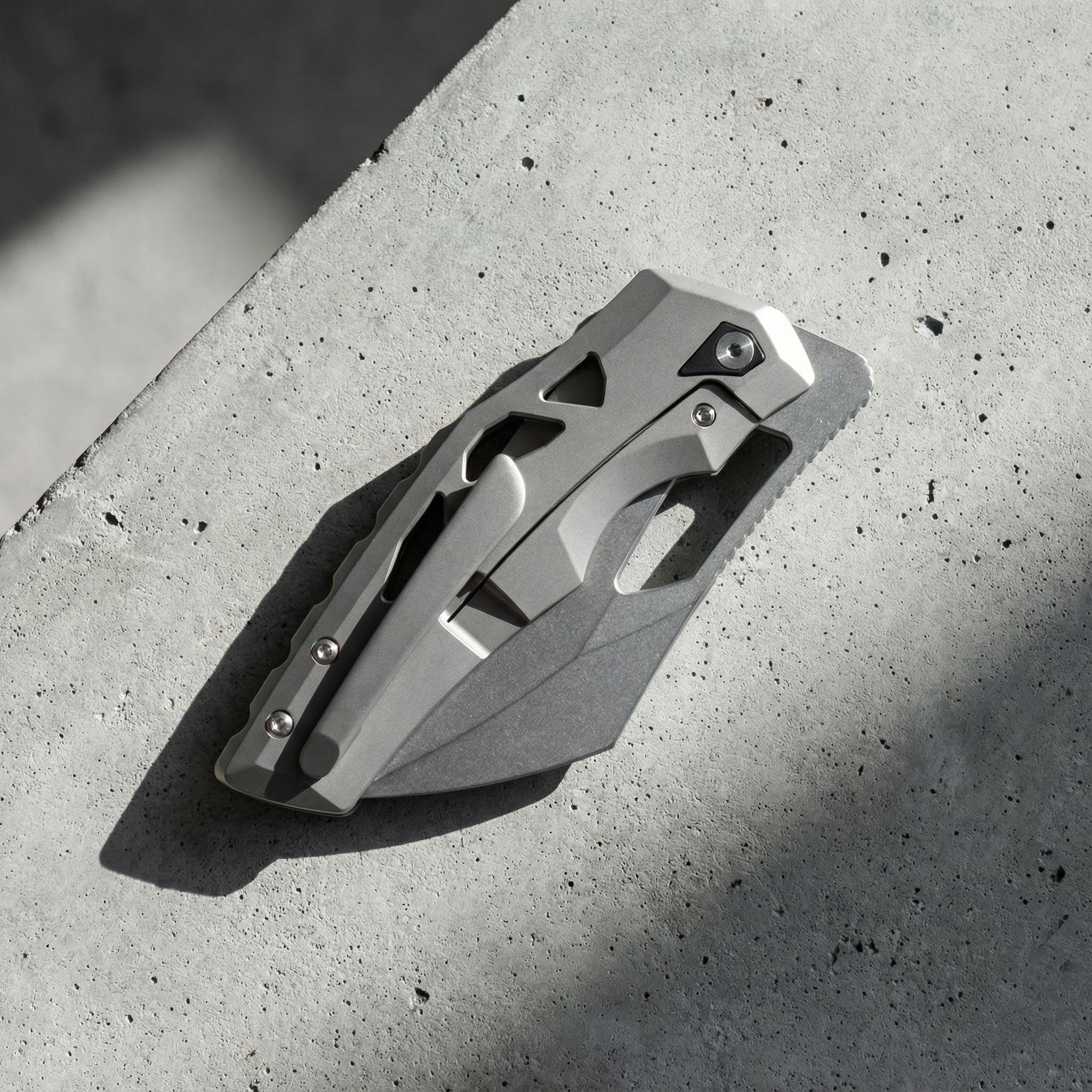
Cleaver-style pocket knives are characterized by a incredibly tall, broad blade profile with a mostly straight cutting edge (though modern EDC interpretations often feature a very slight, sweeping belly for added slicing versatility) and a distinctively blunt, squared-off tip. The sheer height of the blade allows knife makers to use what is known as a "tall flat grind." This means the blade can be incredibly thick and robust at the spine for immense structural strength, while the primary bevel tapers down gradually over a long distance to reach a screaming sharp, surprisingly thin cutting edge.
Why it Rules (Momentum, Safety, and Sheer Power): Cleaver blades use sheer mass to their advantage. The weight of the steel, situated prominently toward the front of the blade (forward-weighted), assists in push-cuts and chopping motions, generating kinetic momentum that lighter, thinner blades simply cannot match. If you need to power through thick nylon rope, heavy cardboard tubes, dense vegetation, or thick rubber hosing, the cleaver is unmatched.
Additionally, the lack of a fragile, pointy tip makes them inherently safer for heavy push-cutting in chaotic environments. For example, in a rescue scenario where you need to cut a seatbelt away from a trapped person, a blunt-tipped cleaver is vastly safer than a needle-tipped dagger. Finally, the broad, squared-off front edge doubles as a highly effective makeshift scraper in a pinch, perfect for removing gaskets, stickers, or residue where you wouldn't want to risk snapping the tip of a delicate drop point.
The CJRB Cleaver Benchmark
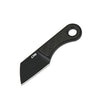
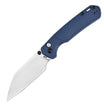
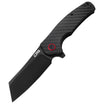
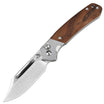
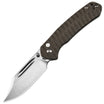
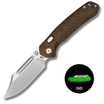
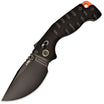
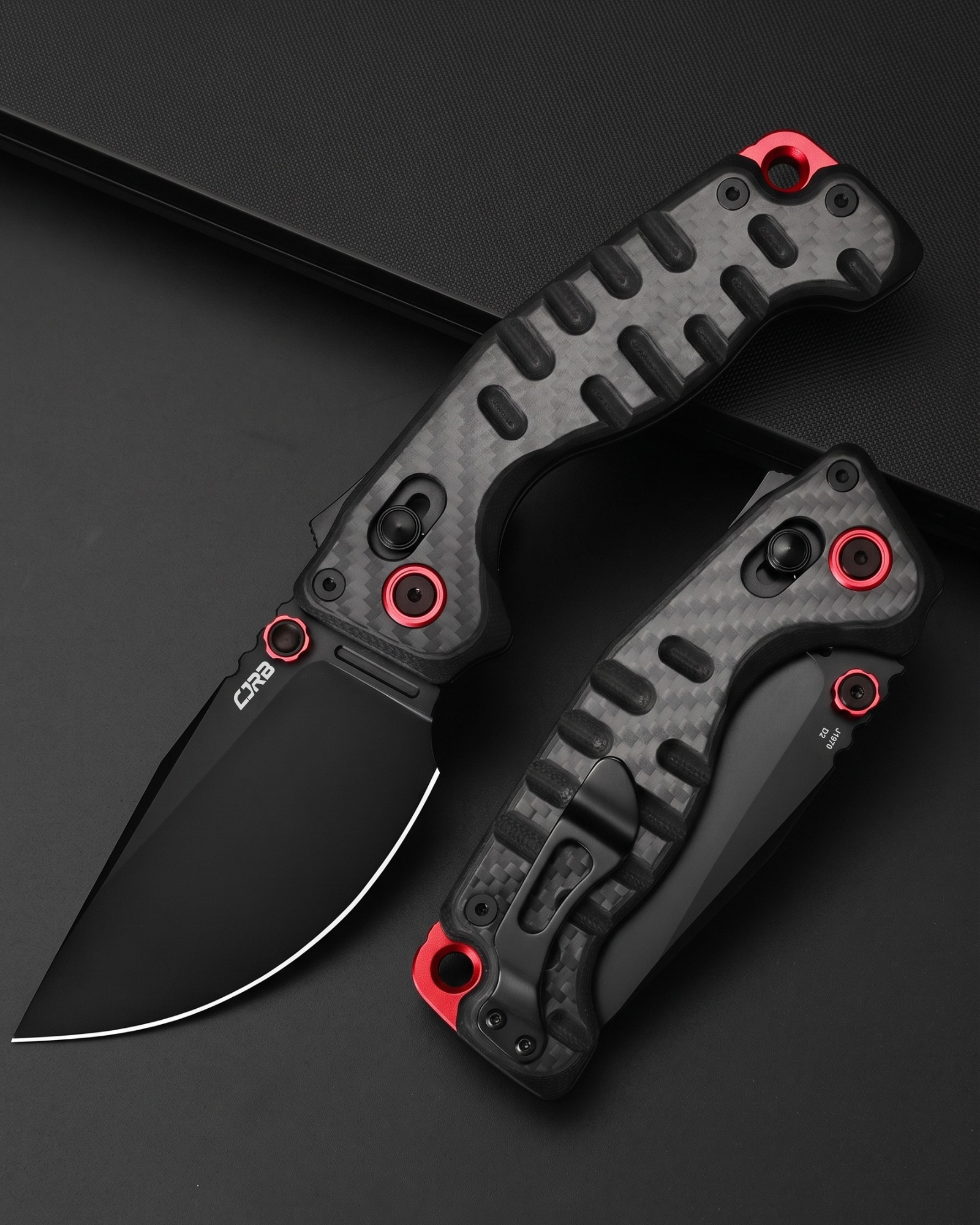
The CJRB Crag (J1904) and the aggressively styled CJRB Tigris (J1919) are the definitive heavy-duty EDC cleavers on the market today. The Crag utilizes its massive blade real estate to slice with an authority that feels completely unstoppable. It features a flipper tab that rockets the heavy blade out on ceramic bearings with a satisfying, authoritative "thwack."
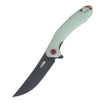
The Tigris takes the tactical cleaver concept a step further with an overbuilt frame, striking dual-layered G10 scales, and a generous finger choil (a cutout at the base of the blade) that allows you to choke up on the massive blade for surprisingly fine detail work and maximum control. And if you want to step up to the absolute pinnacle of premium, overbuilt cleaver madness, the Artisan Cutlery Proponent (designed by Dirk Pinkerton) in CPM S35VN steel and titanium handle scales will absolutely blow your mind. It features vault-like lock-up, massive cutting power, and an optional screw-in locking pin that converts the folding mechanism into a virtual fixed blade for the hardest of hard-use tasks.
4. The Secret Ingredient: Why AR-RPM9 Steel Maximizes Blade Geometry
We absolutely cannot discuss blade shapes and cutting geometry without discussing the metallurgical medium they are carved from. You can design the most geometrically perfect Wharncliffe in the world, but if the steel is soft or brittle, the acute tip will roll, fold, or snap under pressure. You can design a flawless Drop Point belly, but if the steel features massive, chunky carbides, it will lose its micro-serrated slicing edge quickly and tear through material rather than slicing it cleanly.
This critical intersection of geometry and metallurgy is exactly why the engineering team at CJRB and Artisan Cutlery spent years developing our proprietary steel: AR-RPM9.
Traditional budget-friendly knife steels (like the ubiquitous D2 tool steel) are what we call "ingot steels." They are poured into molds as molten liquid and allowed to cool. This traditional process often results in large, uneven carbide structures clustering together. This makes D2 notoriously difficult to sharpen to a polished mirror edge, and critically, it makes the edge prone to "micro-chipping" under lateral stress—which is absolutely fatal for a Wharncliffe's fine, precision tip.
AR-RPM9, on the other hand, is a proprietary Spray Form steel. Unlike traditional Spray Form (PM) which requires expensive sintering and pressing of powders, the Spray Form (spray deposition) process atomizes molten steel and sprays it directly onto a rotating substrate to form a solid billet. This highly advanced manufacturing process cools the steel incredibly fast, preventing large carbides from forming and creating an ultra-fine, perfectly uniform grain structure throughout the entire blade. Our proprietary Spray Form process ensures that the hyper-acute, needle-like tip of the Pyrite-Alt can handle scoring hard materials (like drywall, clamshell packaging, or hard plastics) without the devastating micro-chipping that commonly plagues D2 steel on straight-edge profiles.
How AR-RPM9 Enhances the Cleaver: High corrosion resistance is vital for large blades. Cleavers have a massive surface area exposed to the elements. AR-RPM9 boasts excellent stainless properties, meaning your Crag or Tigris won't rust or pit if you sweat on it during a heavy work shift or expose it to humid environments, giving it a massive maintenance advantage over high-carbon tool steels.
5. Frequently Asked Questions (FAQ)
Q: Is a cleaver blade good for tactical or self-defense applications?
A: Honestly? No. While a cleaver like the CJRB Tigris is visually intimidating and extremely robust in its construction, defensive and tactical applications typically rely heavily on rapid piercing and penetration capabilities—something a cleaver fundamentally lacks by design due to its blunt, squared-off front. If tactical application is your primary priority, you should stick to a drop point, spear point, or dagger profile. Save the cleaver for heavy utility, hard daily work, and looking awesome in your pocket dump photos.
Q: How hard is it to sharpen a Wharncliffe compared to a Drop Point?
A: A Wharncliffe is generally significantly easier for beginners to sharpen and maintain. Because the edge is perfectly straight, you don't have to constantly adjust your wrist angle or rotate the knife to follow a curved "belly" (like you do on a drop point) as you pull it across the stone. You can lock in your angle on a whetstone or a guided sharpening system (like a Work Sharp or KME) and make consistent, straight, back-and-forth passes. It takes a massive amount of guesswork out of edge maintenance.
Q: Will the fine tip of a Wharncliffe break if I drop it on concrete?
A: It depends entirely on the steel and the heat treat. A Wharncliffe's tip is inherently more fragile than a Drop Point because it comes to a finer, more acute angle with less steel mass backing it up. However, because CJRB utilizes AR-RPM9 Spray Form steel (which possesses excellent toughness and shock resistance), our Wharncliffe blades are far more resilient to accidental drops than traditional high-carbon, brittle blades. That being said, it is still a precision cutting tool—please don't use it as a flathead screwdriver or a prybar.
Q: What is the absolute best all-around blade shape for a beginner building their first EDC kit?
A: The Drop Point is universally, unanimously recommended for beginners across the EDC community. Its perfect balance of slicing ability, tip strength, visual appeal, and overall ease of use makes it incredibly forgiving for a wide variety of unpredictable daily tasks. You simply cannot go wrong starting your collection with a reliable drop point like the CJRB Pyrite.
Q: Can a pocket Cleaver be used for camp food prep?
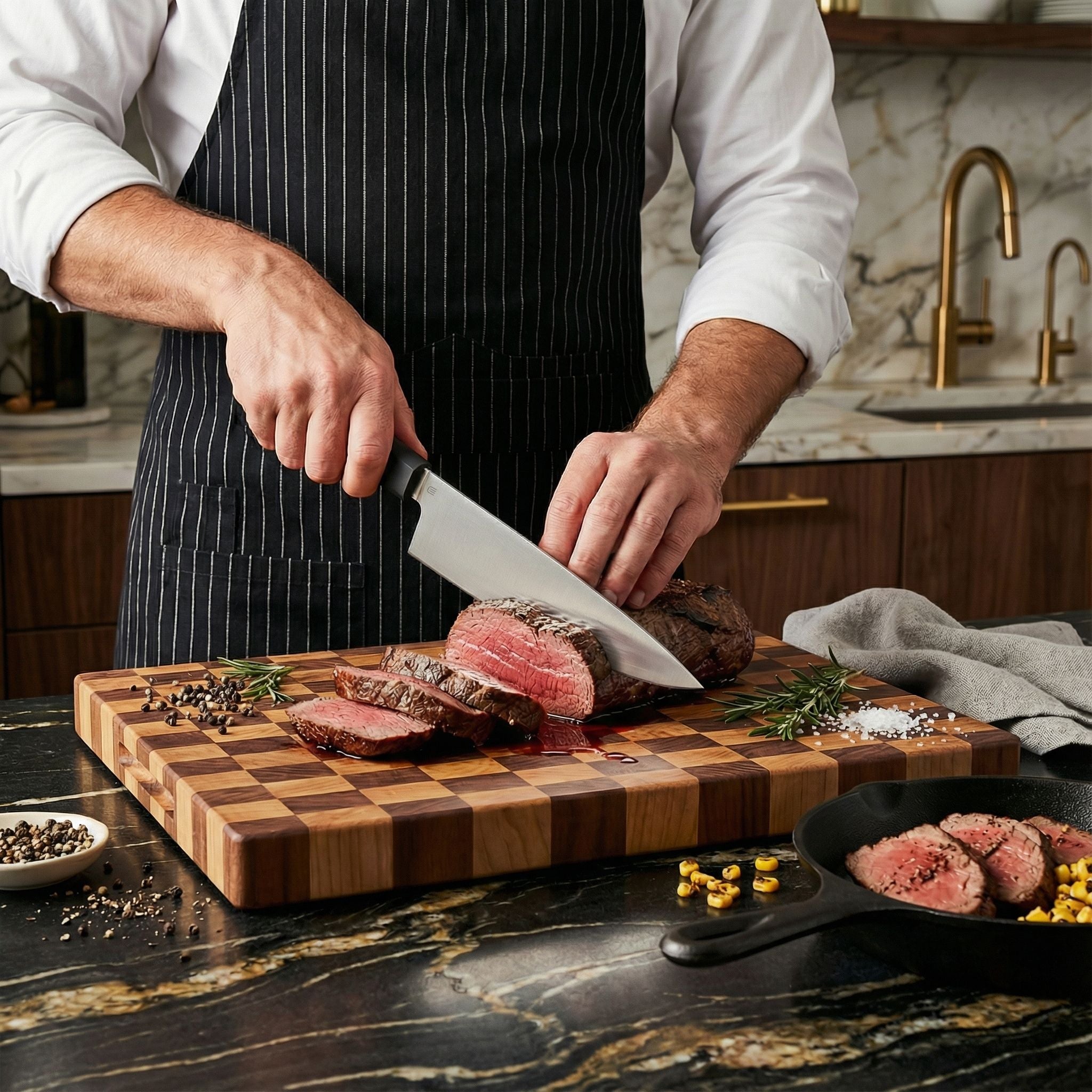
A: Yes, surprisingly well! Because modern EDC cleavers feature a tall flat grind, they transition smoothly through thick materials like apples, potatoes, or onions without wedging and splitting the material apart (which is a very common problem with thick saber grinds or scandi grinds). While it is certainly not a substitute for a dedicated, thin-stock 8-inch chef's knife, a CJRB Crag makes an excellent, highly capable camp kitchen companion when you're away from home.
Conclusion: The Final Verdict on EDC Blade Shapes
It's time to stop buying pocket knives just because they look cool in a flat-lay photo on Instagram or Reddit. It's time to start buying knives that actually solve your specific daily problems through applied physics, superior ergonomics, and highly optimized edge geometry.
If your day involves unpredictable, widely varied tasks—food prep at the campsite, cutting paracord, opening mail, slicing fruit, and general suburban survival—the Drop Point (like the classic, universally loved CJRB Pyrite) is your absolute ride-or-die companion. It’s the undisputed jack-of-all-trades that will never disappoint you, no matter what situation you pull it out for.
If you are a warehouse worker, an electrician, a crafter, or someone who demands surgical precision and maximum downward cutting force without the blade slipping or sliding out of the cut, the Wharncliffe (like the razor-sharp Pyrite-Alt) will fundamentally change your daily workflow and efficiency.
And if you need a pocket-sized bulldozer that prioritizes edge durability, sheer slicing momentum, and brute force over delicate, precision tip work, the Cleaver (like the massive CJRB Crag or Tigris) is waiting to clock in and go to work on the toughest materials you can find.
Whatever blade shape you ultimately choose, remember that geometry is only half the battle. Pair that perfect shape with premium materials like AR-RPM9 Spray Form steel, flawless ceramic ball-bearing pivot mechanics, and precision-milled G10 or Titanium handles, and you've got an Everyday Carry tool that will outlast you. Stop compromising on your gear. Shop the full collection of precision-engineered EDC knives at CJRB Cutlery and Artisan Cutlery today, and elevate your carry to the next level.



Leave a comment
All comments are moderated before being published.
This site is protected by hCaptcha and the hCaptcha Privacy Policy and Terms of Service apply.