

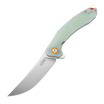
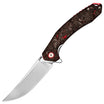
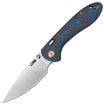
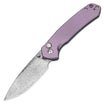

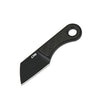
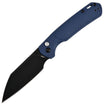
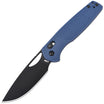
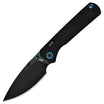
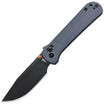
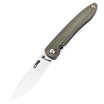
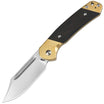
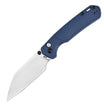
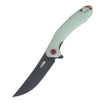
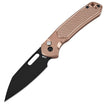
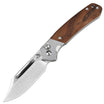
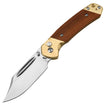
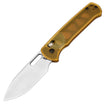
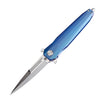
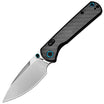
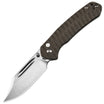
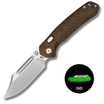
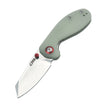
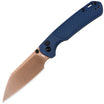
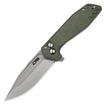

I will admit it right up front: my first experience with a geometric front-edge blade was a complete disaster. I bought it purely for the aesthetics. It looked aggressive, tactical, and incredibly tough. I remember searching online for a 'tonto knife' as a beginner, completely misspelling the name, just wanting something that resembled a modern ninja tool. But the reality hit me hard the first time I tried to peel an apple or break down heavy double-walled cardboard boxes. Instead of slicing smoothly, the thick blade acted like a blunt wedge, splitting the material rather than cutting it.
For years, this has been the dark secret of the tactical folding knife community. We buy these aggressive shapes for their legendary piercing capabilities and incredibly strong tips, but we suffer through terrible slicing performance in our everyday carry (EDC) tasks. Honestly, it is frustrating to carry a tool that struggles with mundane chores.
But the industry has shifted. Thanks to advanced metallurgical techniques and highly refined blade geometries, you no longer have to sacrifice slicing ability for tip strength. Today, we are going to explore the reality of this iconic shape, analyze where traditional designs fail in daily use, and look at how modern engineering has solved the dreaded cutting dilemma.
From Ancient Armor-Piercing to Modern Streets
To understand why this shape behaves the way it does, we need to look at its origins. The traditional Japanese short sword, originally developed during the Heian period, was essentially designed to pierce through armor. Historical records indicate that these early blades featured a graceful, continuous curve known as hira-zukuri. They did not have the harsh, angular snap we associate with the modern Americanized version today.
The American geometric profile, popularized in the 1980s by tactical brands like Cold Steel, changed the formula entirely. They introduced the secondary point—the sharp, abrupt transition angle where the front edge meets the bottom edge. This transition created an incredibly reinforced tip, placing maximum steel mass directly behind the point. If you need to puncture a car door or heavy canvas, this is the geometry you want.
However, this structural reinforcement created a massive blind spot for regular users. By prioritizing mass and thickness, the designers inadvertently ruined the edge geometry for delicate work. The blade became a pry bar with an edge on it. This is why many outdoor enthusiasts argue that when considering different types blades for camping or EDC, the geometric shape should be avoided.
 The Everyday Carry Dilemma: Slicing vs. Puncturing
Let us talk about reality. In a standard day, how often do you need to puncture heavy steel drums? Probably never. How often do you need to slice open Amazon packages, cut zip ties, prepare food, or strip copper wire? Probably every single week. This mismatch between tactical fantasy and daily reality is the core problem for this blade style.
In a non-tactical environment, a traditional thick geometric edge brings several distinct disadvantages. First, the lack of a prominent belly (the curve found on drop-point blades) makes rocking cuts on a cutting board almost impossible. Second, the thick steel behind the apex causes excessive drag when passing through thick materials like dense cardboard or foam. You often feel the blade binding halfway through the cut.
I have observed countless users abandon their tactical folders specifically because of this binding issue. It takes too much physical force to push a thick wedge through fibrous materials. But what if you could keep the reinforced piercing tip while significantly thinning out the primary cutting edge?
Overcoming the Wedge: Modern Grinds and Thin Geometry
This is exactly where modern knife designers stepped in to fix the problem. Instead of accepting the wedge-like nature of the blade, they altered the primary grind. By introducing a Hollow Grind, manufacturers can drastically reduce the thickness of the steel just behind the edge, turning a thick pry bar into an absolute slicing laser.
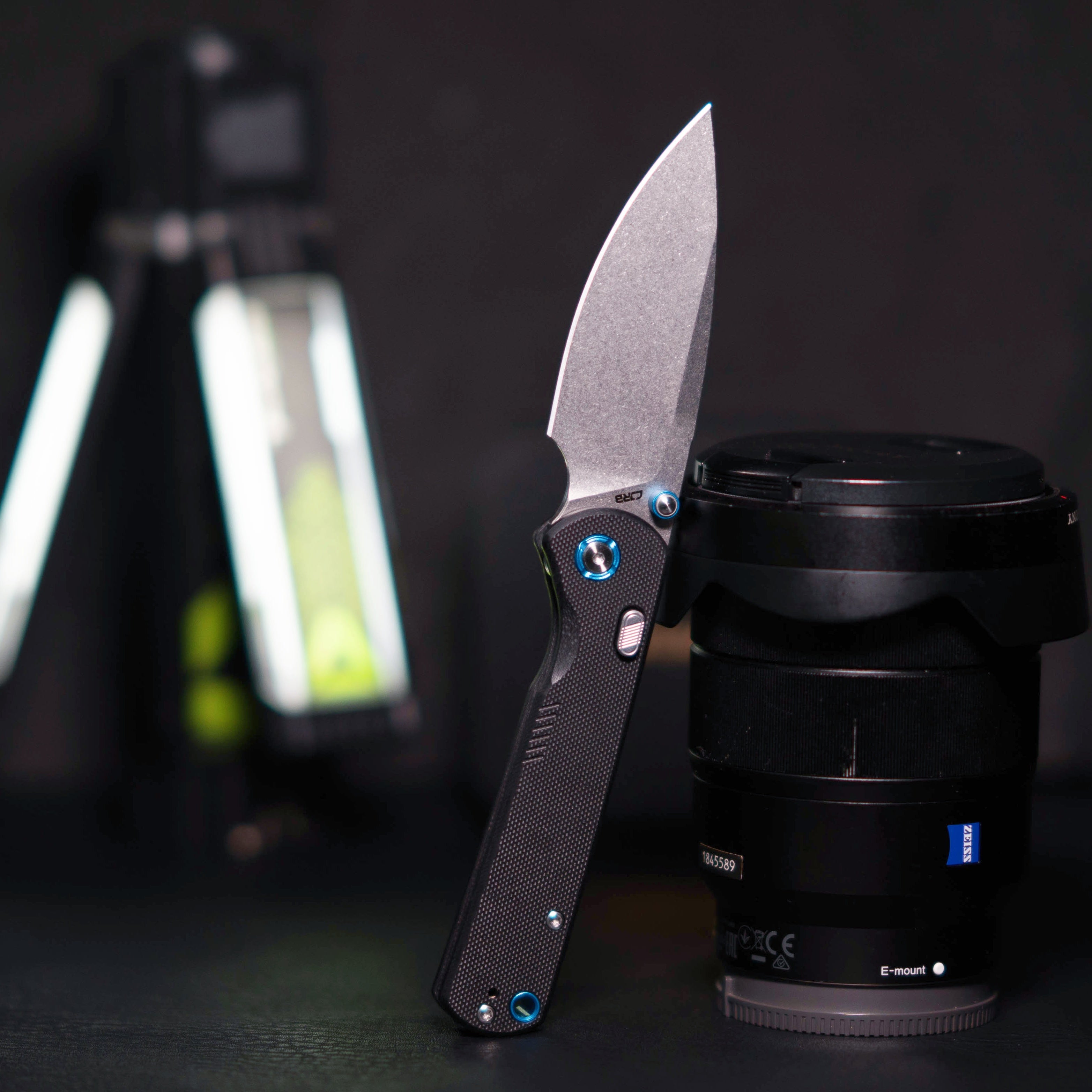
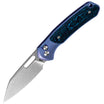
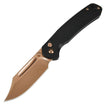
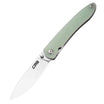
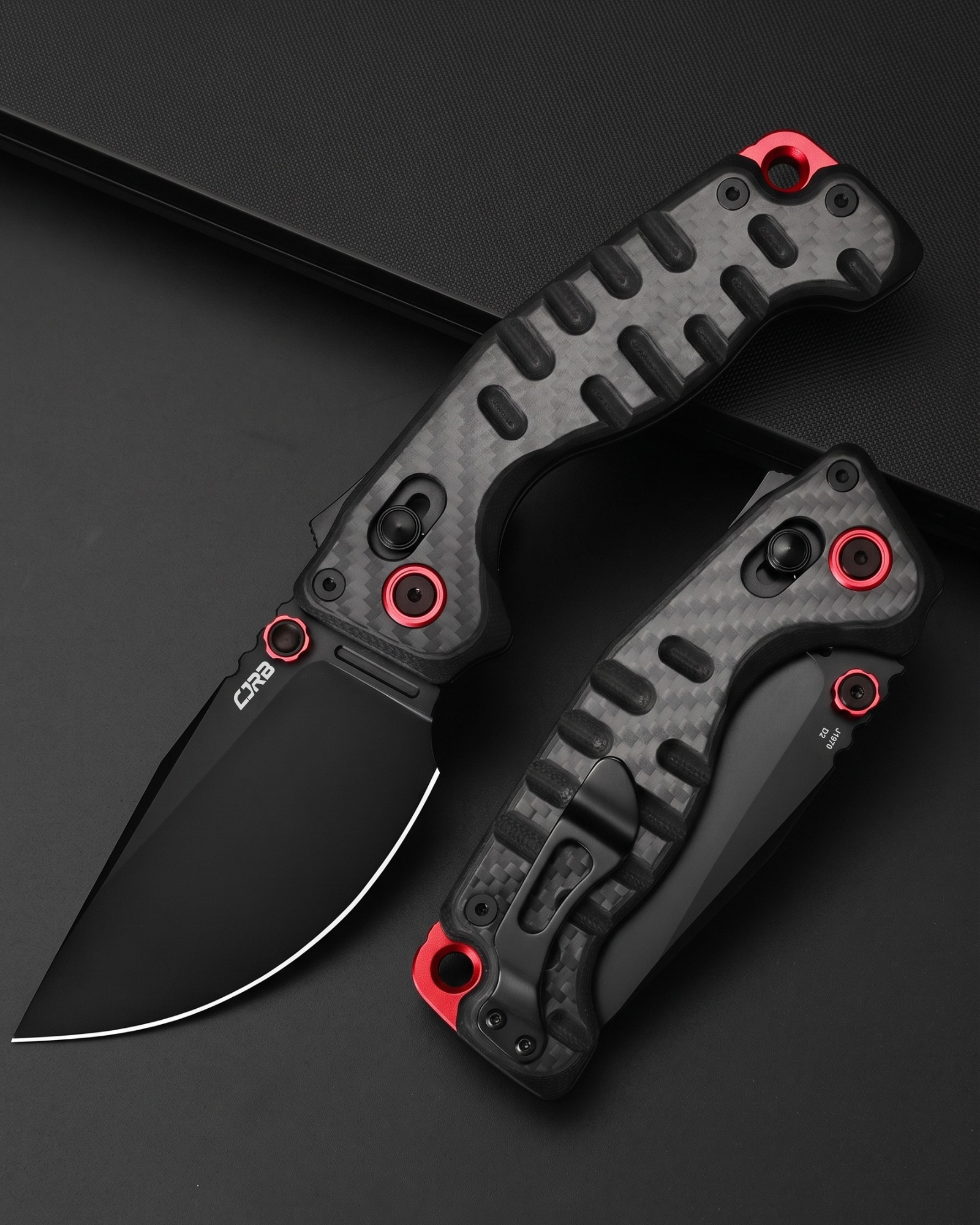
I have spent considerable time testing how this hollow geometry performs, and the difference is night and day. A perfect example of this functional evolution is the CJRB Bellona. The Bellona specifically uses a deeply executed Hollow Grind on its 3.2mm blade stock.
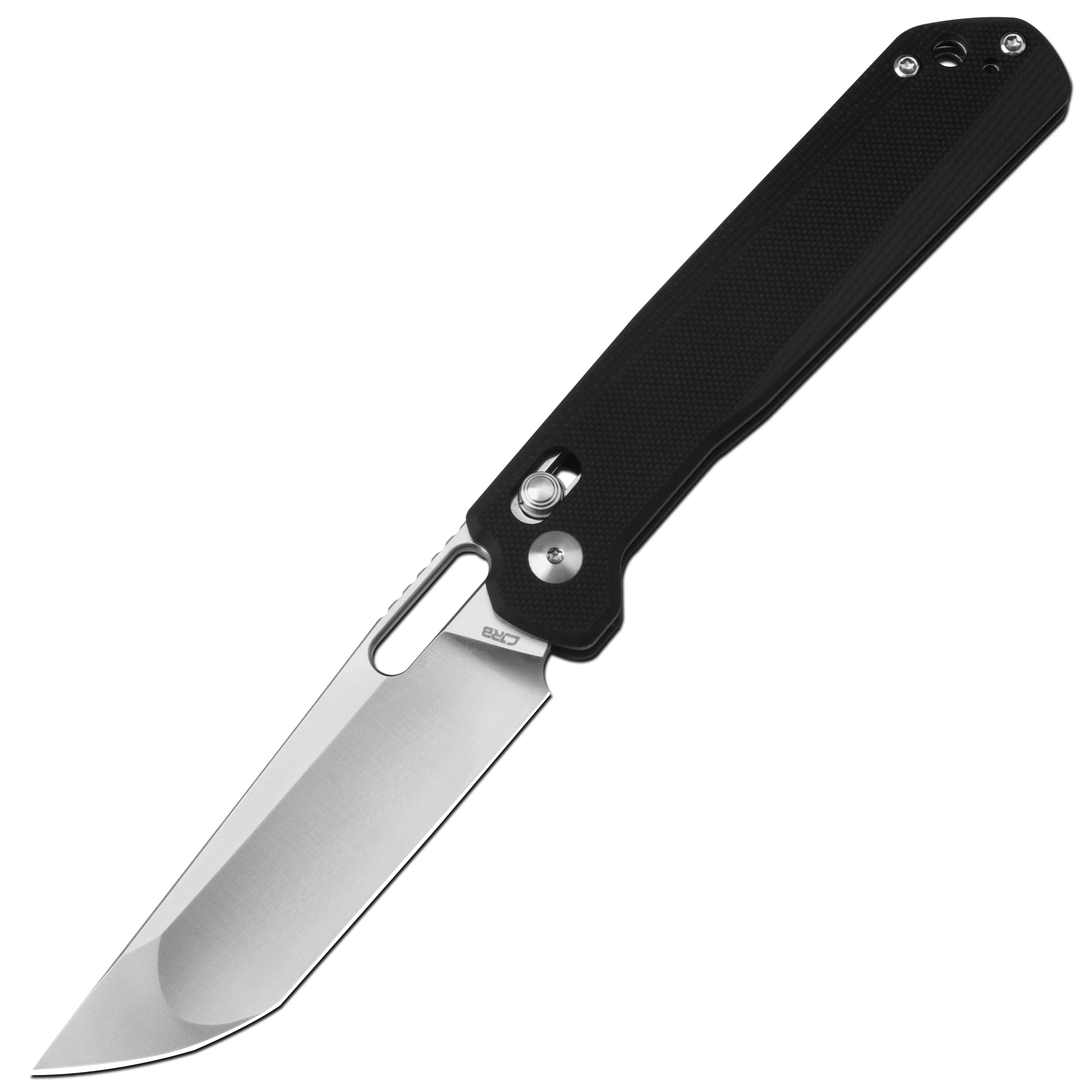
Why does this matter? Because the hollow grind creates a concave surface that literally removes friction points as the blade passes through material. You still get the hyper-durable tip for puncturing, but the main edge glides through cardboard like a traditional flat-ground slicer. Furthermore, combining this geometry with a lightweight 100g G10 handle and a remarkably smooth Ceramic Ball Bearing pivot creates an EDC experience that feels agile rather than cumbersome.
- Excellent slicing through thick cardboard
- Maintains reinforced tip strength
- Reduced friction and binding
- Acts as a wedge in fibrous materials
- Heavy and cumbersome for daily tasks
- Requires excess force for simple cuts
Harpoons and Compound Grinds: A Visual and Functional Shift
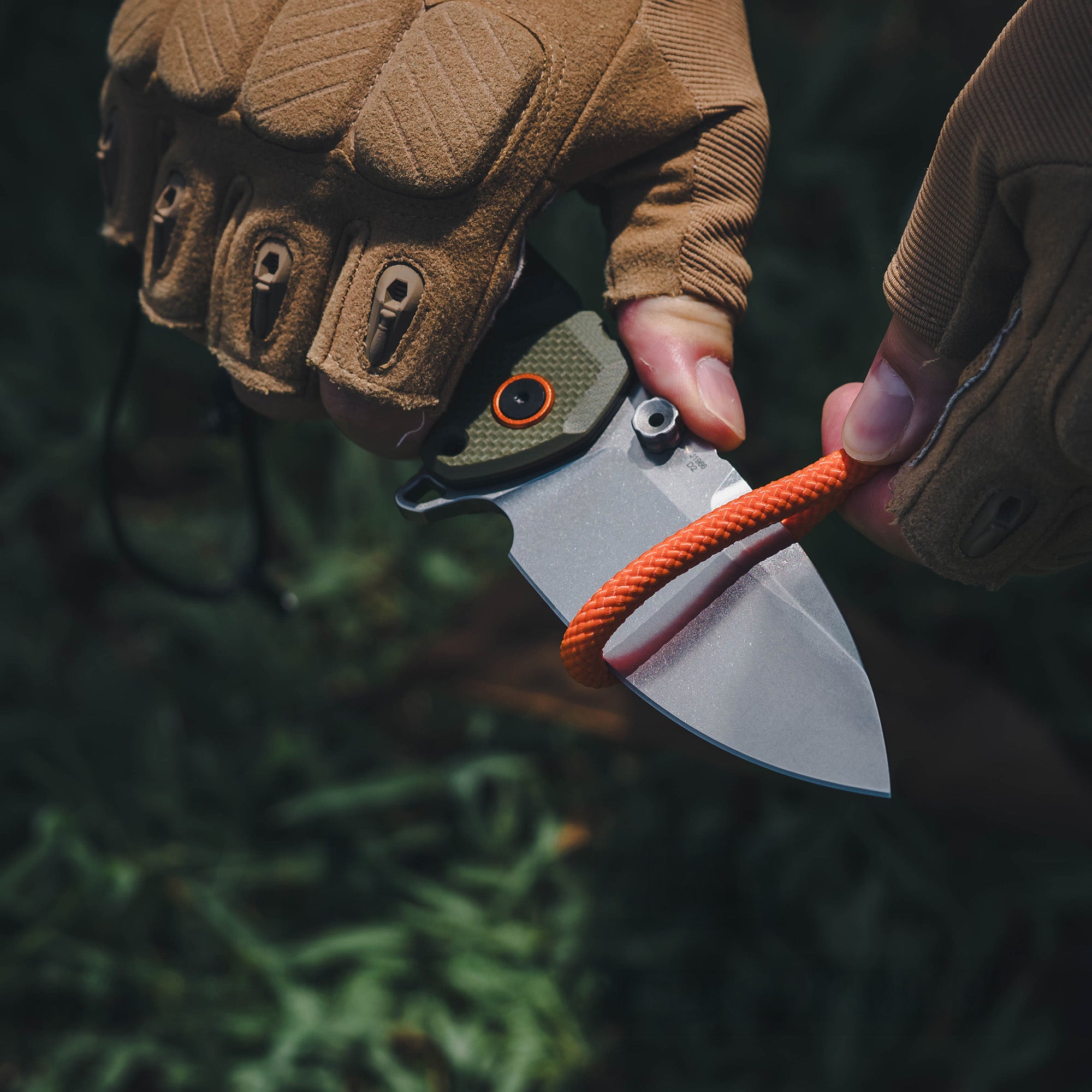
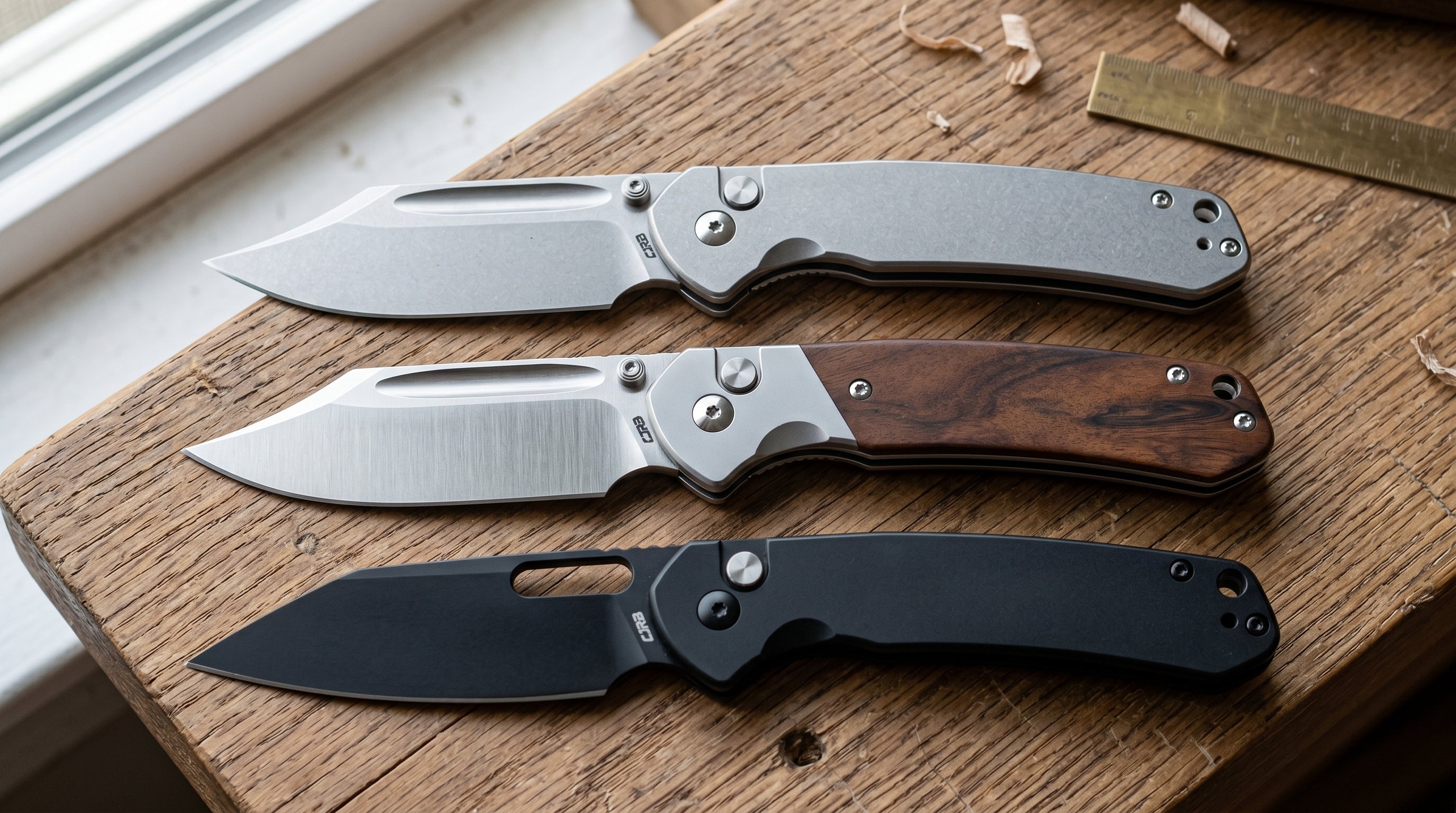
If the hollow grind is one solution, the compound flat grind combined with ultra-thin blade stock is the other. Knife designers are constantly looking for ways to blend aesthetics with raw utility. The introduction of the Harpoon profile—where the spine of the blade features a distinct scooped ramp—gives the user a natural resting place for their thumb, applying direct downward pressure right where the secondary point meets the material.
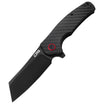
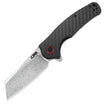
I am genuinely impressed by how much a thumb ramp changes the ergonomics of utility cuts. When you combine that harpoon shape with an aggressively thinned-out blade stock, you completely eliminate the 'wedge' problem. This brings us to a standout piece of modern design, the CJRB Nova.
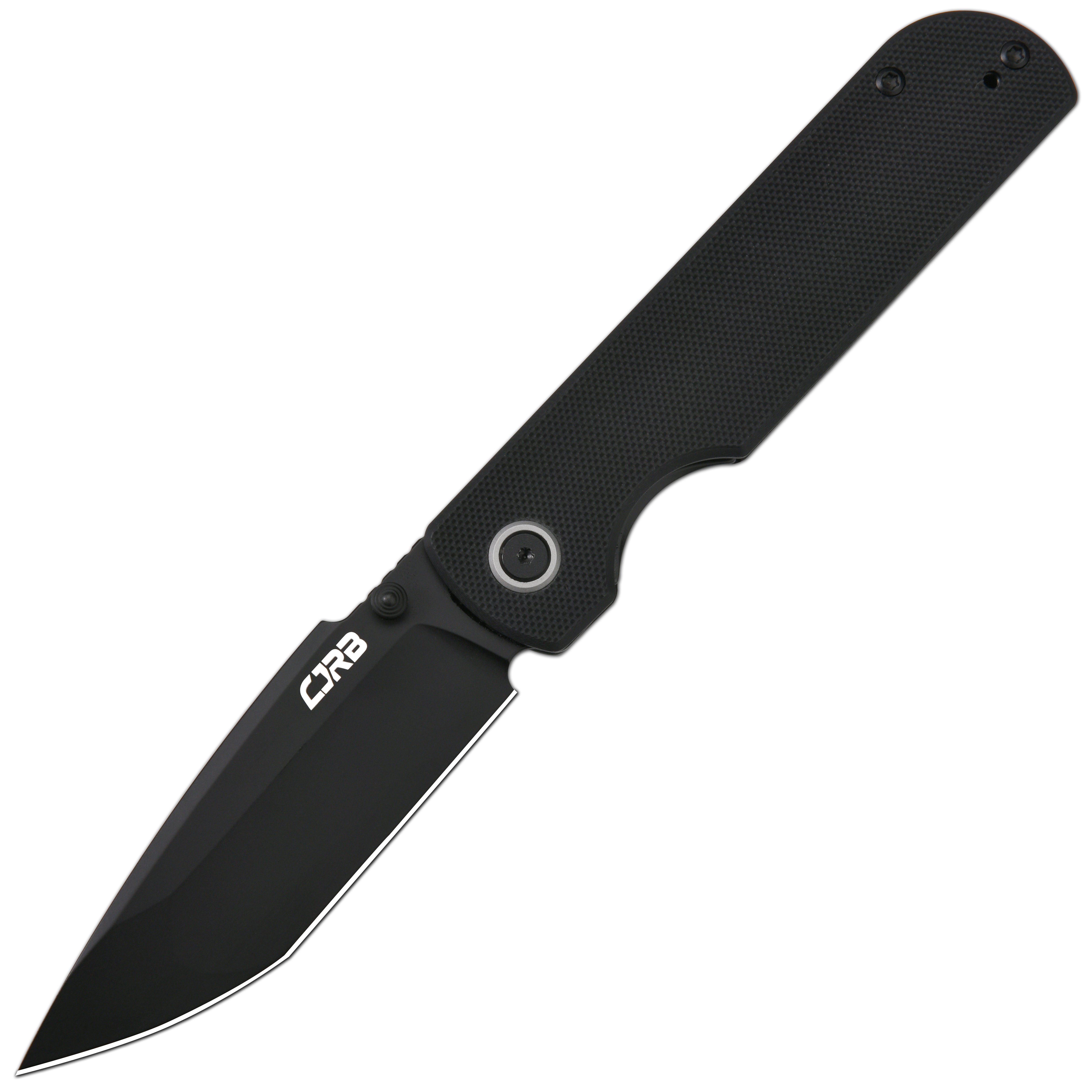
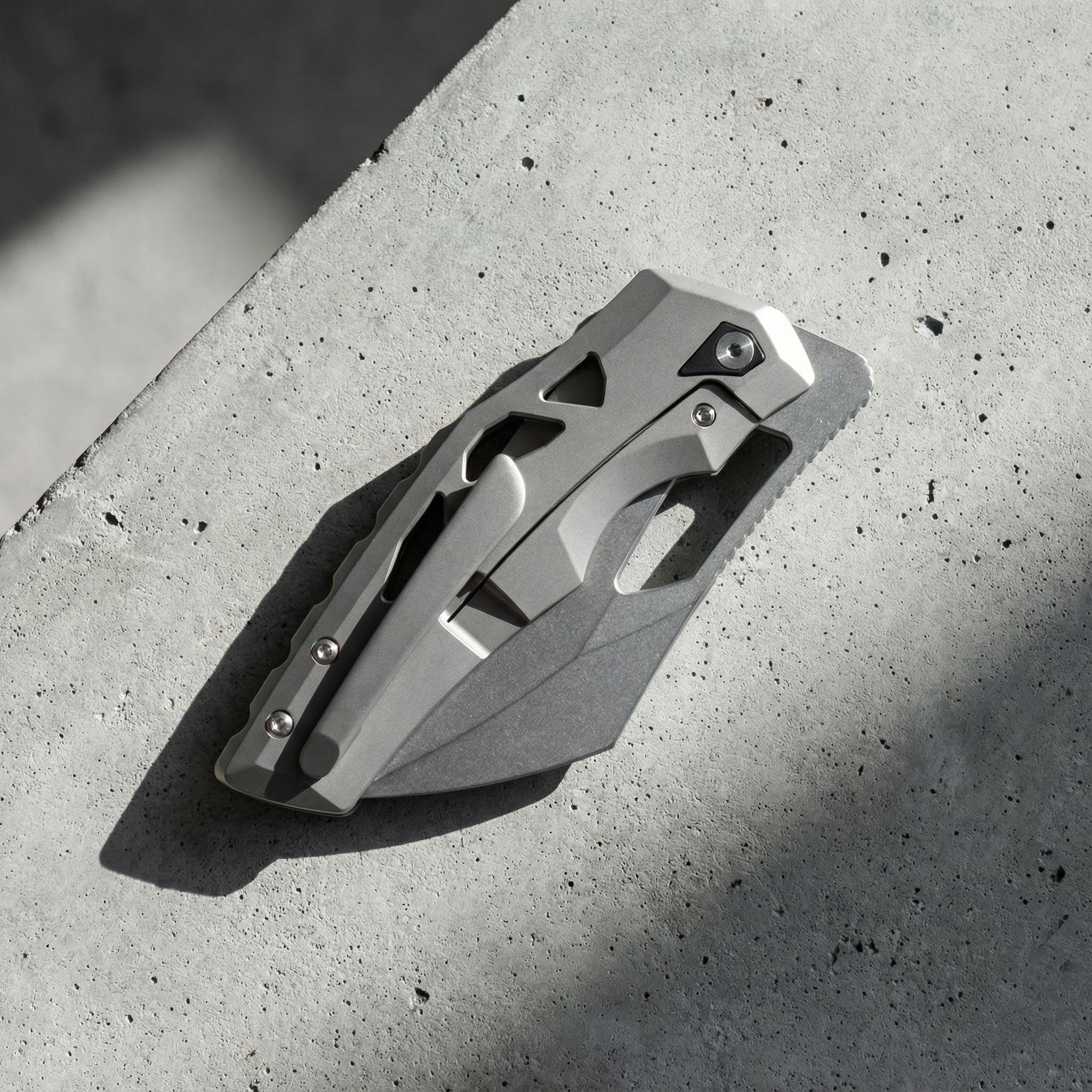
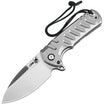
Designed by Christian Porterfield, the Nova takes a completely different approach. It utilizes a Compound Flat Grind and thins the AR-RPM9 steel stock down to an incredible 2.7mm. At just 90g (3.18oz), it is remarkably light. The flat grind excels at slicing apples and food prep without splitting them, while the secondary angle retains enough geometry to handle tough scraping tasks. It is proof that you do not need an overbuilt, heavy folder to get the benefits of this profile.
The Sharpening Anxiety: Saving Your Secondary Point
Here is the absolute biggest pain point for beginners: sharpening. I hear it constantly. 'How do I sharpen the secondary point without rounding it off?' It is a valid fear. If you take a geometric blade to a standard flat whetstone and try to sweep across the entire length like you would with a drop point, you will instantly ruin the crisp transition angle.
I ruined my first blade doing exactly this. But through trial and error, I learned the foolproof method. The secret is incredibly simple once you mentally accept it: you do not have one edge; you have two entirely separate straight edges. You must sharpen them completely independent of one another.
Here is my exact, step-by-step process for maintaining that factory-crisp angle without rounding it:
- Step 1: Isolate the Main Edge. Lay the primary edge flat against the stone at your desired angle (usually 20 degrees). Push the blade forward, stopping exactly when the stone reaches the secondary point. Do not lift the handle or sweep the stroke.
- Step 2: Lift and Reposition. Completely remove the knife from the stone. Do not drag it.
- Step 3: Isolate the Front Edge. Angle the knife so that only the short front edge is making contact with the stone. Sharpen this short section with straight back-and-forth motions.
- Step 4: The Strop. When stropping on leather to remove the burr, use the exact same start-and-stop method. Never roll the transition point across the leather.

Material Science: Why Advanced Alloys Make Sense
The geometry of the blade dictates how it cuts, but the steel dictates how long it keeps cutting. When dealing with sharp transition angles, edge stability is critical. If the steel is too brittle, that secondary point will chip the moment you use it to scrape or pry open a staple. If the steel is too soft, the point will roll and deform.
This is where proprietary spray forming metallurgy comes into play. The AR-RPM9 steel used in both the Bellona and Nova models is an exceptional example of modern material science. By utilizing an advanced spray forming process (rather than traditional poured ingots), the carbide structure within the steel becomes exceptionally fine and uniformly distributed. This results in a blade that hardens to HRC 59-61, providing superior edge retention while remaining remarkably easy to sharpen.
According to my experience testing various budget-friendly alloys, AR-RPM9 hits a sweet spot that traditional high carbon steels or basic stainless steels miss. You get the corrosion resistance necessary for a sweaty pocket EDC, combined with the toughness required to keep that geometric tip from snapping during hard use.
Fixed Blade Traps: Hamons, Tangs, and Sheath Fit
While folding knives dominate the EDC space, many enthusiasts still seek out traditional fixed blades. However, the market is flooded with deceptive marketing. If you are shopping online for a 'hand-forged' piece, you need to know how to spot the fakes and ensure your tool is actually safe to use.
First, let us discuss the hamon—the temper line along the edge. Authentic high-carbon steels like 1095 or T10 are clay-tempered to create a differential heat treatment. This leaves the spine flexible and the edge brutally hard. A real hamon has a cloudy, milky transition line showing the crystalline structure change. Cheap replicas use an acid wash to paint a fake line on basic steel. If the pattern looks flat, heavily contrasted, and repetitive, it is likely fake.
Safety is an even bigger concern regarding the tang. If you plan to practice test cutting (tameshigiri) or heavy chopping, you must verify the blade has a true full tang. A rat-tail tang—where the steel narrows to a thin wire inside the handle—can easily snap under shock, sending the blade flying. Always look for visible pins securing the handle scales directly to the full width of the steel.
Traditional Saya Maintenance & Legal Carry Advice
If you do opt for a traditional fixed version with a wooden sheath (saya), you will eventually run into a common maintenance issue: the koiguchi (the mouth of the sheath) becomes loose over time. A loose saya is dangerous because the blade can slip out unexpectedly. Fortunately, the fix is quite simple.
I routinely repair this by taking a very thin piece of wood veneer, applying a tiny drop of wood glue, and pressing it inside the mouth of the sheath on the spine side. Once it dries, use a small file to gently sand the shim until the knife fits snugly again with a satisfying 'click'. Never use tape or paper, as they will trap moisture and rust your carbon steel blade.
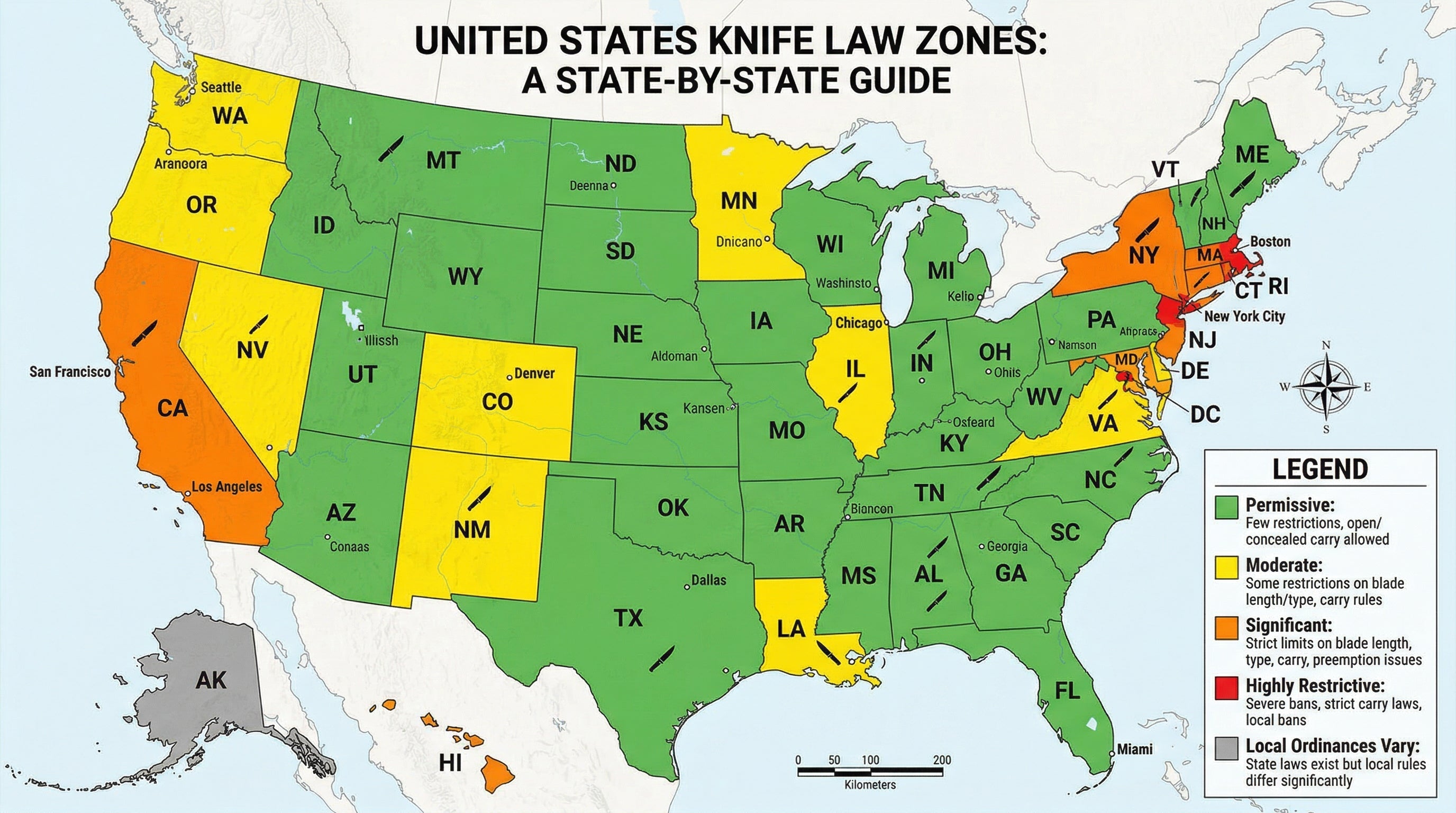
From a legal perspective, carrying a fixed blade with a tsuba (guard) can be highly problematic. In many urban environments, a fixed blade with a guard triggers concealed weapons ordinances, classifying it as a combat tool rather than a utility tool. This is exactly why folders like the Bellona and Nova are vastly superior for modern EDC. They offer the exact same blade functionality but fold safely into your pocket, keeping you on the right side of local ordinances.

The Value Proposition of Modern Folders
Let us talk about value for a moment. Historically, getting a premium steel folder with smooth ball bearings and a reliable lock would cost well over a hundred dollars. The current landscape has shifted aggressively in favor of the consumer. It is frankly astonishing what you can get in the $50 to $60 price range today.
Both the Crossbar lock on the Bellona and the Liner lock on the Nova offer incredibly secure lockups, completely negating the old fear that a folding tip-heavy blade might collapse during hard use. When you pair those locks with Ceramic Ball Bearings, the deployment is faster and smoother than spring-assisted mechanisms, without the legal baggage of automatic knives.
At the end of the day, you no longer have to compromise. You can have the aggressive, historically inspired aesthetic of the geometric point, without sacrificing the slicing capability needed for daily tasks. By choosing models with thinner blade stocks, advanced grinds, and easily maintainable steel, you turn what used to be just a tactical novelty into a genuinely indispensable daily tool.
Frequently Asked Questions
What makes a tanto blade different from other shapes?
Unlike drop points or clip points that feature a continuous curved belly, this profile features a distinct, angular transition (the secondary point) between the front edge and the bottom edge. This places more steel mass directly behind the tip, resulting in unmatched piercing strength.
Are tanto knives good for everyday carry (EDC)?
Traditionally, their thick geometry made them poor slicers. However, modern variations featuring hollow grinds or compound flat grinds with thin blade stocks (around 2.7mm to 3.2mm) are excellent for EDC, as they slice cleanly while retaining tip durability.
How do I sharpen the secondary angle without ruining it?
The key is to treat the blade as two separate straight edges. Sharpen the long bottom edge first, stopping your stroke exactly at the transition point. Then, lift the blade and sharpen the short front edge separately. Never sweep your sharpening stroke around the corner.
What is the difference between an American and a Japanese profile?
The traditional Japanese version features a subtle, continuous curve (hira-zukuri) designed for slashing and armor piercing. The Americanized version features strict, straight lines and a sharp geometric angle, prioritizing structural tip strength over slicing ability.
Is AR-RPM9 steel good for this blade shape?
Yes. AR-RPM9 is a proprietary spray-formed steel that achieves high hardness (HRC 59-61) while maintaining excellent toughness and corrosion resistance. This prevents the delicate secondary point from chipping during hard use while keeping it highly resistant to daily moisture.


1 comment
John Bridges
I am having trouble deciding which piece to buy!
Leave a comment
All comments are moderated before being published.
This site is protected by hCaptcha and the hCaptcha Privacy Policy and Terms of Service apply.