


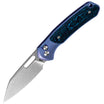
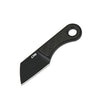
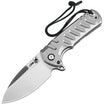
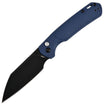
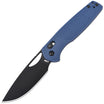
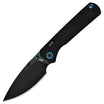
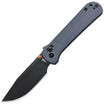
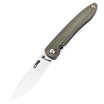
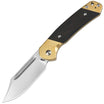
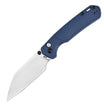
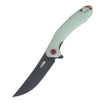
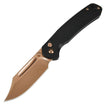
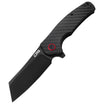
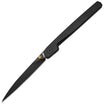
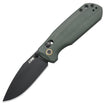
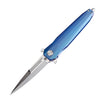
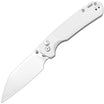
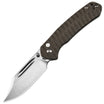
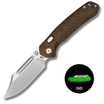

When selecting the perfect everyday carry (EDC) or outdoor knife, the blade steel is arguably the most critical factor to consider. The market is flooded with acronyms and chemical formulas, making it daunting for even seasoned enthusiasts to keep up. Among the myriad of options, cpm 154 steel for knives has established itself as a benchmark for premium performance, balancing edge retention, toughness, and corrosion resistance in a way few other materials can. However, how does it stack up against the semi-stainless ruggedness of D2, the modern toughness of Nitro V, or the industry-standard CPM S30V? Furthermore, with the emergence of proprietary innovations like AR-RPM9 and AR-SFII, the landscape of blade performance is shifting rapidly.
This comprehensive guide will dissect these steels down to their molecular level. We will explore how different manufacturing processes—from traditional ingot casting to advanced particle metallurgy and proprietary spray-form technologies—impact the knife in your pocket. Whether you are looking for a blade that holds an edge for months or one that can withstand heavy abuse without chipping, understanding the metallurgy behind the metal is the first step to making an informed choice.

1. Understanding Knife Steel Terminologies and Composition
To truly appreciate the performance differences between cpm 154 steel for knives and its competitors, we must first establish a baseline understanding of blade metallurgy. A steel's performance is not magic; it is the result of precise chemical engineering and heat treatment.
The Building Blocks of Blade Steel
Every knife steel is an alloy of iron and carbon, but the "secret sauce" lies in the additives. These elements determine whether a blade will rust in humidity, snap under pressure, or dull after cutting a single rope.
- Carbon (C): The king of hardeners. Higher carbon content generally means better edge retention and hardness but can increase brittleness and susceptibility to rust.
- Chromium (Cr): The stainless element. To be classified as "stainless," steel typically needs at least 10.5% to 13% chromium. It forms a passive oxide layer that prevents rust. It also contributes to the formation of chromium carbides, which aid wear resistance.
- Vanadium (V): A crucial element for modern super-steels. Vanadium forms incredibly hard carbides (vanadium carbides) that act like microscopic diamonds within the steel matrix, significantly boosting wear resistance and allowing for a very fine grain structure.
- Molybdenum (Mo): Increases toughness and strength, particularly at high temperatures. It also works synergistically with chromium to improve corrosion resistance.
Grain Structure and Manufacturing Processes
The method used to create the steel is just as important as the ingredients. Traditional steel is melted in a crucible and poured into molds (ingots). As it cools, elements can segregate, creating uneven clumps of carbides. This can lead to weak spots.
Particle Metallurgy (PM): This advanced process involves spraying molten metal through a nozzle to create tiny droplets that solidify instantly into particles. These particles are then fused under heat and pressure. The result is a steel with a perfectly uniform distribution of carbides. This is the process behind CPM (Crucible Particle Metallurgy) steels like CPM 154 and CPM S30V.
Spray-Form Technology: A distinct and innovative method used for steels like AR-RPM9 and AR-SFII. It also utilizes rapid solidification to achieve a fine grain structure but is distinct from the PM process, offering a unique balance of performance and economic accessibility.
The Heat Treatment Factor
Even the most chemically advanced steel will fail if not heat-treated correctly. Heat treatment involves heating the steel to critical temperatures and quenching it to lock in the crystal structure (martensite), followed by tempering to relieve stress. A difference of a few degrees or minutes can drastically alter the final hardness (measured on the Rockwell C scale, or HRC).

2. The Spotlight on CPM 154 Steel
When discussing high-performance cutlery, cpm 154 steel for knives is frequently cited as a favorite among custom knifemakers and premium production brands alike. But what exactly makes it so special?
CPM 154 vs. 154CM: The Evolution
It is crucial to distinguish between 154CM and CPM 154. 154CM was originally developed for jet engine components and later adopted by knifemakers for its high strength and corrosion resistance. CPM 154 is the particle metallurgy version of the exact same alloy.
By applying the particle metallurgy process to the 154CM formula, the large, blocky chromium carbides found in standard 154CM are broken down into fine, evenly distributed particles. This modification does not change the chemical makeup but drastically improves two things: toughness and finishability. A blade made of CPM 154 can take a finer edge and be polished to a mirror finish much easier than its predecessor.
Performance Profile of CPM 154
In the world of EDC, CPM 154 occupies a "Goldilocks" zone. It offers:
- Edge Retention: Excellent. It holds an edge significantly better than standard stainless steels like 440C but is easier to sharpen than extremely hard steels like S90V.
- Corrosion Resistance: High. With 14% Chromium, it resists rust well in most environments, making it suitable for pocket carry where sweat and humidity are factors.
- Toughness: Improved over 154CM. The fine grain structure prevents micro-chipping, allowing the edge to roll rather than snap under stress.
Why It Remains a Top Choice
Despite newer alloys hitting the market, cpm 154 steel for knives remains relevant because it is predictable and user-friendly. It sharpens relatively easily on standard stones, unlike some vanadium-heavy super steels that require diamond plates. For a user who wants a premium experience without the headache of impossible maintenance, CPM 154 is a stellar choice.
3. D2 Steel: The Semi-Stainless Powerhouse
While CPM 154 offers a stainless premium experience, D2 Steel represents the gritty, hardworking side of the spectrum. Often called a "semi-stainless" tool steel, D2 has a legendary reputation in the industry.
Defining the Semi-Stainless Category
D2 contains roughly 11% to 12% chromium. This places it just shy of the 13% threshold typically required for a full stainless classification. What does this mean for you? It means D2 offers incredible resistance to wear and abrasion—far superior to standard carbon steels—but it requires a bit more care to prevent staining or pitting if left wet.
Strength and Edge Retention
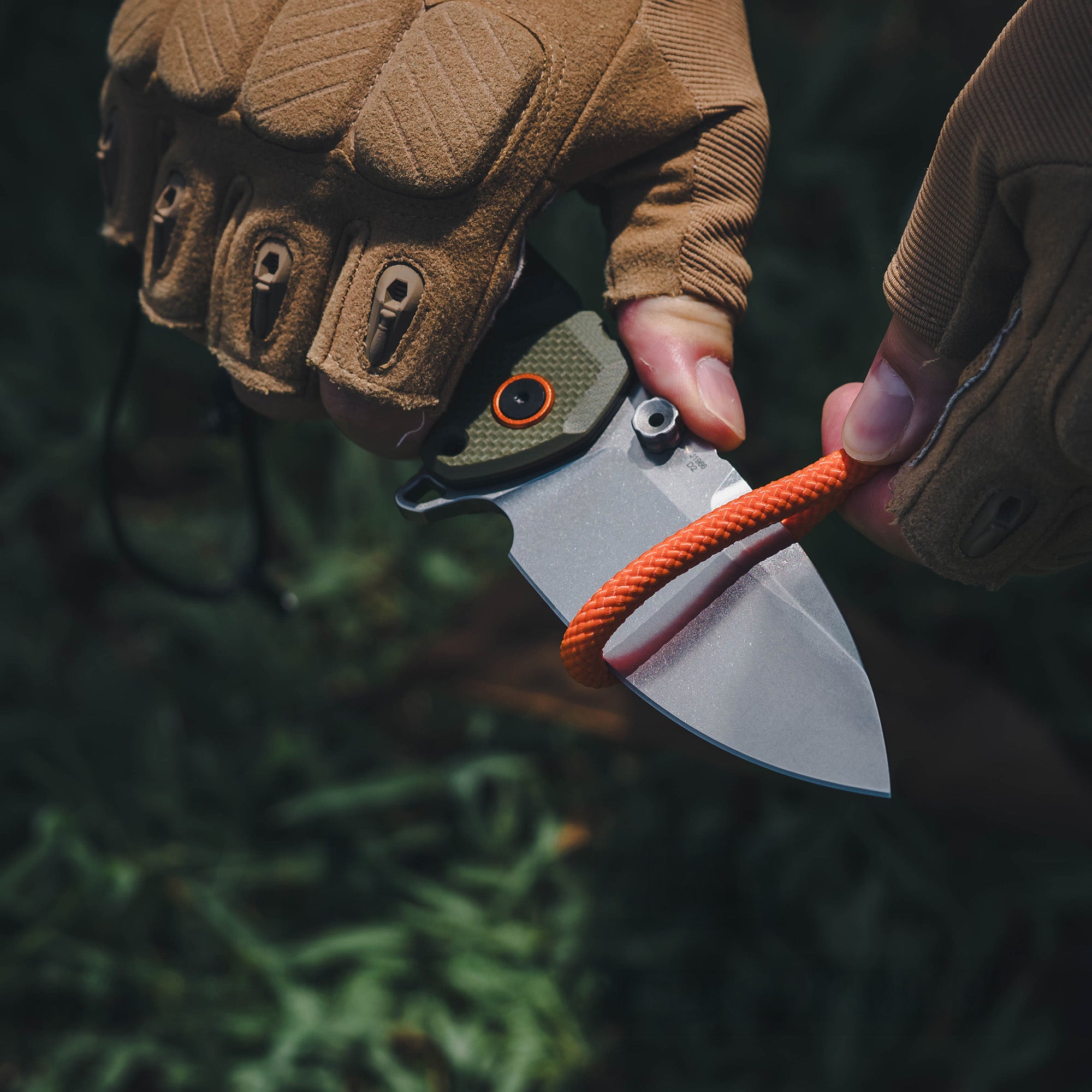
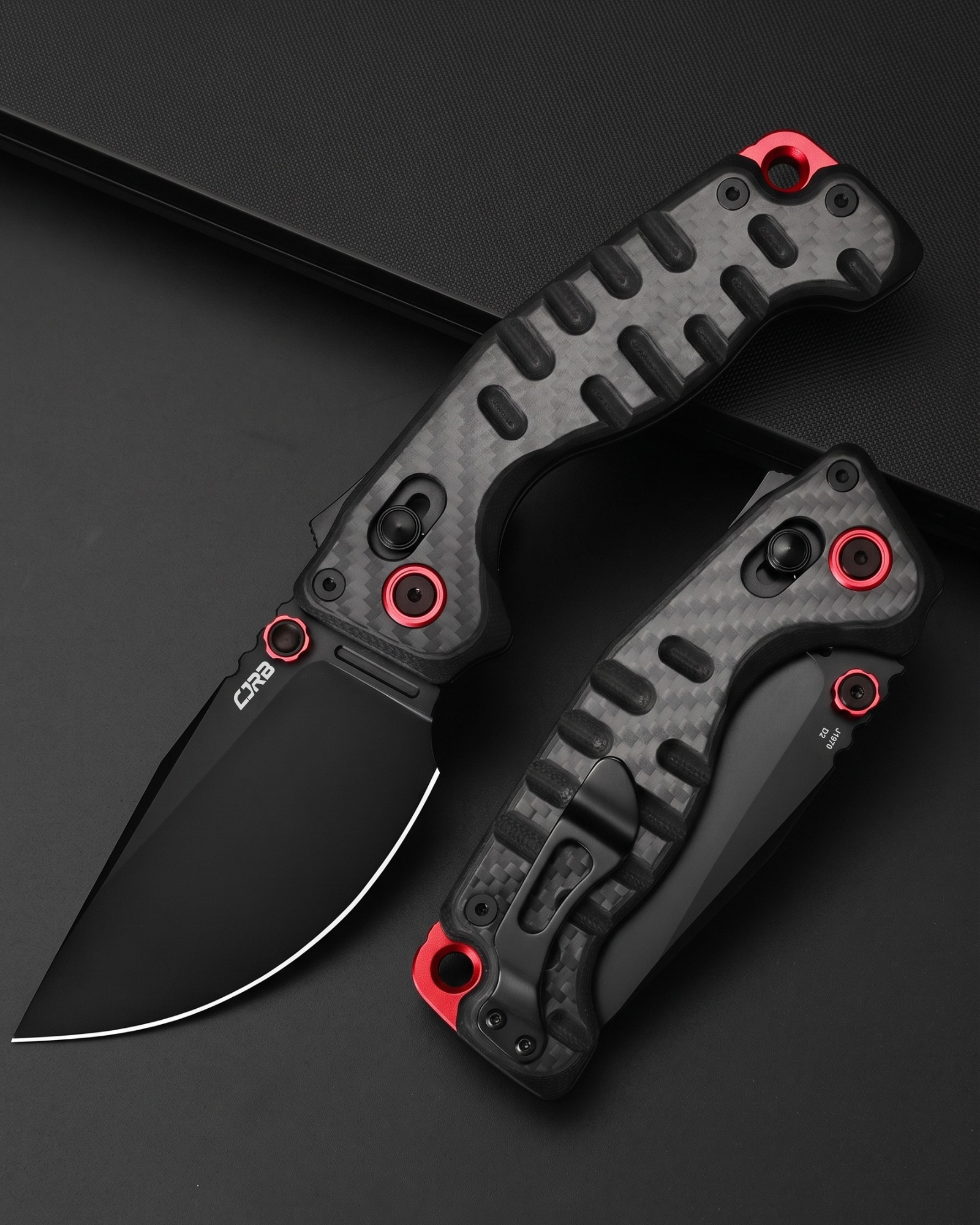
Dive into CJRB's D2 collection, where high-carbon, semi-stainless steel takes the center stage, offering blades that promise a phenomenal blend of edge retention and durability. Our D2 Steel knives, acclaimed for their robustness and sharpness, are designed to navigate through your cutting tasks with ease and precision. Explore a variety crafted for those who demand excellence in every cut and find a companion that reflects steadfast quality and reliability.
Because of its large chromium carbides, D2 has a "toothy" edge that is aggressive on fibrous materials like cardboard and rope. It holds this working edge for a very long time, often outlasting tougher stainless steels in pure abrasion tests.
Maintenance Considerations
Owning a D2 knife is a commitment to maintenance. It is not difficult, but it is necessary. A simple wipe-down with mineral oil after use is usually sufficient. In return, you get a blade that is incredibly hard (often 60-62 HRC) and durable.
4. Nitro V: The Tough and Versatile Contender
Nitro V is a newer player that has gained massive popularity, particularly in custom knives and hard-use EDC blades. It is essentially an enhancement of the AEB-L razor blade steel formula, modified with Nitrogen and Vanadium.
The Chemistry of Nitro V
The addition of Nitrogen is the game-changer here. Nitrogen functions similarly to carbon in hardening the steel but also improves corrosion resistance significantly. This allows Nitro V to achieve high hardness without becoming brittle.
Nitro V vs. CPM 154
| Feature | Nitro V | CPM 154 |
|---|---|---|
| Toughness | ✅ Superior (Very resistant to chipping) | Good |
| Corrosion Resistance | ✅ Excellent (High Nitrogen benefit) | Very Good |
| Edge Retention | Moderate | ✅ Better (Higher Carbon/Alloy content) |
| Sharpenability | ✅ Very Easy (Fine microstructure) | Moderate |
Ideal Applications
Nitro V is exceptional for knives that might see impact or twisting forces, such as outdoor fixed blades or heavy-duty folders. Its extreme toughness means the edge will survive encounters that might chip harder, more brittle steels.
5. CPM S30V: The Industry Standard for Premium EDC
For a long time, CPM S30V was widely considered the ultimate EDC steel. It was one of the first steels designed specifically for cutlery rather than adapted from industrial machinery.
Designed for Knives
CPM S30V was developed by Crucible Industries in collaboration with legendary knifemaker Chris Reeve. The goal was to create the perfect balance of edge retention, corrosion resistance, and toughness.
The Vanadium Advantage
With roughly 4% Vanadium, S30V contains a high volume of vanadium carbides. This gives it superior wear resistance compared to cpm 154 steel for knives. However, this also makes it slightly harder to sharpen. In terms of corrosion resistance, it is on par with or slightly better than CPM 154.
Comparison Summary
If edge retention is your absolute priority, CPM S30V generally outperforms CPM 154. However, CPM 154 often takes a keener, finer edge and is easier to polish. Many users prefer CPM 154 for tasks requiring a razor-like finish, whereas S30V is a workhorse that keeps cutting for a long time.

6. The Innovation of Spray-Form Technology: AR-RPM9 and AR-SFII
While the industry has long relied on standard PM steels, Artisan Cutlery and CJRB have pioneered the use of proprietary spray-form technology to deliver exceptional performance at accessible price points. This technology bridges the gap between budget steels and premium particle metallurgy options.
Exploring AR-RPM9 Steel
What is AR-RPM9? AR-RPM9 is a proprietary steel designed by Artisan Cutlery that will be used for both folding knives and fixed blades. AR-RPM9 has been formulated to offer balanced performance at an accessible price point. Unlike traditional budget steels which are cast in ingots, AR-RPM9 uses a spray-form process.
Why Spray-Form Matters: We are proud to be using a proprietary spray-form process to keep the grain structure of this steel exceptionally fine, which improves the overall toughness and performance of the steel over time. Knives that are produced using this steel are: highly corrosion resistant, maintain a fine sharp edge for an extended period of time, and can be easily maintained and sharpened.
Chemical Composition of AR-RPM9:
| C | Cr | Mo | Mn | V | Co | Si | Ni |
|---|---|---|---|---|---|---|---|
| 0.9% | 18% | 1% | 0.45% | 0.1% | 0.3% | 0.2~0.8% | <0.4% |
AR-RPM9 is an exclusive steel designed by Artisan Cutlery that has been specifically made with our budget-friendly line of knives in mind. AR-RPM9 boasts high performance thanks to a proprietary spray-form process developed by our supplier. This proprietary process helps to create a fine grain structure that enhances overall toughness, sharpens easily, and prevents corrosion. We have done our best to create a material that holds up to the rigors of regular use and will excel in adverse conditions, all while maintaining a competitive price point!
The Evolution: AR-SFII Steel
Building on the massive success of AR-RPM9, CJRB introduced AR-SFII Steel. AR-SFII is CJRB’s latest proprietary spray-form stainless steel, engineered to build on the proven success of AR-RPM9 by significantly boosting edge retention while preserving outstanding toughness and easy sharpenability.
Composition Breakdown & Enhancements:
The alloy balance in the AR-SFII formula highlights its high-chromium, high-molybdenum, high-carbon design. Key elements include:
- Carbon (1.11%): Increases hardness and wear resistance, supporting long-lasting sharpness. This is a significant bump from AR-RPM9, giving it more "bite."
- Chromium (14.70%): Delivers core corrosion resistance and contributes to hard chromium carbides for durability.
- Molybdenum (3.75%): Enhances wear resistance and pitting resistance under demanding cutting tasks. This high amount of Molybdenum is a key differentiator.
- Vanadium (1.11%): Refines the grain and forms fine carbides, improving toughness and edge stability.
- Nickel (0.25%): Further boosts corrosion resistance and toughness for reliability in real-world folding-knife use.
Performance Goals: During development, the target for AR-SFII was clear: retain the exceptional toughness and easy maintenance of AR-RPM9 while noticeably increasing edge-holding performance. By adjusting the carbon, molybdenum, and vanadium levels within the spray-form platform, AR-SFII is designed to deliver longer cutting life per sharpening cycle while still allowing users to bring back a razor edge quickly with common sharpening equipment.
From CJRB’s point of view, AR-SFII represents the next step in high-value performance steel, giving our knives a steel “engine” that can confidently compete with any steel in a similar price range. Like AR-RPM9, AR-SFII uses a proprietary spray-form process that atomizes molten steel and solidifies it rapidly, creating an exceptionally fine and uniform grain structure. This fine microstructure translates into higher toughness at a given hardness, better resistance to chipping and cracking, and a cleaner, more refined edge that responds well to sharpening.

7. Comparative Analysis: Edge Retention vs. Toughness vs. Corrosion
To help you visualize how these steels relate to one another, we have compiled a comparative analysis based on typical heat treatments and performance testing.
Overall Performance Ratings (1-10 Scale)
| Steel | Edge Retention | Toughness | Corrosion Resistance | Ease of Sharpening |
|---|---|---|---|---|
| CPM 154 |
|
|
|
6/10 |
| D2 |
|
|
|
4/10 |
| Nitro V |
|
|
|
8/10 |
| CPM S30V |
|
|
|
4/10 |
| AR-RPM9 |
|
|
|
9/10 |
| AR-SFII |
|
|
|
7/10 |
Interpreting the Data
As shown in the table, there is rarely a single "best" steel. cpm 154 steel for knives offers a very balanced profile. It does not excel to the extreme in any one category but fails in none. Contrast this with D2, which sacrifices corrosion resistance for raw cutting power, or Nitro V, which trades edge retention for extreme toughness and corrosion resistance.
The newcomer, AR-SFII Steel, is particularly impressive because it challenges the traditional trade-off between toughness and edge retention. Thanks to the spray-form process, it achieves high marks in both, positioning it as a serious competitor to premium particle metallurgy steels.
8. Choosing the Right Steel for Your Needs
With so many options, how do you decide? Let's break it down by use-case scenarios.
Everyday Carry (EDC) in Urban Environments
For an office setting or general urban carry where you might cut open packages, slice an apple, or cut loose threads, corrosion resistance and ease of sharpening are key. AR-RPM9 Steel is a fantastic choice here due to its high corrosion resistance and ease of maintenance. CPM 154 is also excellent if you want a more premium feel and finish.
Hard Use and Outdoor Adventure
If you are camping, hiking, or working on a construction site, you need toughness. You do not want your blade to chip if it hits a staple or a knot in wood. Nitro V and AR-SFII Steel are superior choices here. Their fine grain structures allow them to absorb impact significantly better than D2 or S30V.
Maximum Cutting Performance
If your primary goal is to cut cardboard all day without sharpening, you need high wear resistance. D2 Steel is the budget king for this purpose. For a stainless option, CPM S30V or AR-SFII will keep cutting long after others have dulled.
9. Maintenance and Sharpening Guide
Proper care extends the life of your knife regardless of the steel type.
Sharpening Protocols
- 1 Know Your Steel: Softer steels like AR-RPM9 can be sharpened quickly on standard ceramic rods or Arkansas stones. Harder steels with high vanadium content (like S30V) respond best to diamond abrasives.
- 2 The Burr: The goal is to raise a burr on one side before flipping. With fine-grain steels like CPM 154 and AR-SFII, the burr is smaller and cleaner, making it easier to deburr and strobe to a razor finish.
- 3 Stropping: Always finish with a leather strop loaded with compound. This aligns the microscopic edge and is particularly effective on the fine grain structure of spray-form and particle metallurgy steels.
Preventing Rust
Even stainless steels can rust. CPM 154 and AR-SFII are resistant, but not rust-proof. Clean your blade after cutting acidic foods (like citrus) or exposure to saltwater. A light coat of food-safe mineral oil is all that is needed for storage. For D2, this step is mandatory, not optional.

Conclusion
The world of knife steel is vast, but understanding the nuances of cpm 154 steel for knives compared to its peers allows you to make a purchase that fits your lifestyle. Whether you choose the balanced premium nature of CPM 154, the rugged endurance of D2, or the cutting-edge innovation of AR-SFII, knowing the science behind the steel ensures you get the best tool for the job.
FAQ: Common Questions About Knife Steels
Q1: Is CPM 154 the same as 154CM?
Not exactly. While they share the same chemical formula, CPM 154 is made using the Crucible Particle Metallurgy process. This results in a much finer, more uniform grain structure compared to the standard ingot-cast 154CM. This difference gives CPM 154 better toughness, improved grindability, and the ability to take a cleaner polished finish.
Q2: Does CPM 154 rust easily?
CPM 154 is a stainless steel with roughly 14% chromium, so it has very good corrosion resistance. It is suitable for most everyday carry tasks and food prep. However, like all steel, it is not completely rust-proof. Prolonged exposure to saltwater or acids without cleaning can cause staining, but it is far more resistant than tool steels like D2.
Q3: Is D2 better than CPM 154?
"Better" depends on the use case. D2 is generally harder and may hold a working edge slightly longer in abrasive cutting due to large carbides, but it is not stainless and can be more brittle. CPM 154 is fully stainless, tougher, and easier to sharpen to a razor edge. For a well-rounded EDC knife, CPM 154 is often considered superior due to its balanced attributes.
Q4: How does AR-RPM9 compare to CPM 154?
AR-RPM9 is a spray-form steel designed to offer high performance at a budget price. While CPM 154 is a premium steel with better edge retention, AR-RPM9 offers incredible value with high corrosion resistance and a very fine grain structure that makes it exceptionally easy to sharpen. AR-RPM9 is tougher than many budget steels, making it a competitive alternative for users who want performance without the premium price tag.
Q5: Why is the grain structure important in knife steel?
The grain structure refers to the arrangement of the crystals and carbides within the steel. A coarse structure (like in traditional D2) can lead to micro-chipping and difficult sharpening. A fine, uniform structure (found in CPM 154, AR-RPM9, and AR-SFII) improves toughness because there are no weak spots. It also allows the steel to support a much finer, sharper edge geometry without collapsing.


1 comment
David
Very interesting. I wasn’t aware that AR-SFII was on the market. Sounds good.
Leave a comment
All comments are moderated before being published.
This site is protected by hCaptcha and the hCaptcha Privacy Policy and Terms of Service apply.