

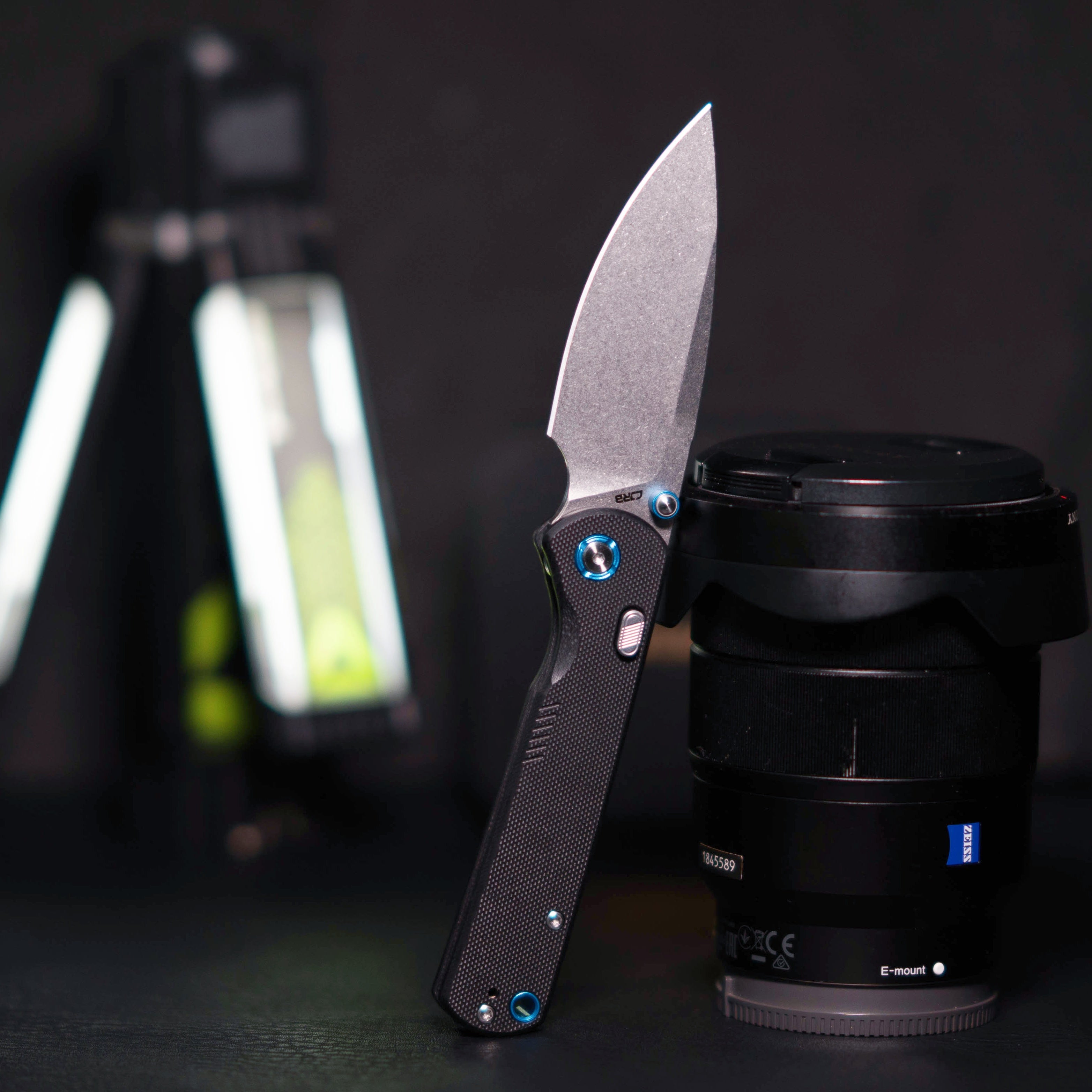
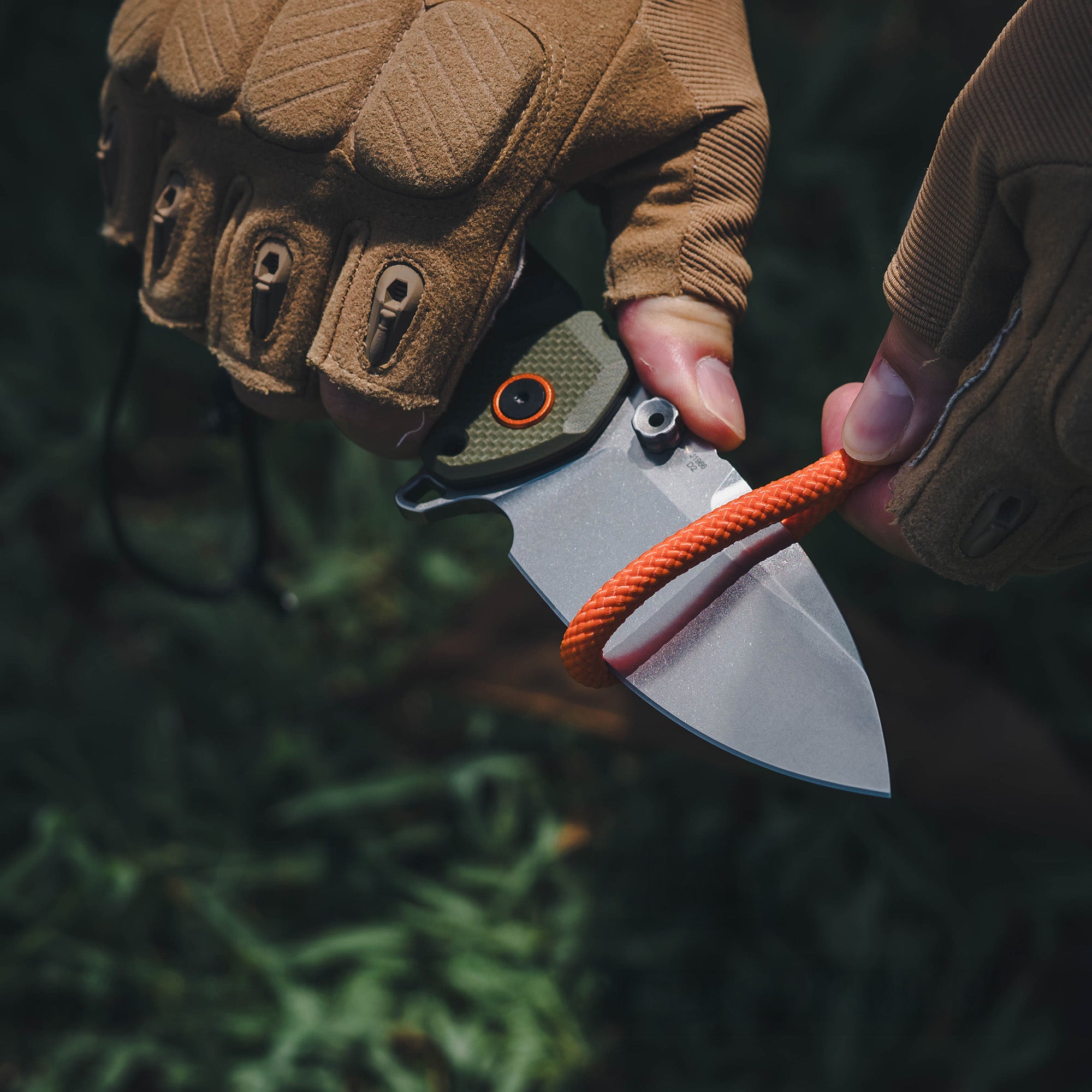
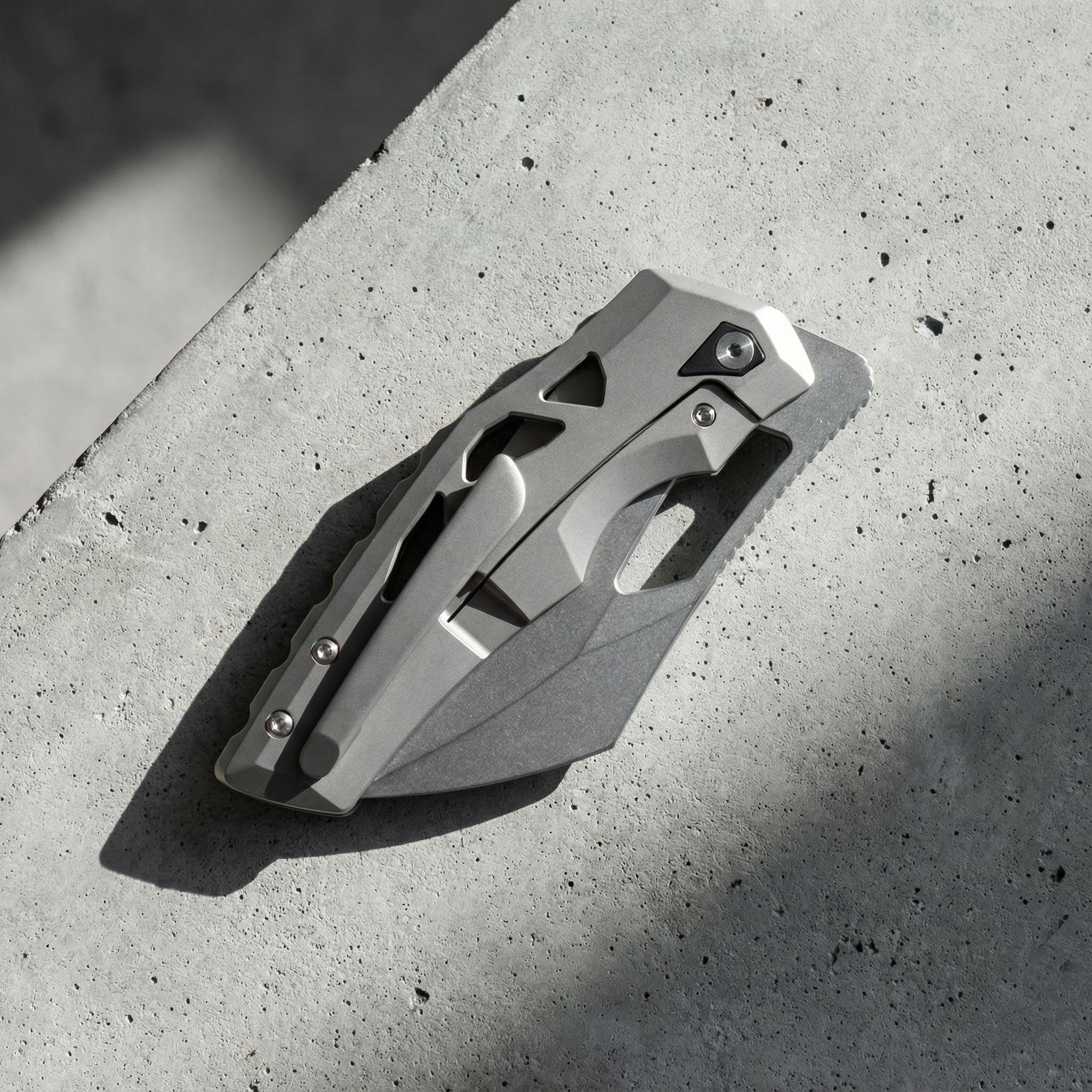
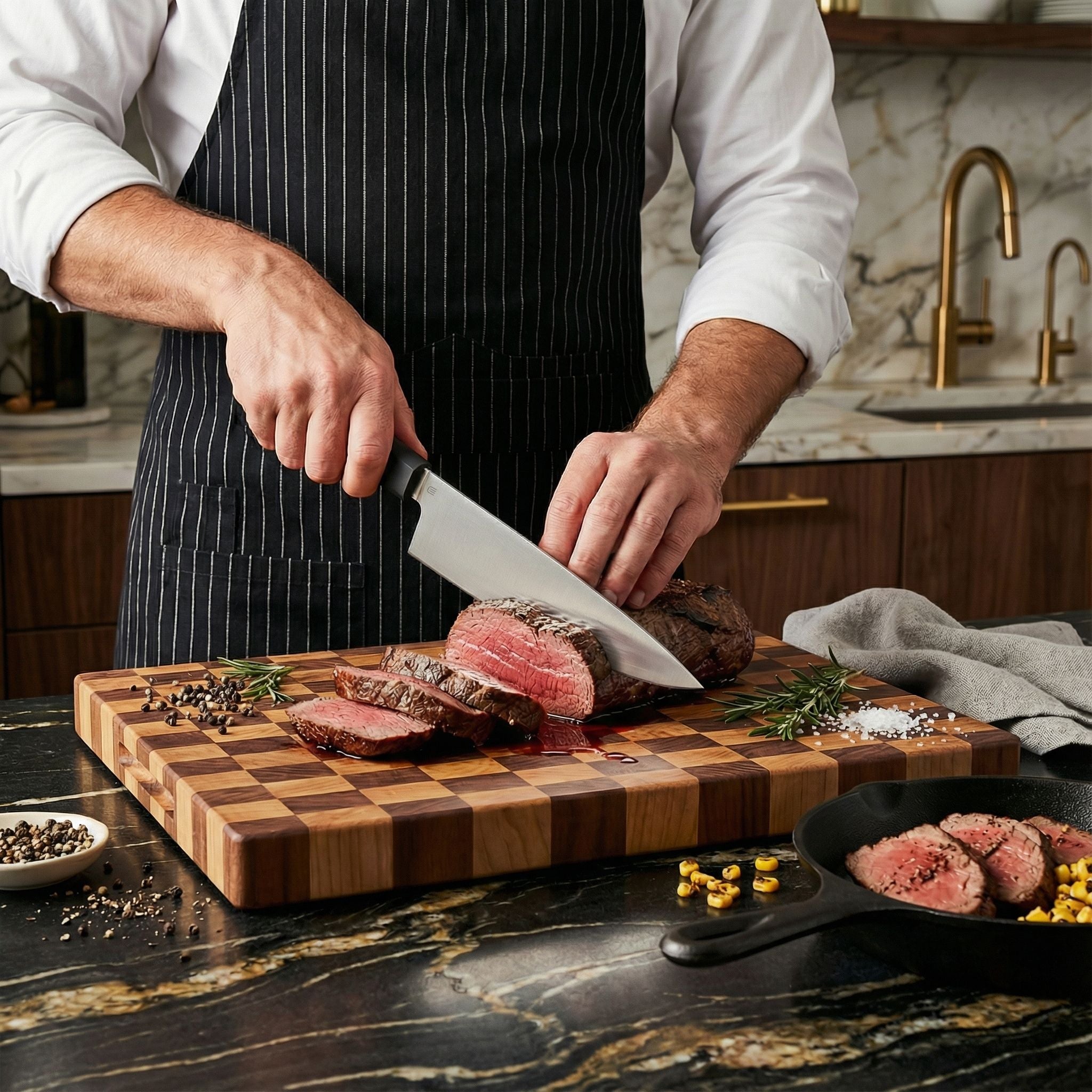

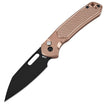
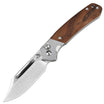
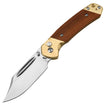
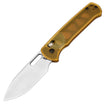
Let’s be honest for a second. We all love the click-clack sound of a well-tuned folding knife. It’s the fidget spinner for grown-ups. It’s mechanical pocket jewelry. But if we strip away the gadgetry, the ball bearings, the axis locks, and the thumb studs, what are we left with? We are left with a tool that has a built-in structural weakness: the pivot. In the world of Every Day Carry (EDC), there is a rising tide of minimalists who are trading in their complex folders for something simpler, stronger, and surprisingly more convenient: the small fixed blade EDC.
You might be thinking, “Carry a fixed blade? Like Crocodile Dundee? In the office?” Hold your horses. We aren't talking about strapping a Bowie knife to your leg to go pick up a latte. We are talking about micro-fixed blades—compact, stout, and incredibly capable tools that disappear in your pocket or around your neck until you need them. In this deep dive, we are going to explore why ditching the folder might just be the smartest upgrade you make to your daily loadout this year.

The Folder Fallacy: Why Your Pivot is Your Problem
Folding knives are marvels of engineering. They allow a 3-inch blade to fit into a 4-inch handle. But that engineering comes at a cost. Complexity is the enemy of reliability, and nowhere is this more true than in a tool designed to cut, pry, and slice.
The Dirt, The Lint, and The Grime
If you carry a pocket knife, you know the struggle. Pocket lint is insidious. It gets everywhere. In a folding knife, that lint mixes with the lubrication on your pivot bearings or washers to create a kind of abrasive sludge. Over time, that silky smooth drop-shut action becomes gritty. The locking mechanism—whether it’s a liner lock, frame lock, or crossbar lock—can become compromised by debris.
With a small fixed blade, this problem simply ceases to exist. There is no pivot to gum up. There are no bearings to seize. You could drop a fixed blade into a bucket of mud, rinse it off in a stream (or the office sink), and it is immediately ready to go back to work. For those who work in dusty environments, construction, or even just own a shedding dog, the hygiene of a fixed blade is superior.
The Myth of the "Hard Use" Folder
Marketing teams love to sell us "hard use" folding knives. They tout the strength of the lock. But here is the physics reality check: a folding knife is a broken knife that you temporarily fix with a pin every time you open it. Under extreme stress, locks fail. Pivots snap. Handles flex.
A fixed blade acts as a single, continuous piece of material. The energy transfer is direct. When you are cutting through thick cardboard, carving wood, or (heaven forbid) prying something open, you aren't worrying about the lock disengaging and the blade closing on your fingers. The peace of mind that comes with a static blade is immeasurable.
| Feature | Folding Knife | Small Fixed Blade |
|---|---|---|
| Moving Parts | Many (Pivot, Stop Pin, Lock, Bearings) | Zero |
| Cleaning | Requires disassembly/tools | Rinse and wipe |
| Deployment Speed | Fast (requires fine motor skills) | Instant (Grab & Pull) |
| Structural Integrity |
Moderate
|
Maximum
|
Deployment Dynamics: Faster Than a Flipper
We often equate speed with fancy deployment mechanisms. The switchblade, the assisted opener, the ball-bearing flipper. These are fun, but they require fine motor skills. In a high-stress situation, or even just when your hands are cold or wearing gloves, finding a thumb stud or hitting a flipper tab can be clumsy.
The Grab-and-Go Advantage
A small fixed blade relies on gross motor skills. You grab the handle, you pull. The sheath releases the knife. That's it. There is no "action" to manipulate. This makes the small fixed blade the ultimate tool for immediate use. Whether you are cutting a seatbelt in an emergency or just trying to open a package while holding a toddler in your other arm, the simplicity of deployment is a massive ergonomic victory.
Modern Sheaths: The Secret Sauce
The viability of a small fixed blade rests entirely on the quality of its sheath. In the past, bulky leather sheaths made carrying a fixed blade cumbersome. Today, we have Kydex and injection-molded thermoplastics. These materials snap onto the blade with a satisfying click, offering retention that keeps the knife secure even if you are jogging or hanging upside down (though we don't recommend the latter as a general hobby).
Consider the setup of modern micro-blades. They often come with holes spacing compatible with Ulticlips or Tek-Loks, allowing you to mount them inside your waistband, horizontally on a belt, or attached to a backpack strap.
Enter the Game Changers: CJRB Chip and Knap
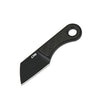
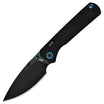
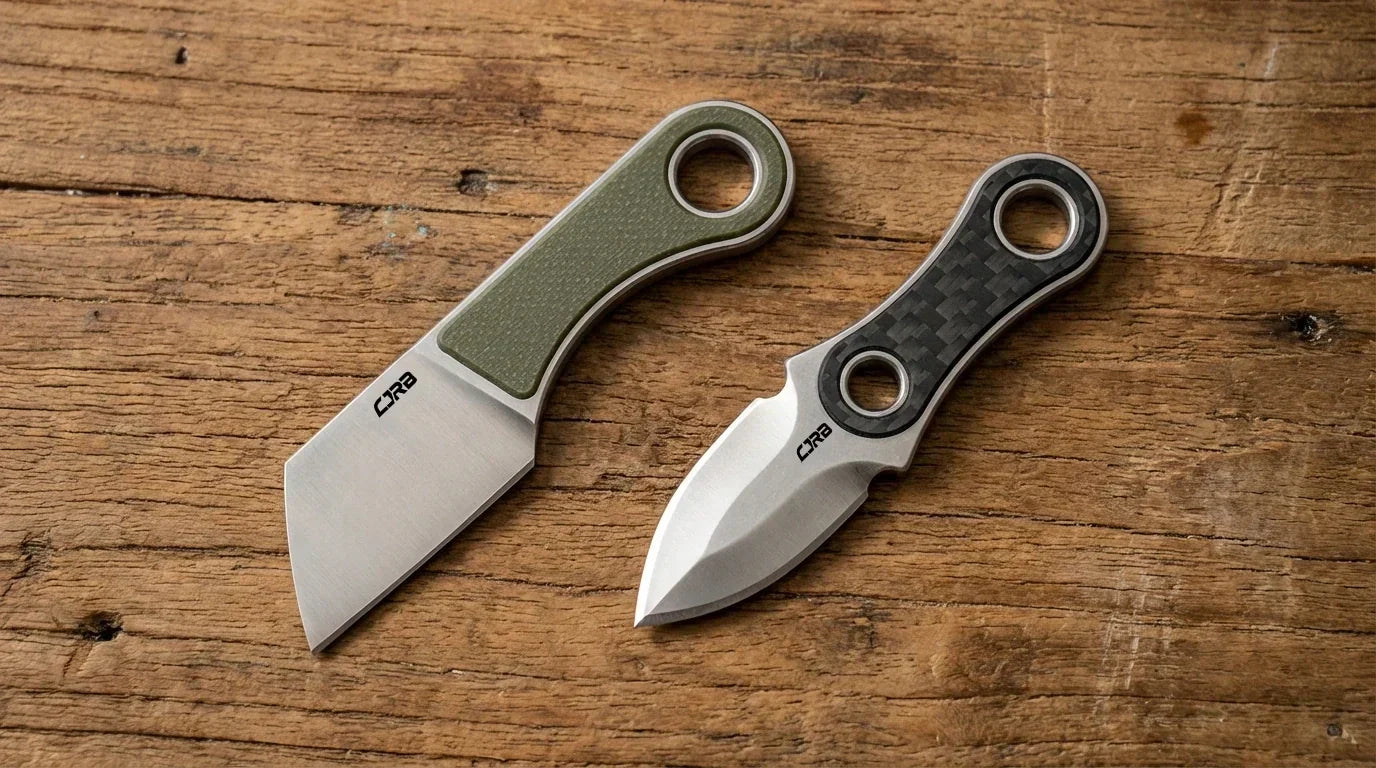
Speaking of modern solutions, the market has finally caught up to the demand for high-quality, budget-friendly micro fixed blades. CJRB has introduced two models that perfectly encapsulate this philosophy: the Chip and the Knap. These aren't just shrunken-down survival knives; they are purpose-built EDC scalpels.

The CJRB Chip: The Urban Cleaver
The CJRB Chip is a masterclass in efficiency. It features a Cleaver style blade, which is exceptionally useful for draw cuts—think opening boxes, scoring materials, or cutting on a flat surface. Because the tip is lowered, you have excellent control without the risk of accidentally puncturing the contents of a package.
- Blade Material: AR-RPM9 (High Performance Steel) – Provides excellent edge retention and corrosion resistance.
- Blade Length: A minuscule 1.23" (31.12mm). This is legal almost everywhere and non-threatening.
- Handle: A mix of G10 and Carbon Fiber. It provides grip without chewing up your clothes.
- Weight: 12.2g (0.43oz). You literally forget it is there until you need it.
The CJRB Knap: The Versatile Spear
If you prefer a more traditional profile, the CJRB Knap offers a Spear Point geometry. This gives you a piercing tip that is centered with the handle, making it ideal for drilling holes, removing splinters, or detailed carving tasks. It shares the same DNA as the Chip but serves a different user preference.
- Blade Length: 1.18" (30mm) – Short, controllable, and precise.
- Overall Length: 3" (76.25mm) – Fits in the coin pocket of your jeans.
- Blade Grind: Flat grind for superior slicing performance despite the thick stock relative to size.
- Assembly: Comes with a sheath and rope, ready for neck carry right out of the box.
Material Matters: Why Steel Choice is Critical in Small Blades
When you have a blade that is less than 1.5 inches long, the quality of that steel becomes paramount. You don't have inches of edge to spare. If the one inch you have gets dull, the knife is useless. This is why the choice of steel in these micro-blades is a critical factor in their performance.
The Magic of AR-RPM9
Both the CJRB Chip and Knap utilize AR-RPM9, a proprietary spray form steel. Why does this matter? Traditional budget steels are cast, which can lead to uneven grain structures—clumps of carbides here, soft spots there. Spray forming produces steel by atomizing molten metal into fine droplets that solidify rapidly, creating a highly uniform microstructure with even carbide distribution and improved toughness.
For a small fixed blade, AR-RPM9 offers the "Goldilocks" zone:
- 1 High Corrosion Resistance: Since neck knives often sit against the chest (sweat) or inside pockets, rust resistance is non-negotiable.
- 2 Easy Sharpening: Small blades get used often. You want a steel that takes a razor edge quickly without needing diamond stones.
- 3 Toughness: A short blade is stiff. It needs steel that won't chip (pun intended) when encountering staples or hard plastic.
G10 and Carbon Fiber: Grip in Micro Sizes
Handling a tiny knife can be dangerous if the grip is slippery. You don't have a full four-finger grip. You are likely using a two-finger or three-finger pinch grip. The texture of G10 (a high-pressure fiberglass laminate) combined with the aesthetic of Carbon Fiber on the CJRB models ensures that the knife stays locked in your fingers, providing the tactical feedback necessary for precision cuts.
The Art of Discreet Carry: Invisible Yet Accessible
The biggest hurdle for people switching from folders to fixed blades is figuring out how to carry them. We are conditioned to the pocket clip. But the small fixed blade opens up a world of carry options that are often more comfortable and discreet.

Neck Carry: The Classic
This is the most common method for blades the size of the Chip and Knap. By suspending the knife inverted on a paracord loop or ball chain, the knife is always center-line on your body. It is accessible with either hand (ambidextrous). Under a t-shirt, it is invisible. For runners or hikers, this keeps the knife off the belt and away from waist straps.
The "Coin Pocket" Carry
That useless little pocket inside the right front pocket of your jeans? It was originally designed for pocket watches, but it is the perfect home for a CJRB Chip. Because the knife is under 3 inches in total length, it slides right in. You can attach a small lanyard to the handle to fish it out easily. It sits securely, doesn't scratch your phone, and doesn't clutter your main pocket real estate.
Keychain Utility
While some might find this bulky, for those who carry keys on a carabiner or a belt loop, attaching the sheath of a small fixed blade is a viable option. It ensures you never leave the house without a cutting tool. The lightweight nature (under 0.5oz for the CJRB models) means it won't ruin your car's ignition switch or weigh down your pants.
Real-World Scenarios: Where the Mini Fixie Shines
Let's move away from theory and look at where these tools excel in daily life. Why would you reach for a fixed blade over a folder in these situations?
The Office Environment
Pulling out a large, tactical folding knife in a corporate breakroom to slice an apple can raise eyebrows. It looks aggressive. The "snap" of deployment draws attention. A small fixed blade like the CJRB Knap, however, is cute. It looks like a tool, not a weapon. It’s precise and non-threatening, making it the perfect "gentleman's" or "gentlewoman's" cutter for opening mail or packages.
Food Prep on the Go
Have you ever tried to cut fruit with a folder? Juice gets into the pivot. Sticky residue ruins the action. With a fixed blade, you can slice your apple, wipe the blade on a napkin, and re-sheath it. When you get home, wash it with soap and water without fear of rust forming inside a hidden mechanism. The AR-RPM9 steel is particularly food-prep friendly due to its corrosion resistance.
precise Crafting and Whittling
There is a reason woodcarvers use fixed blades. The lack of handle play allows for extreme precision. If you are into whittling, leatherworking, or just fixing things around the house, the solid feel of a fixed blade handle translates to better control over the tip. The Chip's cleaver shape, for example, is excellent for push-cuts against a flat surface, acting almost like a portable chisel or utility razor.
How to Choose Your First Small Fixed Blade
Ready to make the jump? Here is a checklist to ensure you buy a tool you will actually carry, rather than one that sits in a drawer.
Cleaver vs. Spear Point vs. Drop Point
- Cleaver (e.g., CJRB Chip): Best for utility tasks. Opening boxes, cutting straps, scoring drywall. It lacks a sharp piercing tip, which makes it safer for working near contents you don't want to damage.
- Spear Point (e.g., CJRB Knap): A jack-of-all-trades. Good for piercing, drilling, and slicing. If you need to dig a splinter out, this is the one.
- Drop Point: The traditional hunter's shape. Great belly for slicing, but often results in a slightly longer overall package.
Handle Ergonomics
Do not expect a full grip. Look for handles that have "finger choils" or deep grooves. These allow your fingers to lock into place so the knife doesn't slide. The G10/Carbon Fiber mix on the CJRB models provides texture, which is essential when you only have two fingers on the tool.
The Weight Ratio
For neck carry, weight is the enemy. Anything over 2 ounces will start to feel like a pendulum swinging around your neck. Aim for the sub-1-ounce range if possible. At 0.43oz and 0.52oz respectively, the Chip and Knap are leaders in this weight class.
Conclusion: Making the Switch
We aren't saying you have to throw away your collection of folding knives. They are fun, they are beautiful, and they serve a purpose. But for the core tasks of Every Day Carry—opening, slicing, cutting, and utility—the small fixed blade is objectively the superior tool. It is stronger, cleaner, faster to deploy, and lighter.
By switching to a micro fixed blade like the CJRB Chip or Knap, you are embracing a philosophy of functional minimalism. You are choosing reliability over fidget factor. You are choosing a tool that will never fold on you, never get gummed up with lint, and never weigh you down. Give the fixed blade life a try for a week. You might just find that your pockets feel lighter, but your capability has never been higher.
Frequently Asked Questions
1. Is it legal to carry a fixed blade knife in my pocket?
Knife laws vary drastically by country, state, and even city. Generally speaking, small fixed blades (under 2-3 inches) are often treated similarly to folding knives in many jurisdictions, especially if carried openly or for utility purposes. However, some places (like the UK or certain US cities) have strict bans on fixed blades or "locking" knives without a "good reason." Always check your local penal code specifically regarding "concealed fixed blades" before carrying.
2. How do I sharpen such a small blade?
Sharpening a small blade like the CJRB Chip is actually easier than a large knife because there is less metal to work. You can use a small pocket whetstone or a ceramic rod. Since the blade is short, you can maintain a consistent angle more easily. For the AR-RPM9 steel, standard ceramic or diamond sharpeners work beautifully. A leather strop loaded with compound is usually enough to maintain the edge for weeks.
3. Is neck carry uncomfortable?
Neck carry is only uncomfortable if the knife is too heavy or the chain/cord is irritating. With ultra-light knives like the 12g CJRB Chip, you won't even feel the weight. Use a breakaway ball chain for safety (so you don't get choked if it catches on machinery) or cover your paracord with a soft fabric sleeve if it irritates your skin. Adjust the length so the knife hangs just above your solar plexus to prevent it from swinging excessively.
4. Can these small knives actually be used for self-defense?
While any sharp object can be used defensively in a life-or-death scenario, small fixed blades like these are designed primarily as utility tools. Their small handles do not offer the secure grip required for combat, and their short reach is a significant disadvantage. They are excellent for cutting seatbelts or clothing in an emergency rescue, but relying on a 1.2-inch blade for self-defense should be a very last resort. View them as tools, not weapons.
5. Why choose AR-RPM9 over standard stainless steel like 8Cr13MoV?
AR-RPM9 is a High-performance steel, meaning it has a much finer, more uniform microstructure than cast steels like 8Cr13MoV or 440C. This results in significantly better edge retention (it stays sharp longer) and higher toughness (it resists chipping better). For a small blade that might see relatively hard use for its size, the upgrade to High-performance steel provides a massive performance boost for a very small difference in price.


1 comment
Varshith
I want knife please send me
Leave a comment
All comments are moderated before being published.
This site is protected by hCaptcha and the hCaptcha Privacy Policy and Terms of Service apply.