


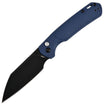
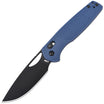
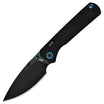
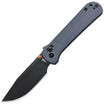

The Tiny Part That Controls the Entire Opening Experience
Have you ever wondered why two folding knives with similar bearings and blade sizes can feel completely different when you open them? I’ve noticed this constantly in my testing. One knife fires open like a rocket, while another feels sluggish or requires frustratingly high thumb pressure. The secret usually lies in a tiny, hidden mechanism: the knife detent. How a detent is tuned affects opening resistance, deployment speed, pocket safety, and the overall action of the blade. The quick answer is that a knife detent holds the blade closed until deliberate opening force overcomes it. Let’s clear up a common misconception right away. The detent is not the same thing as the blade lock. They do completely different jobs. So, how strong should a knife detent actually be? Truth is, there isn't one perfect answer, but understanding the mechanics will totally change how you evaluate your everyday carry (EDC) gear.
What Is a Knife Detent?
Defining the Mechanism
What does "detent" mean on a folding knife? In simple language, it's a closed-blade retention function. It acts as a friction-based or spring-based gatekeeper that resists accidental blade movement. When you carry a knife in your pocket, you want to be absolutely sure the sharp edge stays safely hidden inside the handle.
Detent vs. Pivot vs. Lock
Many users incorrectly describe all opening resistance as "detent strength." Actually, we need to distinguish between several parts:
- Detent: The mechanism holding the blade closed.
- Pivot: The central axis the blade rotates around.
- Bearings or Washers: The friction-reducing materials inside the pivot.
- Locking Mechanism: The part that secures the blade after it opens.
Detent vs Lock: What Is the Difference?
Holding Closed vs. Locking Open
Does the detent lock the knife closed? No. A detent holds the blade closed through resistance, not a hard mechanical block. You can overcome it simply by pulling the blade. The lock, on the other hand, secures the blade firmly in place after it reaches the fully open position. This difference is huge for pocket safety. Users shouldn't assume a strong open lock guarantees strong closed-blade retention. A knife could have an incredibly tough lockup but a terribly weak detent, making it unsafe to carry loose in a pocket. Different knife mechanisms create this closed bias in different ways. For example, a traditional frame lock uses a ceramic ball. In contrast, mechanisms like a Crossbar Lock or a Button Lock use spring tension pressing against the blade tang to keep it securely housed.
How Does a Detent Ball Work?
The Ball, The Pocket, and The Track
Where is the detent ball located? On most liner and frame locks, it is pressed into the springable lock bar. When the knife is closed, this ball engages a small pocket or hole drilled into the side of the blade tang. When you apply opening force—say, pushing on a flipper tab—that force eventually pushes the ball out of the detent pocket. The blade releases. As the blade rotates, the ball travels along a flat arc on the tang known as the detent track. When you close the knife, the ball slides backward along that same track until it loudly clicks back into the pocket. According to engineering principles regarding static and kinetic friction, the initial force required to unseat the ball is always higher than the sliding friction that follows.
A Detent Is a System, Not Just a Ball and a Hole
Honestly, detent feel cannot be explained by the ball alone. It's an entire mechanical ecosystem. Changing just one variable can affect several parts of the knife action.
Main Variables That Affect Perceived Strength
- Lock-bar tension (how hard the spring pushes).
- Detent ball exposure (how far the ball sticks out).
- Detent hole depth and position.
- Blade tang geometry and blade weight.
- Pivot tightness and bearing friction.
- Opening-method leverage.
What Contributes Most to Detent "Feel"? (Estimated Impact)
Opening feel is the result of the complete mechanical system, not just a single part.
What Does “Detent Strength” Actually Mean?
Breakaway Force vs. Travel Friction
What is a strong detent? It simply means a high amount of initial force is required to move the blade out of the closed position. A weak detent requires very little force. But stronger does not always mean better, and lighter does not always mean smoother. We have to look at the difference between the initial breakaway force and the blade movement after the detent releases. A knife can have a very strong initial breakaway but incredibly smooth, frictionless movement afterward. That's actually the ideal setup for many flipper knives. The "snap" you feel is just stored energy releasing all at once.
Strong vs Weak Detent: What Are the Trade-Offs?
Every tuning choice involves compromise. Let's look at the realities of heavy versus light retention.
- Highly secure closed-blade retention.
- More decisive, powerful flipper deployment.
- Excellent energy buildup before release.
- Thumb discomfort or soreness.
- Very difficult operation with gloves.
- Poor accessibility for users with limited hand strength.
Lighter detents offer much easier slow-roll opening and lower thumb pressure. They are far more comfortable for thumb-stud operation. However, an overly weak detent can result in soft, unreliable flipper deployment where the blade fails to reach full lockup. Worse, it creates a greater risk of unintended blade movement during pocket carry.
Why Flipper Knives Usually Need a Stronger Detent
The Physics of the Flipper Tab
A flipper tab acts as a tiny lever. As you press your index finger against it, you are building pressure against the detent ball holding the blade. When the blade finally releases after crossing that threshold, all that stored force transfers instantly to the blade. This creates the characteristic satisfying "snap." If the detent is weak, you can't build up enough stored energy. The blade might only open halfway, leaving you awkwardly shaking your wrist to lock it. Blade weight also changes the ideal tuning. A heavy blade needs more stored force to overcome its rotational inertia compared to a thin, lightweight slicing blade. You can't just use identical tuning across different blade shapes.
How Detent Affects Thumb Stud Knives
Direct Push vs. Lever Snap
Thumb studs apply force entirely differently from flipper tabs. With a stud, your thumb pushes outward through a relatively small contact area. If the breakaway force is too aggressive, it can cause literal thumb pain. I've handled knives that practically tore up my thumb because the manufacturer tuned a thumb-stud knife like a flipper. We also have to consider the difference between slow-rolling the blade (pushing it manually all the way) versus thumb flicking (snapping it out). Handle clearance affects access to the stud, which alters your pushing angle. Often, a lighter, more progressive release feels vastly superior on a thumb stud model.
How Detent Affects Front Flippers
Front flippers have totally different leverage compared to rear flippers. Because the pivot position is different and you are dragging your thumb over the top, the mechanical advantage is lower. Some front flippers feel incredibly difficult even when the detent is not unusually strong. Why? Hand size and thumb reach change the experience. Front-flipper technique matters way more than many users expect. A setup tuned perfectly for a rear flipper usually feels way too stiff when applied to a front flipper. The Multi-Deployment Challenge What happens when one knife has two or more opening methods? Let's say it has a flipper tab and a thumb hole. Every opening method shares the exact same underlying blade resistance. Tuning for a powerful flipper snap might make the thumb hole completely unusable. Conversely, tuning for an easy slow-roll opening can severely weaken flipper performance. Good multi-deployment knives require careful compromise. Manufacturers have to find a "balanced window" of resistance. A great example of solving this is utilizing a Top Liner Lock, which often provides a highly predictable, moderate resistance that accommodates both front flippers and thumb studs comfortably without destroying your fingers.
Why Your Grip Can Make the Detent Feel Stronger
The Dreaded Lock-Bar Squeeze
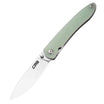
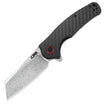
Here is a scenario I see all the time: a user buys a new knife, tries to flip it open, and claims it's broken because the blade won't budge. Very often, the issue is their grip. On many frame-lock knives, your fingers naturally rest right on the lock bar. When you squeeze the handle to gain leverage, you are literally pressing the detent ball harder into the blade tang. You are manually increasing the resistance! This is why users mistakenly blame the factory tuning. If you own a CJRB Frame Lock, try resting your fingers on the pocket clip instead of the lock bar. The knife will suddenly fire open easily. This issue is significantly less noticeable on a Liner Lock design, because the outer handle scale physically protects the lock bar from your grip pressure.
Detent Strength vs Pivot Tightness: How to Tell the Difference
A tight pivot is frequently mistaken for a strong detent. How can you tell the difference? Signs of a detent-related issue:
- High resistance occurs only at the very beginning of deployment.
- The blade swings completely freely after releasing.
Signs of excessive pivot resistance:
- Resistance continues throughout the entire blade travel.
- The blade does not drop or swing freely after it clears the ball.
Dirt, dried factory lubricant, or overtightened hardware can imitate poor tuning. Always diagnose the root cause before attempting aggressive adjustments.
What Is the Detent Track and Ramp?
Normal Wear and Tear
The visible path traveled by the ball across the blade tang is called the detent track. It is completely normal on liner-lock and frame-lock knives. Coated blades (like black DLC) might show this track prominently, while stonewashed blades hide it. Dirt and pocket lint can accumulate in this track, creating a gritty action. If your brand new coated blade feels rough, it just needs some early use to wear in the track smoothly.
The Detent Ramp
Some modern knives feature a detent ramp—a small angled cut near the end of the track. It helps the ball transition smoothly onto the tang during closing, reducing that abrupt "double-clutch" feeling where the blade suddenly stops. Not every folding knife uses a visible ramp, and users should absolutely never attempt to grind one themselves without proper machining knowledge.
What Is Detent Lash?
Detent lash refers to slight, loose blade movement before the blade fully releases from the closed position. You can hear a tiny "click-click" if you lightly push and pull the closed blade. We need to differentiate between lash and actual blade play. Lash happens when the knife is closed; blade play happens when it's open and locked. Small pre-detent movement does not always indicate unsafe lockup. However, if the blade easily exposes its tip, it might justify contacting the manufacturer.
Steel vs Ceramic Detent Balls
What materials are these tiny spheres made from? Traditionally, they were stainless steel. Today, ceramic balls are highly favored in premium knives.
Material Hardness Comparison (Mohs Scale Estimate)
Ceramic balls offer vastly superior wear resistance and surface smoothness. According to material science classifications, technical ceramics resist deformation far better than steel. However, material alone does not determine whether a knife feels good. Geometry and lock-bar tension remain far more important than just having a "ceramic" marketing label.
Does the Pivot System Determine Detent Quality?
Bearings versus washers is an endless debate. Bearings reduce rotational friction, but they do not create the detent. A bearing knife can still have absolutely terrible deployment if the lock bar is too stiff. Conversely, a knife running on basic phosphor bronze washers can have extraordinary tuning. Low pivot friction simply makes the detent characteristics more noticeable. Smooth pivot movement and good tuning are two entirely separate qualities.
Does a New Knife Detent Need to Break In?
Yes, absolutely. A new knife may initially feel stiff or gritty. The ball and the track are making repeated, high-pressure contact for the first time. Blade coatings significantly affect early action. Over the first few weeks of normal use, you will likely notice the action smoothing out as the materials mate together. But there is a line between reasonable break-in and a genuine defect. If it requires two hands to force the knife open, stop and contact customer support.
How Detent Affects Pocket-Carry Safety
Closed-blade retention matters incredibly during everyday carry. A weak setup can allow unintended blade movement while walking or running. Pocket-clip orientation helps—carrying "tip-up" with the blade spine pushed against the pocket seam adds a physical safety barrier. However, loose carry in a bag or purse requires extra caution. Lint, a loose pivot, or damaged components can drastically affect retention. Always perform basic safe-carry checks before regular use, and never rely solely on "fidget feel" to judge whether a tool is safe.How to Evaluate Detent When Buying an EDC Knife
When you are handling a new knife, run through this mental checklist:- Does the closed blade feel securely retained when shaken lightly?
- Can every advertised opener be used comfortably?
- Is the initial resistance deliberate rather than painful?
- Does the blade reach full lockup consistently without aggressive wrist flicks?
- Is the knife intended for slow-roll control, fast deployment, or both?
Quick Comparison: Detent Requirements by Opening Method
| Feature | Rear Flipper | Thumb Stud | Front Flipper | Dual-Deployment |
|---|---|---|---|---|
| Mechanical Leverage | High | Moderate | Low/Awkward | Varies |
| Typical Preferred Tuning | Strong / Crisp | Moderate / Smooth | Light to Moderate | Balanced Compromise |
| Problem if Too Strong | Finger fatigue | Severe thumb pain | Unable to open | One method unusable |
| Problem if Too Weak | Fails to lock up | Accidental opening | Misfires | Poor flipper action |
A Detent Troubleshooting Decision Tree
If your knife isn't acting right, follow these diagnostic steps: 1. The Knife Is Hard to Open: First, check whether your fingers are pressing the lock bar. If they aren't, determine whether resistance occurs only at initial release or throughout blade travel. If it's everywhere, loosen the pivot slightly. If it's only at the start, check for dirt or contact support. 2. The Flipper Does Not Fully Deploy the Blade: This could be a weak detent, but also check for excessive pivot friction. Ensure you are using sufficient "push-button" or "light-switch" technique. 3. The Action Feels Gritty: Clean the track with a cotton swab and rubbing alcohol. Apply only a tiny drop of proper knife lubricant. Remember, heavy oil attracts pocket lint and makes grit worse.Should You Adjust a Knife Detent Yourself?
Honestly, I don't recommend it for most users. Tuning involves physically bending the lock bar to change spring tension. The risks of bending a lock bar too far are high. You can ruin the heat treat, introduce lock rock, or completely destroy the closed-blade retention. DIY modification often voids the warranty. Stick to safe user-level steps like cleaning, checking pivot hardware, and confirming correct grip. Leave the metal bending to the professionals.Frequently Asked Questions
What is a detent on a folding knife?
It is the friction-based mechanism, usually consisting of a small ball and a hole in the blade tang, that keeps a folding knife securely closed when not in use.Is the detent the same as the knife lock?
No. The detent keeps the blade closed, while the locking mechanism keeps the blade safely open during use.Why is my frame-lock knife harder to open when I grip it?
When you squeeze the handle of a frame-lock, your fingers often press directly onto the lock bar. This applies extra pressure to the detent ball, significantly increasing the force required to open the knife.Can a knife have too much detent?
Yes. An overly strong setup can cause significant thumb or finger pain, make thumb studs unusable, and lead to deployment failures because the user cannot overcome the initial resistance.Does a new knife detent need to break in?
Absolutely. The ball and track need time to wear off micro-burrs and smooth out coatings. A slightly stiff new knife will generally become smoother after a few weeks of regular operation.


Leave a comment
All comments are moderated before being published.
This site is protected by hCaptcha and the hCaptcha Privacy Policy and Terms of Service apply.