

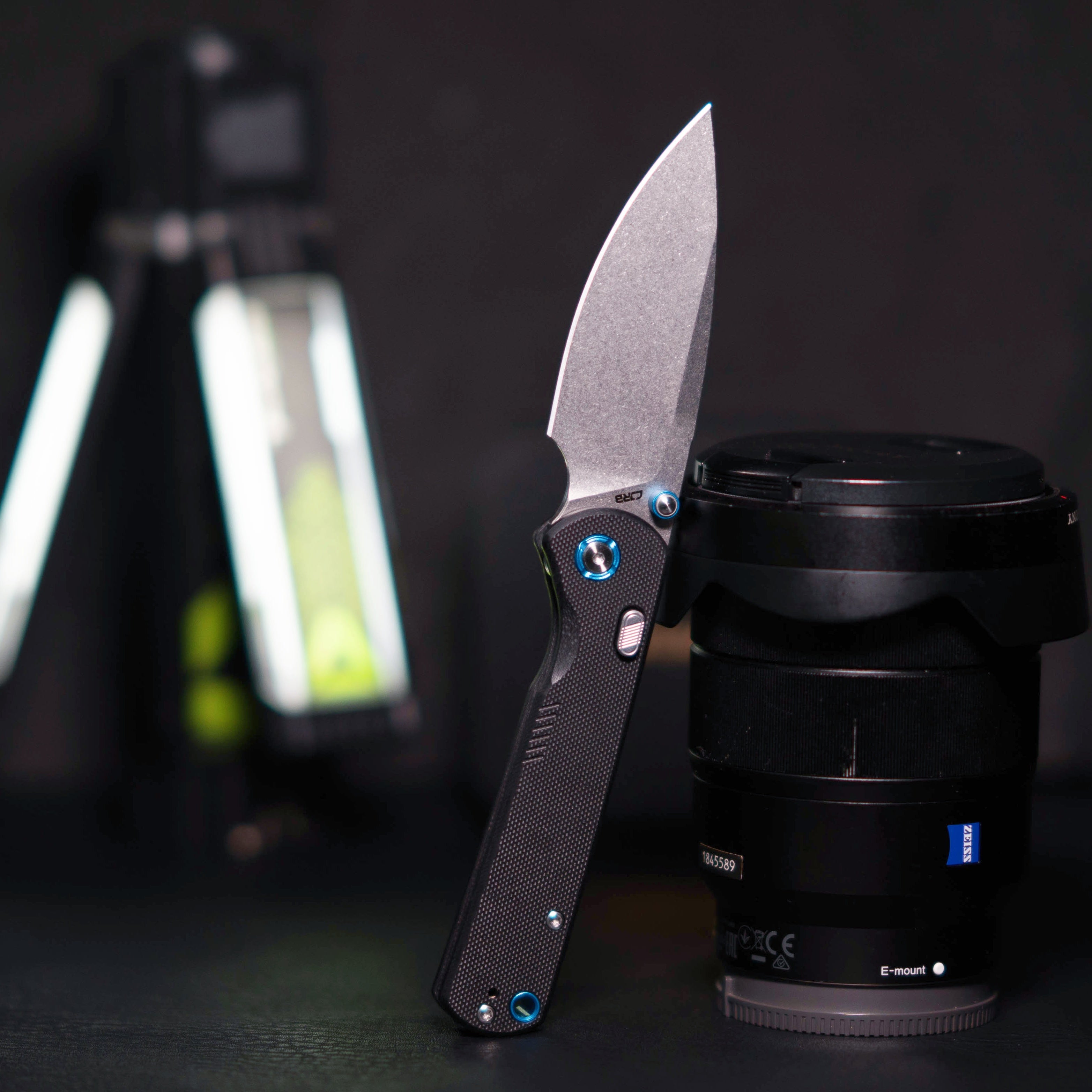
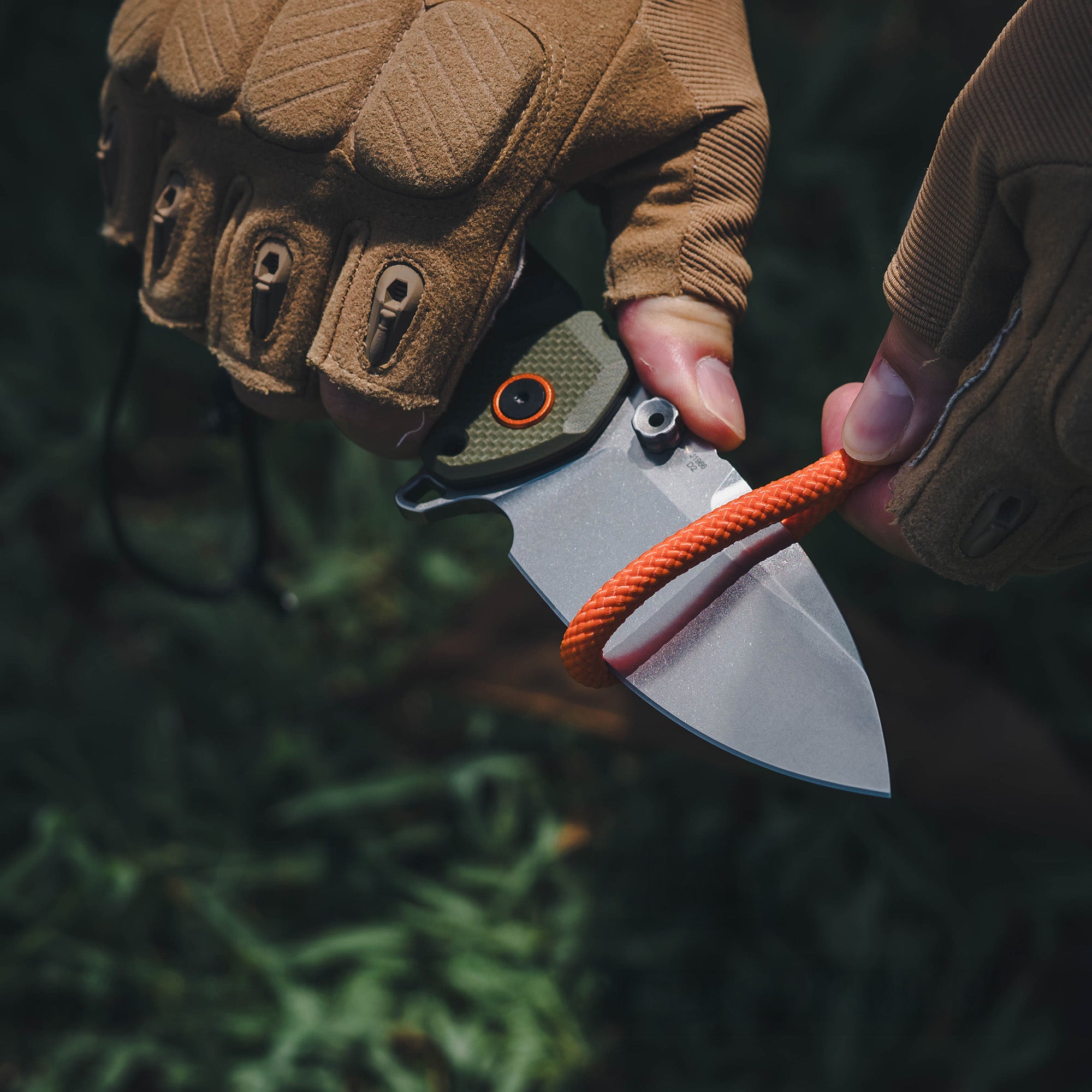
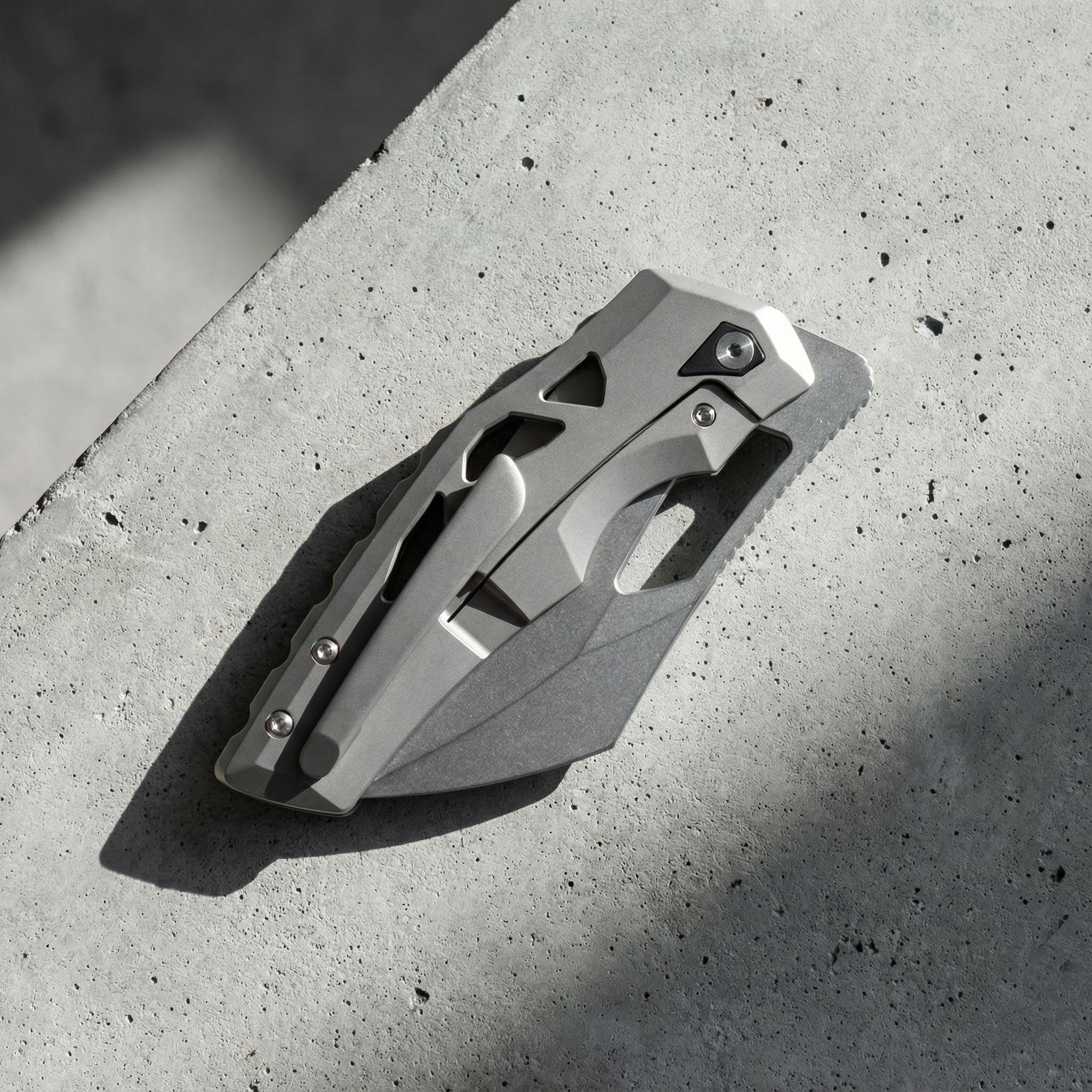
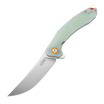
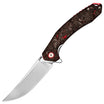
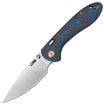
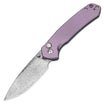

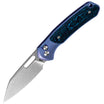
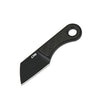
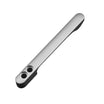
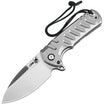
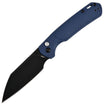
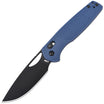
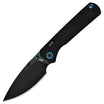
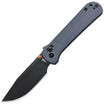
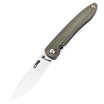
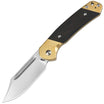
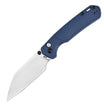
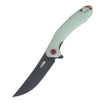
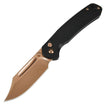
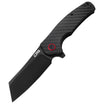
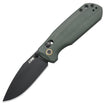
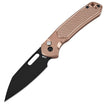
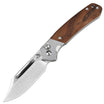
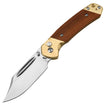
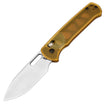
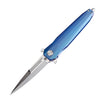
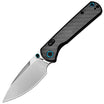
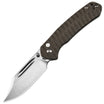
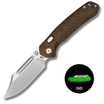
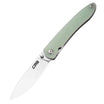
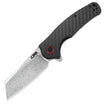
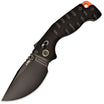
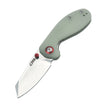
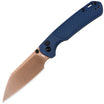
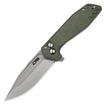
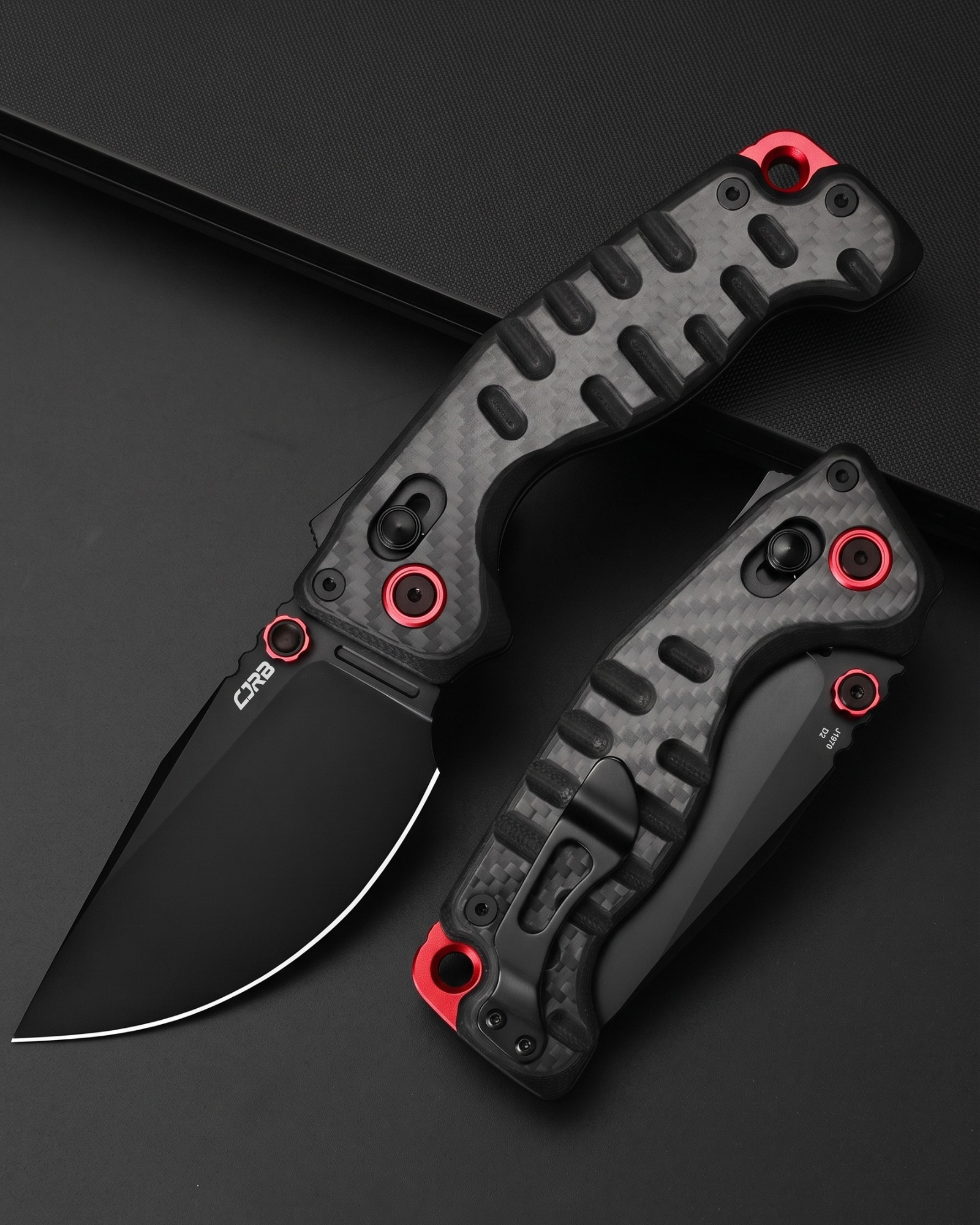
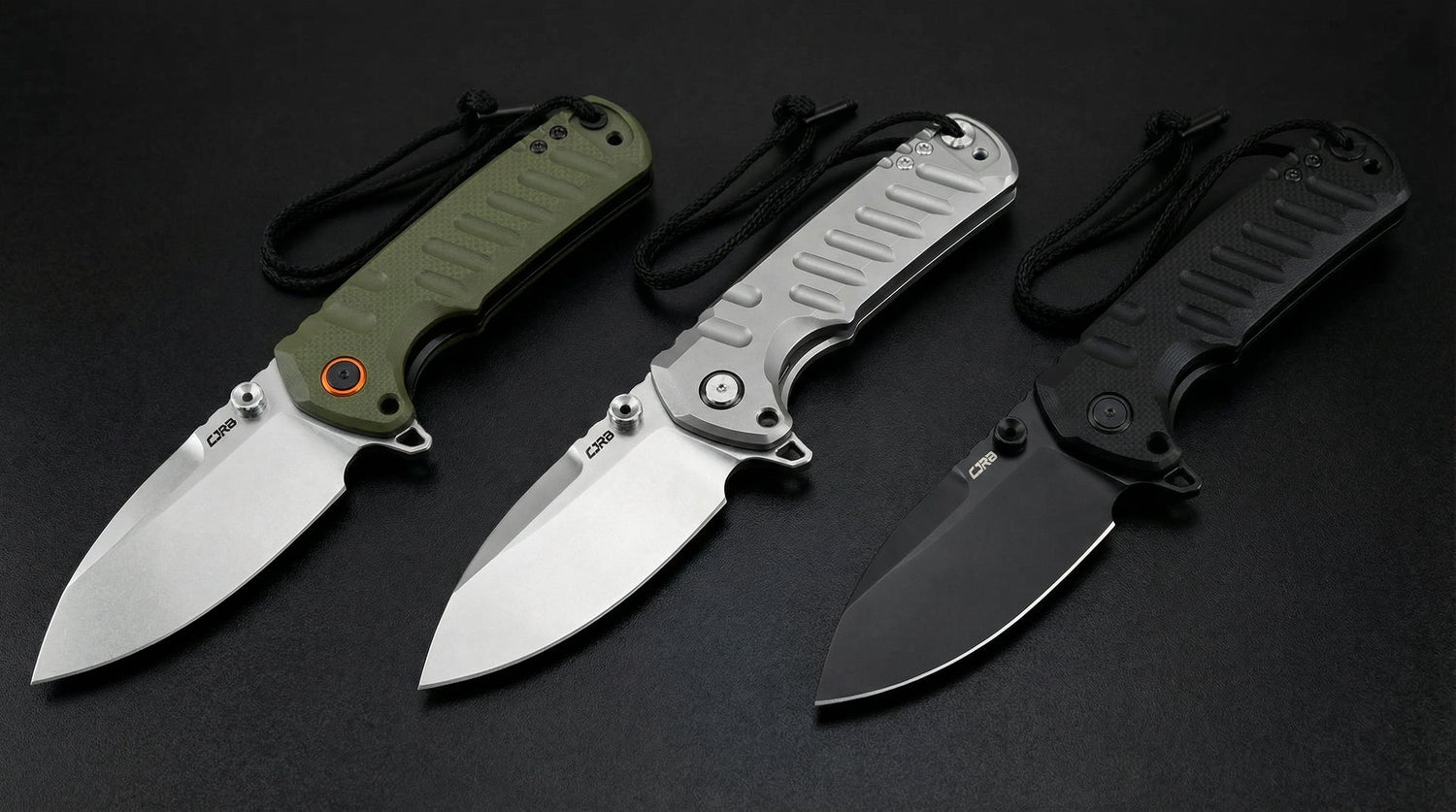
When you first pick up a folding knife, you usually know immediately if it’s meant for opening envelopes or breaking down thick cardboard boxes. But then there are knives that feel like they could chop through a car door. The CJRB Tundra Flipper & Thumb Stud & Locking Pin & Frame Lock Tatical Knife Titanium Handle fits squarely into that second category. It is an unapologetic "pocket beast."
I have spent years analyzing EDC (Everyday Carry) gear, and frankly, the trend toward "overbuilt" folders often results in knives that are just heavy bricks with no finesse. The CJRB Tundra series is different. It manages to balance sheer structural mass with a level of mechanical precision that is rare at this price point. Whether you are looking at the premium S35VN version or the workhorse D2 models, this is a tool designed for users who want fixed-blade confidence without the sheath.
In this deep dive guide, I’m not just going to list specs. We are going to take apart the design philosophy, analyze the metallurgy of the blade steels, and look closely at the unique locking pin mechanism that sets this knife apart from 99% of the market.

Design Philosophy: A Pocket "Beast" With Purpose
Let's be real for a second: size matters when you are wearing gloves or working in cold environments. The Tundra does not try to be a slim gentleman's carry. It is big, and that is exactly the point. With an overall length of 8.82 inches and a blade thickness of 0.19 inches (4.7mm), this knife dwarfs the standard EDC folder.
Massive Silhouette and Ergonomics
The first thing I noticed when handling the Tundra is that the handle is not just long; it is voluminous. The designers at CJRB understood that a heavy blade needs a counterbalance. If you have large hands, you know the struggle of trying to get a four-finger grip on a compact knife. The Tundra solves this by providing ample real estate.
The ergonomic lines feature a subtle curve that locks the hand into place. Whether you are using the G10 scales or the Titanium handle, the chamfering is done well enough to prevent hot spots during hard cutting, though I wouldn't mind if the jimping on the spine was slightly more aggressive for gloved use.
Blade Geometry for Heavy Duty
The blade shape is a modified drop point with a high flat grind. Why does this matter? A stock thickness of 4.7mm is incredibly thick—almost resembling a pry bar. However, by using a high flat grind, the blade thins out reasonably well behind the edge. It won't slice a tomato as cleanly as a kitchen knife, but it will baton through a piece of firewood without snapping.
The Mechanics of Safety: Locking Pin & Pivot System
This is where the engineering gets interesting. Most folding knives rely on a single point of failure: the lock face (liner or frame). If that fails, the blade closes on your fingers. The CJRB Tundra introduces a secondary safety redundancy that effectively turns this folder into a fixed blade.
The Secondary Locking Pin Explained
The Tundra features a threaded hole near the pivot and comes with a separate steel pin (often stored on a lanyard or in the box). When the blade is deployed, you can insert and screw this pin through the scales and the blade tang.
I have tested this mechanism, and the result is absolute structural rigidity. The physics here are simple but effective: the pin acts as a physical block that prevents rotation entirely. It bypasses the lock bar completely. If you are doing heavy piercing or twisting motions—tasks that usually wreck folding knives—this pin takes the stress off the liner/frame lock.

Ceramic Ball Bearings vs. Heavy Stock
Moving a 4.7mm thick blade requires force. To ensure the action remains smooth, CJRB uses a ceramic ball bearing pivot. The detent is tuned to be stiff. This is necessary because a heavy blade carries a lot of inertia; you don't want it shaking open in your pocket. When you hit the flipper tab or the thumb studs, the blade flies out with a satisfying "thwack." It is authoritative.
Material Science: D2 vs. CPM S35VN
The Tundra series is split into two distinct tiers based on metallurgy. Understanding the difference between these steels is critical for choosing the right tool for your environment.
The Workhorse: D2 Steel
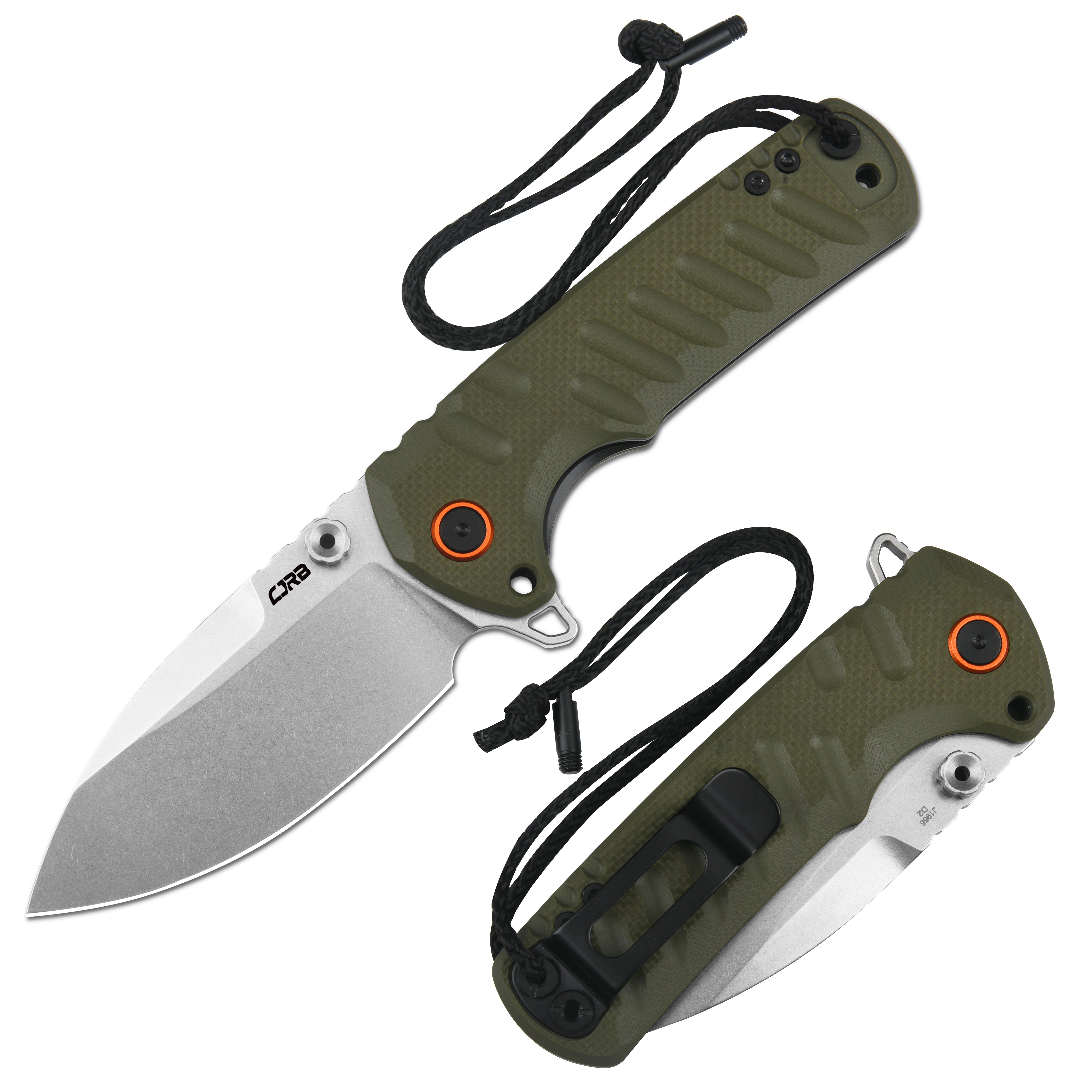
For the budget-conscious user, the G10 models utilize D2 steel. D2 is a semi-stainless tool steel known for its high hardness and decent edge retention. In my experience, D2 is the king of budget performance. It will hold an edge significantly longer than standard stainless steels like 8Cr13MoV.
If you are looking for a collection of hardworking blades, the CJRB D2 Steel Collection represents some of the best value in the industry. However, D2 is not fully stainless. If you work in wet environments or near saltwater, you will need to oil the blade regularly to prevent corrosion. The Tundra mitigates this slightly with its stone wash or black PVD coating, which adds a layer of protection.
The Premium Choice: CPM S35VN
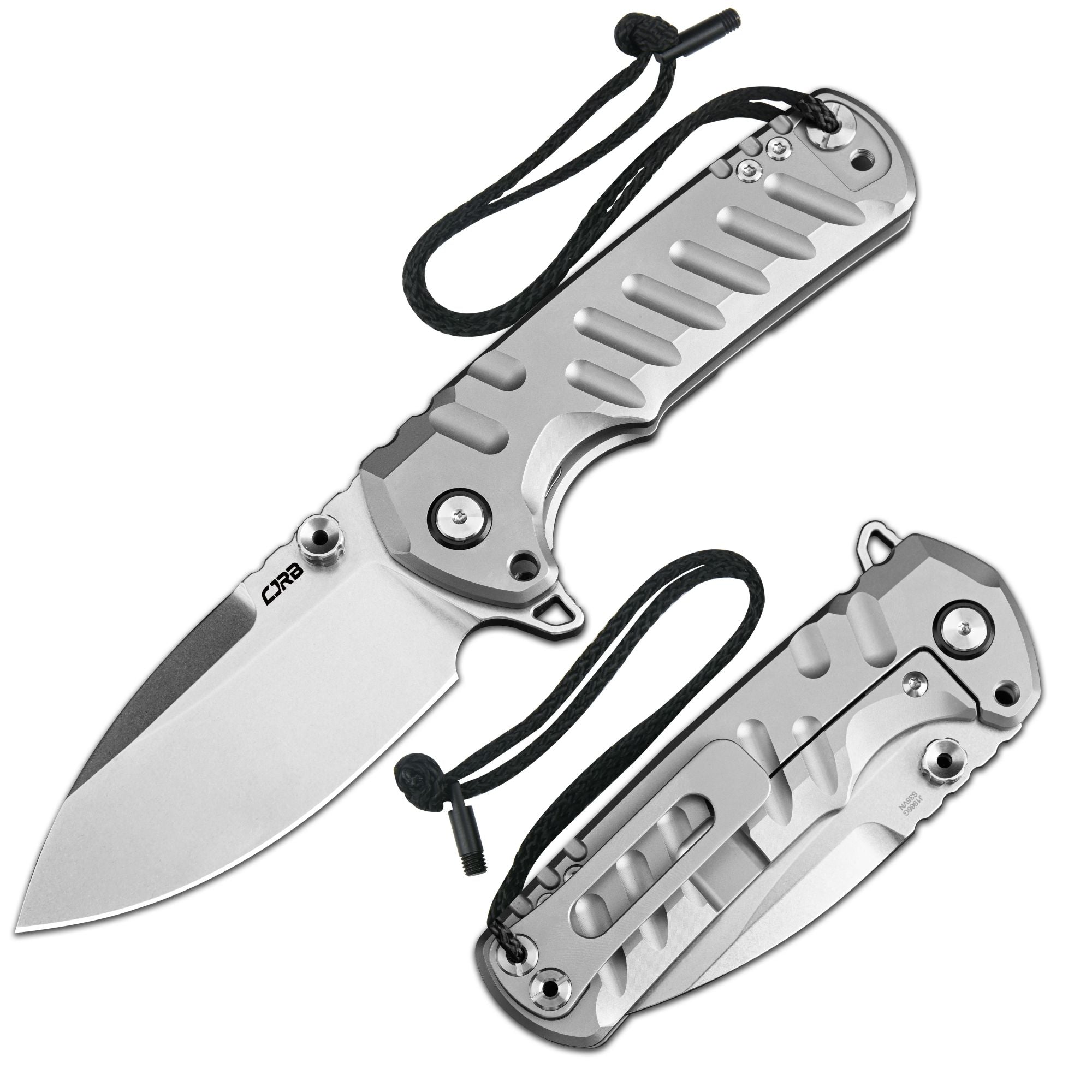
The Limited Edition Tundra upgrades the steel to CPM S35VN. Developed by Crucible Industries, this is a true powder metallurgy steel. Unlike D2, which has large carbides that can make the edge somewhat brittle at high hardness, S35VN has a fine, uniform microstructure.
Why pay more for S35VN? Toughness and stain resistance. In a knife this large, you want the steel to be able to absorb impact without chipping. S35VN offers that balance. It is easier to sharpen than S30V and holds a working edge for a very long time.
| Feature | D2 Tool Steel | CPM S35VN |
|---|---|---|
| Corrosion Resistance | Moderate (Semi-Stainless) | High (Stainless) |
| Edge Retention | Good | Excellent |
| Toughness | Moderate | High |
| Ease of Sharpening | Moderate | High |
Construction Analysis: Titanium vs. G10
The handle material dictates not just the look, but the balance and weight of the knife.
The Feel of Titanium
The titanium version features a full frame lock. Titanium is lighter than steel but stronger by weight, giving the knife a premium, warm feel in the hand. The frame lock mechanism is integral to the handle scale, meaning the harder you grip the knife, the more you reinforce the lock. It’s a design that has stood the test of time for tactical applications.
The Grip of G10
On the other hand, we have the G10 versions, such as the CJRB Tundra J1966 D2 Steel Blade Black G10 Handle Folding Knives. G10 (Garolite) is a high-pressure fiberglass laminate. It is impervious to temperature changes, chemicals, and moisture.
I personally find that G10 offers better traction than titanium, especially when wet. The texturing on the Tundra’s G10 scales is aggressive enough to stick to your palm without shredding your pants pocket. For a pure work knife, G10 is often the more practical choice.

Real-World Performance Assessment
I believe you can't judge a knife until you've used it to destroy something. In testing the Tundra, its character became clear immediately.
Hard Use Scenarios
This knife shines in demolition tasks. Breaking down thick, double-walled cardboard boxes is effortless due to the blade's weight—it falls through the material. I also tested the CJRB Tundra J1966 D2 Steel Blade Green G10 Handle Folding Knives on seasoned hardwood. The thick spine allows you to put your thumb on the back of the blade and apply serious pressure for notch-cutting without discomfort.
However, delicate tasks like peeling an apple? Forget about it. The blade thickness splits the fruit rather than slicing it. This is a trade-off you accept for the structural strength.
A Note on CJRB's Steel Evolution
While the Tundra series relies heavily on D2 and S35VN, it is worth noting that CJRB is constantly innovating with materials. For users who want a balance between the budget‑friendliness of D2 and the corrosion resistance of stainless, the CJRB AR‑RPM9 Steel Collection is worth exploring. AR‑RPM9 is CJRB’s proprietary spray‑formed steel, engineered to deliver high performance at a lower price point, though for the massive Tundra, D2 and S35VN remain the current standards.
Expert Opinions & Community Feedback
The knife community can be harsh, but the consensus on the Tundra is surprisingly unified. Reviewers from major channels often cite the locking pin as the polarizing feature. Some see it as a gimmick, but those who use their knives for camping see it as a brilliant safety addition.
"It feels like a bank vault in your pocket. The deployment sound alone tells you this isn't a toy." — YouTube Reviewer
Critics do point out the weight. At over 9 ounces for the Titanium model, you will feel this in your pocket. It requires a sturdy belt. But as one user on a popular forum put it, "I don't carry the Tundra because I want to forget it's there. I carry it because I want to know it's there."
Which Tundra Is Right for You?
Choosing between the models comes down to your budget and your intended use case.
The Collector & Heavy Duty User
If you appreciate fine machining and want the absolute best materials, the Titanium S35VN model is the way to go. It is a showpiece that can also handle a beating. The frame lock is robust, and the stonewash finish hides scratches well.
The Tactical & Utility User
If you are looking for a tool to throw in your truck box, take camping, or use on a construction site, the G10 versions are superior. The black G10 model offers a stealthy, tactical look, while the green G10 version has a more outdoor-centric aesthetic. You get 90% of the utility for a fraction of the price.
Future Outlook & Conclusion
The CJRB Tundra series represents a specific philosophy: overbuilt power with everyday control. It challenges the notion that a folding knife must be fragile or lightweight.
By integrating a secondary locking pin, CJRB has blurred the lines between folder and fixed blade. Is it for everyone? No. If you work in an office, this knife is overkill. But if your day involves straps, wood, crates, or outdoor survival scenarios, the Tundra is a reliable companion that punches far above its weight class.
Whether you choose the D2 workhorse or the premium S35VN titanium beast, you are getting a tool designed to last.
FAQ
Q: Is the secondary locking pin mandatory to use?
A: No, the knife functions perfectly as a standard frame or liner lock flipper. The pin is optional for extra safety during heavy tasks.
Q: Can I carry the Tundra in deep pocket carry?
A: Yes, the Tundra comes with a titanium or steel clip that allows for secure carry, though the handle length means it will take up significant pocket space.
Q: Is D2 steel prone to rust?
A: D2 is semi-stainless. It is more resistant than simple carbon steel but less so than S35VN. Keep it dry and occasionally oiled.
Q: How do I sharpen the recurring curve of the blade?
A: The Tundra has a mostly flat edge with a belly. Standard flat stones work well, though a guided system helps maintain the thick edge geometry.


1 comment
Maynard Clark Jr
Deep pocket carry is short of entirely concealed in the pocket.
Leave a comment
This site is protected by hCaptcha and the hCaptcha Privacy Policy and Terms of Service apply.