




Legal note: This page is a CJRB educational summary, not legal advice. Washington knife law can change, and local, federal, school, courthouse, airport, workplace, event, public-property, private-property, and transit rules may add restrictions. Use the source links below as a starting point and consult a qualified attorney for legal advice.
Last checked: July 24, 2026 · Primary sources: RCW 9.41.250 plus related official/local sources listed below
Washington Knife Law Snapshot
Short version: Washington restricts spring blade knives and furtive concealed carry of daggers, dirks, or other dangerous weapons. Seattle adds a dangerous-knife rule for fixed blades and blades over 3.5 inches.
Washington restricts spring blade knives, including gravity/centrifugal opening in the definition.
Furtive carry with intent to conceal is restricted.
Seattle has a dangerous-knife rule.
Dangerous weapons on school facilities are restricted.
Can You Carry a Knife in Washington?
| Situation | What it means | Status | Source |
|---|---|---|---|
| Ordinary manual folding knife | Lower risk than spring blades, but Seattle, schools, and threatening-display rules can change the answer. | Medium caution | RCW 9.41.250, Seattle 12A.14 |
| Spring blade, gravity, or centrifugal-opening knife | Washington's spring blade knife definition includes automatic release by spring/mechanical device and gravity or outward/downward/centrifugal movement. | Restricted | RCW 9.41.250 |
| Dagger, dirk, or dangerous weapon carried furtively with intent to conceal | Washington restricts furtive concealed carry of these weapons. | Restricted | RCW 9.41.250 |
| Weapons carried in a way that alarms others | RCW 9.41.270 restricts carrying, exhibiting, displaying, or drawing weapons in a manner warranting alarm. | Conduct caution | RCW 9.41.270 |
| School facilities | Washington has separate school-facility dangerous-weapon rules. | Avoid | RCW 9.41.280 |
| Seattle dangerous knife | Seattle defines dangerous knife as any fixed-blade knife and any other knife with blade more than 3.5 inches, and restricts carry subject to narrow exceptions. | Local restriction | Seattle 12A.14.010, 12A.14.080, 12A.14.100 |
Knife Type Notes
Use this section as a practical EDC check. A knife can be legal to own but still risky to carry because of concealment, location, age, conduct, or local rules.
| Knife type | State summary | Carry risk |
|---|---|---|
| Manual pocket knives | Lower risk outside Seattle and restricted places. | Medium |
| Spring blades / gravity knives | Restricted by state definition. | High |
| Fixed blades | Seattle treats any fixed blade as a dangerous knife. | High in Seattle |
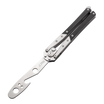
| Balisongs | May raise gravity/centrifugal movement questions; avoid in Washington without legal review. | High caution |
Seattle Rules
Local and place-based rules are often where EDC users get surprised. Check the exact city, campus, venue, transit system, workplace, and private-property rules before carrying.
| Rule area | What to know | Status | Source |
|---|---|---|---|
| Dangerous knife definition | Seattle defines dangerous knife as any fixed-blade knife and any other knife with blade more than 3.5 inches. | Caution | Seattle 12A.14.010 |
| Carry restriction | Seattle restricts carrying dangerous knives, concealed or unconcealed, with occupational and hunting/fishing exceptions. | Caution | Seattle 12A.14.080, 12A.14.100 |
| Under 18 | Seattle restricts sale/gift/purchase/possession of dangerous knives by minors except under direct adult supervision. | Caution | Seattle 12A.14.080 |
Practical EDC Checklist
-
01Start with the knife type: Confirm whether the knife is ordinary utility carry or a listed/restricted weapon category.
-
02Check concealment: Some states treat open and concealed carry differently, and some cities add local concealed-carry limits.
-
03Check the place: Schools, court facilities, government buildings, parks, public transit, airports, and private venues often have stricter rules.
-
04Avoid threatening conduct: Displaying, drawing, or carrying a knife as a weapon can change the legal analysis quickly.
-
05Verify local law: State law is only the first layer unless the state has strong knife preemption.
Relevant Legal Sources
| Source | Why it matters | Status | Citation |
|---|---|---|---|
| RCW 9.41.250 | Dangerous weapons and spring blade knife definition. | Source | RCW 9.41.250 |
| RCW chapter 9.41 | School, child-care, voting, and place-related weapons rules. | Source | RCW chapter 9.41 |
| Seattle Municipal Code 12A.14 | Seattle weapons-control definitions and dangerous-knife rules. | Source | Seattle Municipal Code 12A.14 |
| Seattle City Clerk Municipal Code page | Official Seattle code entry point. | Source | Seattle City Clerk Municipal Code page |
Get the 50-State Knife Law Cheatsheet
Enter your email and CJRB will send the EDC knife law checklist with state notes, status labels, and source links.


Leave a comment
All comments are moderated before being published.
This site is protected by hCaptcha and the hCaptcha Privacy Policy and Terms of Service apply.