



Legal note: This page is a CJRB educational summary, not legal advice. Florida knife law can change, and local, federal, school, airport, courthouse, workplace, event, public-property, and private-property rules may add restrictions. Use the Justia links below as a starting point and consult a qualified attorney for legal advice.
Last checked: July 24, 2026 · Primary source: Justia 2025 Florida Statutes, Chapter 790, plus Justia Florida case law
Florida Knife Law Snapshot
Short version: Florida is not mainly a blade-length state. The biggest questions are whether the knife is a common pocketknife, whether it is carried concealed, whether the carrier is authorized under Florida concealed-carry rules, and whether the place is school-related or otherwise restricted.
Florida's weapon definition excludes a common pocketknife.
Non-pocketknife concealed carry depends on Florida carry authorization.
School property and school-sponsored events have special rules.
Florida specifically bans ballistic self-propelled knives.
Can You Carry a Knife in Florida?
| Situation | What it means | Status | Source |
|---|---|---|---|
| Common pocketknife | Florida's statutory definition of weapon excludes a common pocketknife, which makes ordinary folding pocketknife carry lower risk than other concealed knives. | Generally allowed | § 790.001 |
| Concealed knife that is not a common pocketknife | A knife can fall under Florida concealed-weapon rules. Carry is safer only if the person is licensed or otherwise satisfies the statutory criteria referenced in section 790.01. | Authorization required | § 790.01 |
| Concealed carry without a license under Florida authorization | Florida has an unlicensed carry pathway for people who otherwise meet listed license criteria, but a person carrying this way must carry valid identification and display it on demand. | ID required | § 790.013 |
| Open carry of knives | The open-carry statute reviewed here names firearms and electric weapons or devices, not knives. Still, dangerous display in a rude, careless, angry, or threatening way is separately restricted. | Carry carefully | § 790.053, § 790.10 |
| School property, school bus, school bus stop, or school-sponsored event | High caution. Florida section 790.115 covers weapons on school property and school-sponsored events and separately mentions razor blades, box cutters, and common pocketknives in specific school-related contexts. | Restricted place | § 790.115 |
| Ballistic self-propelled knife | Florida specifically prohibits manufacturing, displaying, selling, owning, possessing, or using a ballistic self-propelled knife. | Prohibited | § 790.225 |
Common Pocketknife vs. Weapon
Florida's most important EDC distinction is the statutory exception for a common pocketknife. Justia's 2025 Florida statute page defines weapon broadly but excludes a common pocketknife, plastic knife, and blunt-bladed table knife.
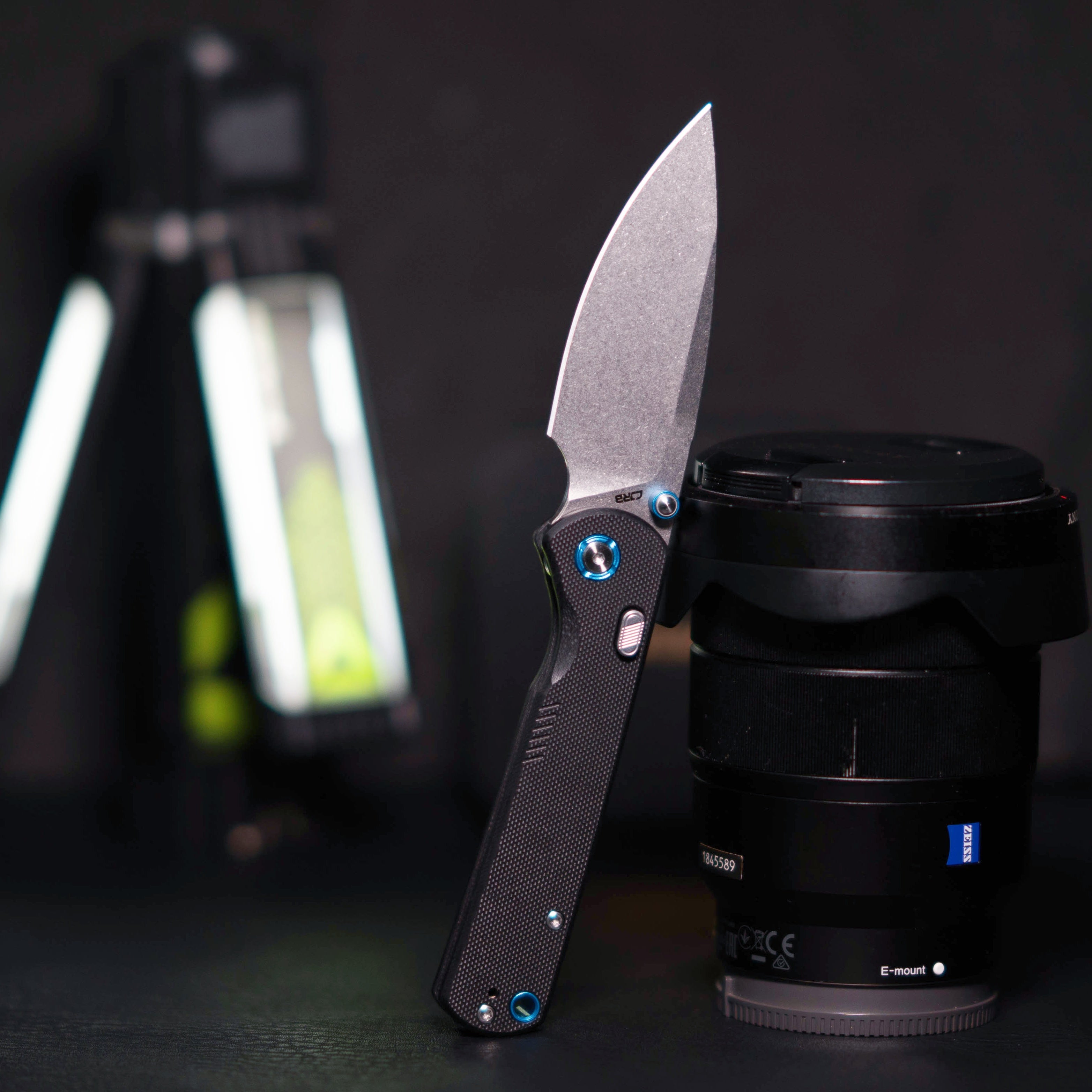
Folding pocket carry is the lower-risk lane
In L.B. v. State, the Florida Supreme Court described a common pocketknife as a frequently occurring community knife with a blade folding into the handle and suitable for pocket carry.
Sources: § 790.001, L.B. v. State
Useful guide, not a simple statutory cutoff
The L.B. decision discusses a Florida Attorney General view about folding knives with blades four inches or less, but the court did not make four inches a universal bright-line rule for every knife.
Source: L.B. v. State
Knife Type Notes
| Knife type | Florida summary | Carry risk |
|---|---|---|
| Pocket knives | Lower risk when they fit the common-pocketknife category. Avoid school settings and threatening display. | Lower |
| Large folders | Florida does not publish a simple statewide blade-length ban in the reviewed Justia statutes, but larger or weapon-like folders may fall outside the common-pocketknife comfort zone. | Fact-specific |
| Fixed blades, dirks, daggers | Fixed blades are more likely to raise concealed-weapon concerns if hidden on or about the person. Improper exhibition rules also matter. | Medium |
| Switchblades, assisted-opening, OTF, balisong | The reviewed Justia statute set does not list a separate switchblade or balisong ban. However, concealed carry, school rules, and ballistic-knife rules still apply where relevant. | Check use and carry method |
| Ballistic self-propelled knives | Florida specifically prohibits this category. The same statute excludes devices where the knifelike blade opens but stays physically integrated with the device. | Prohibited |
Places and Conduct to Be Careful With
-
01Schools and school events: Florida section 790.115 covers school-sponsored events, school property, school buses, and school bus stops. Treat these as high-caution locations even for ordinary EDC knives.
-
02Improper exhibition: Carry is different from display. Exhibiting a dirk, sword, sword cane, firearm, electric weapon or device, or other weapon in a rude, careless, angry, or threatening manner is a separate offense unless lawful self-defense applies.
-
03Concealed carry authorization: Florida section 790.01 ties concealed carry of weapons to either a license or satisfying listed license criteria. Section 790.013 adds an ID requirement for unlicensed concealed carry authorization.
-
04Private property and workplaces: Stores, venues, employers, parks, transit systems, and events can set rules outside this Justia statute summary.
-
05Minors: Do not casually sell, lend, transfer, or give a dirk or other weapon to someone under 18 without parent or guardian permission. Ordinary pocketknives are treated differently in section 790.17.
Vehicle, Outdoor, and Exception Notes
Securely encased or not readily accessible
Florida section 790.25 includes private-conveyance language for a person 18 or older in lawful possession of a handgun or other weapon, while section 790.01 still matters for concealed carry on the person.
Source: § 790.25
Fishing, camping, lawful hunting
Section 790.25 lists lawful-use contexts including fishing, camping, lawful hunting, and going to or returning from those activities. Confirm the exact place and any wildlife, park, federal, or local rules before relying on this.
Source: § 790.25
Exceptions have boundaries
Florida's lawful-use and conveyance language does not erase school, improper-exhibition, ballistic-knife, concealed-carry, or private-property issues.
Relevant Justia Sources
| Source | Why it matters |
|---|---|
| FL Stat § 790.001 | Definitions for concealed weapon and weapon; common pocketknife exception. |
| FL Stat § 790.01 | Concealed weapon or concealed firearm carry authorization and penalty structure. |
| FL Stat § 790.013 | ID requirement for unlicensed concealed carry authorization. |
| FL Stat § 790.06 | Concealed weapon license definition and eligibility criteria referenced by section 790.01. |
| FL Stat § 790.053 | Open-carry statute for firearms and electric weapons or devices. |
| FL Stat § 790.10 | Improper exhibition of dangerous weapons or firearms. |
| FL Stat § 790.115 | Weapons at school-sponsored events and on school property. |
| FL Stat § 790.17 | Furnishing weapons to minors under 18 and ordinary-pocketknife carveout. |
| FL Stat § 790.225 | Ballistic self-propelled knife prohibition. |
| L.B. v. State | Common-pocketknife interpretation, including the four-inch discussion without a universal bright-line cutoff. |
Get the 50-State Knife Law Cheatsheet
Enter your email and CJRB will send the EDC knife law checklist with state notes, status labels, and source links.


Leave a comment
All comments are moderated before being published.
This site is protected by hCaptcha and the hCaptcha Privacy Policy and Terms of Service apply.